Learning Objectives
Teacher Framing:
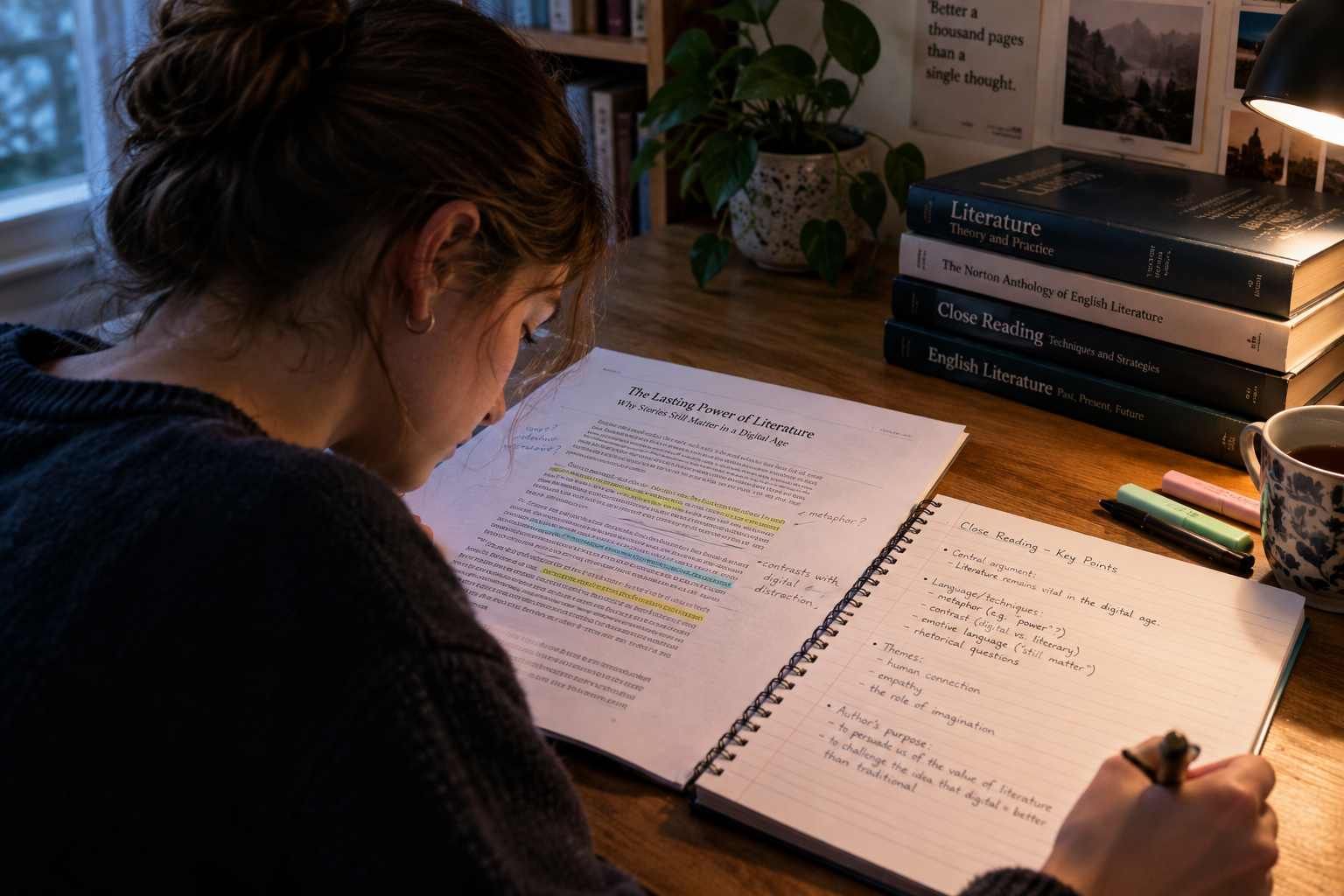
This lesson focuses on the skills of how to read texts, the etiquette of reading. This lesson draws from the Practical Criticism tradition, and I. A. Richards. It is foundational to all textual investigation, whether it is Language, Literature, Oracy or Literacy, but it does not constitute the knowledge curriculum. This skill is embedded overtime, as the knowledge curriculum is being established. This lesson will be delivered periodically to reinforce the skill, but is not the measurable outcome of studies. Assessments will focus on the knowledge gained through studies, but this skill is how that knowledge is gained.
Student Learning Objectives:
To understand how to approach a reading text to be ready for the analytical objectives of English (Language and Literature).
Core Knowledge:
English Studies takes texts and investigates how they build meaning. Language and Literature use different concepts, but are both based around the skill of reading for meaning. This skill is developed in all lessons where reading is being done, and needs to grow continually throughout your education. Remember that this lesson is a skill that will enable you to learn new knowledge in future lessons, and it is the knowledge that you are primarily assessed on.
Key Ingredients:
Key Vocabulary:
- Tone – The writer’s attitude or feeling towards a subject, shown through their choice of words.
- Feeling – The emotions that a character, narrator, or reader experiences while reading.
- Sense – An impression or idea created by the text, such as a sense of danger, excitement, or mystery.
- Intention – The purpose behind the writer’s choices; what they want the reader to think, feel, or understand.
- Judgement – An opinion or conclusion about a character, event, or idea based on evidence from the text.
- Evidence – Words, phrases, or details from the text that support an idea or answer.
- Investigation – A careful search for clues and details in a text to develop understanding.
- Close-reading – Reading a text carefully and repeatedly to analyse language, meaning, and the writer’s techniques.
Key Sentence Stems:
- This text is conveys a tone of…
- The text creates a feeling of…
- We can sense that…
- The author intends to…
- I judge the qualities of the text to be…
- I base these ideas on the following evidence…
- The author’s choice of ___ is especially important because…
Key Thinking:
English has to be approached almost scientifically. There is a procedure to follow, and answers can be judged as right or wrong.
English is a subject about enjoyment and engagement. It doesn’t matter what I say about the text because we each respond differently to the text. Our opinions are as subjective and individual as ourselves.
Models
Non Literary Warm Up:

Think of (or give example) a joke. A joke requires you pay attention to the small shifts in structure and meaning. When you see the shifts and implications, you will be strongly impacted, you might even laugh out loud. But there will always be some who ‘missed’ the joke which really means, they did not get the sense or intention needed to judge the joke well. English studies is like pointing out and explaining all the elements of the text that made it impactful, like explaining a joke to someone who didn’t get it. It requires selecting key words of phrases and teasing out the importance of that evidence to the wider sense. The choices to examine are based on your skill of judgement.
Literary example – :

Tom clutched his coat as he wandered beneath the towering trees. The woods seemed endless, their shadows twisting into shapes that made his heart race. He remembered the old legends of silver-eyed creatures and whispering spirits said to roam between the trunks at dusk. Though anxious and unsure of the path home, Tom took a deep breath and kept walking. Somewhere beyond the mystery and murmuring leaves, he hoped a familiar light was waiting for him.
Listen to a children’s story being read. The tone, feeling, sense and intention should be immediately obvious to all students. Equally, if we read a horror story, we get this immediately. The immediacy of understanding the tone, sense, feeling and intention depends on our close reading, and as texts become more sophisticated, we require ever-closer investigation to make the same judgements.
Now Apply To This To Our Text:
- Read the text for this lesson closely,
- make a judgement on what the intention of the text is,
- focus in on evidence that best highlights the intention of the text,
- explain what the overall tone of the text is and how it creates this tone.
Exit Question:
Why do you think English Studies should be less concerned with personal opinion of texts?
Homework:
a) Pre-reading of the next lesson – read through the knowledge so you can be ready to discuss in class.
b) Apply the learning of today’s lesson to your own private reading text. Write a paragraph explaining how today’s learning changes how you might conceive your text. Be sure to use the key vocabulary and sentence stems.
c) Write a paragraph about the discipline of Literature, explain how key words from today’s lesson impact the field overall.
d) Add today’s vocabulary and sentence stems to your own glossary. Highlight any that you are unsure about, but you must also research the meanings yourself and develop your glossary to include this differentiated support.