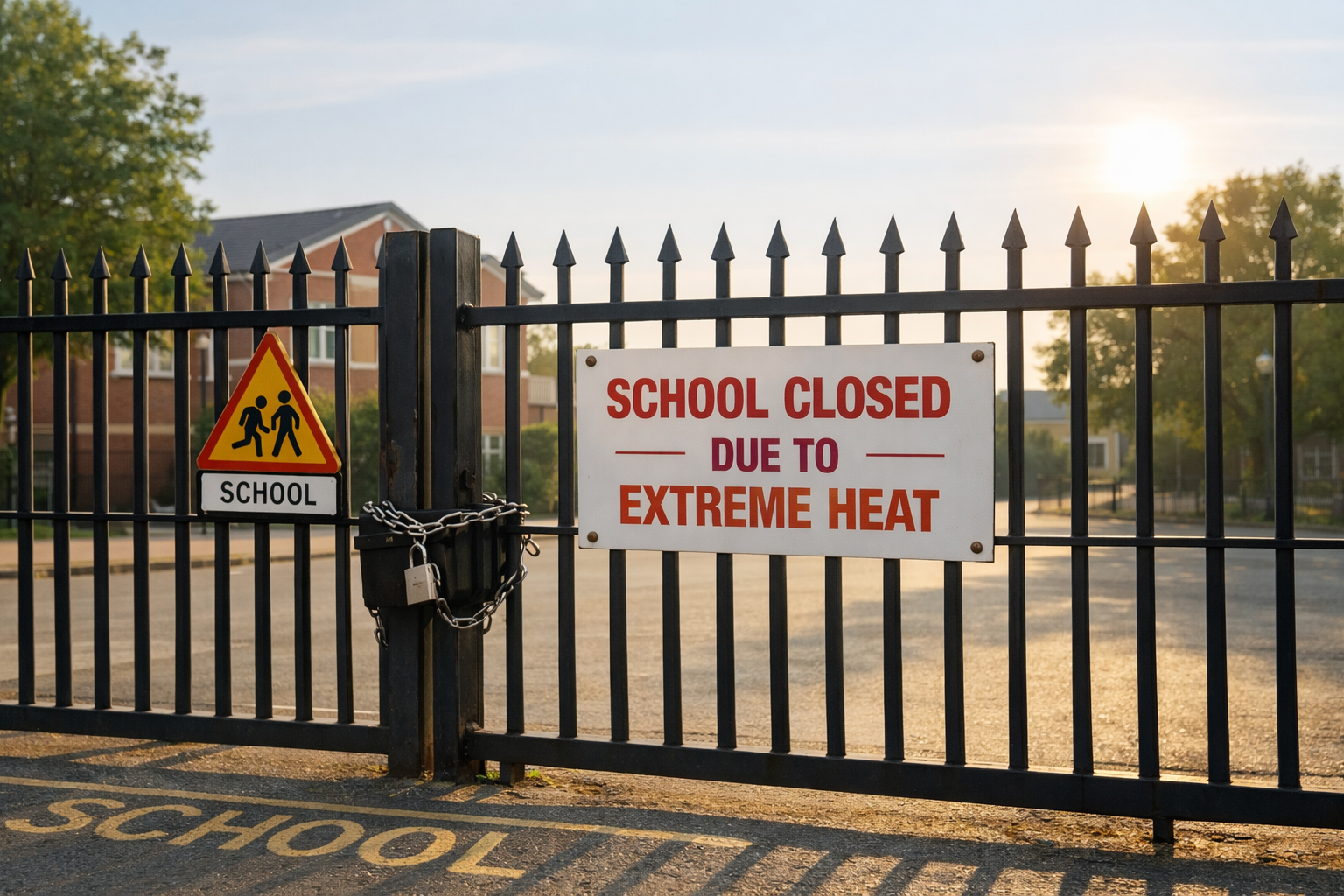

The weather in the UK is turning increasingly balmy. Where I am, temperatures are already into the low 30s, and parts of the South are pushing towards the high 30s. News outlets are reporting that some schools are considering closures to protect students and staff in these extreme conditions. The question for English departments is simple: are you genuinely ready for hybrid learning?
In many schools, “hybrid learning” still means uploading existing PowerPoints for students to follow at home. But this approach fails on two fronts. First, many students do not have personal devices capable of running PowerPoint. Second—and more importantly—PowerPoints are not learning devices. They are teaching prompts, designed for teachers to pace, narrate, and animate. Even when activities are embedded, they tend to be passive: copying, matching, filling in. They rely on the teacher’s presence to make them meaningful.
Periods of hybrid learning expose this weakness. When students are suddenly required to learn independently—whether due to extreme heat, snow days, or public health concerns—departments need resources that can actually teach.
This is where facilitative learning devices become essential. A facilitative device gives students everything they need to make progress without relying on the teacher’s live mediation. The teacher’s role becomes one of continual refinement: improving clarity, strengthening modelling, and ensuring that students can use the device effectively whether they are in the classroom or at home. When hybrid learning is triggered at short notice, facilitative devices stop being a luxury and become a necessity.
There is no reason these devices should be reserved for remote learning. In fact, they work best when they are the normal operating procedure during contact time. When students use facilitative devices in lessons, teachers can demonstrate how to navigate them, how to extract meaning, and how to use them to drive independent learning. Every lesson becomes a rehearsal for autonomy.
Discipline of English is an example of a curriculum built entirely around this principle. Its resources are structured as a website rather than a slideshow. Content is readable, navigable, and deliberately designed for independent study. Visual cues support conceptual understanding, and short video explainers will soon complement the written materials. When a curriculum is built in this way, it becomes straightforward for departments to direct students to meaningful learning—even when teachers and students are not in the same room.
Hybrid learning is not an emergency contingency. It is a test of whether a curriculum is genuinely designed for learners, or merely arranged around the habits of teachers. Departments that invest in facilitative devices now will not only be prepared for the next heatwave—they will have built a more robust, more equitable, and more disciplined English curriculum.
Leave a Reply