From chalkboards, over head transparencies, VHS tapes played on a shared CRT trolley, to software and digital projectors, local servers sharing files, to web streamed video content and to cloud-collaborative infrastructure (think Microsoft Teams). Teachers have always needed to keep moving as technology changes. For many teachers and departments, Microsoft’s Power Point has become the dominant and hegemonic ‘final’ strategy, but teaching tools have continued to evolve.
That continued pace of change has left many departments at least two generations of technology behind, as web-based platforms and AI tools have begun to empower the courses delivered by private, third party, commercial educational services.
Disciplines such as the sciences and maths can find virtual learning environments (VLEs) provided by private companies, but there are very few for disciplines of English (such as Language, Literacy, Creative Writing and Literature). This is the gap that DisciplineOfEnglish.co.uk attempts to fulfil. DisciplineOfEnglish.co.uk aims to model a virtual learning environment that schools should be striving for if they are to keep up with the developing landscape.
More than ‘activities’; a Virtual Learning Environment
The advantages of virtual learning environments are clear; accessibility, LLM assistance and client centered form. Power Points are simply not widely accessible for students, they cannot be easily integrated with LLMs, nor is a .ppt a product for the client / student to receive.
A true VLE is asynchronous (learning does not have to happen at the same time for all); on your computer at home or on your phone whilst commuting. Students can learn when they can, when they need, not within the confines of the classroom. This is the hybrid working contract that many employees today benefit from, but has not yet been rolled out to students who must attend classes.
VLEs are exceptionally accessible, making use of AI services which can act as translator, text-to-speech reader, or mentor. Web pages can be adapted for font size and screen colour. None of this is possible in the existing environment of Power Point or textbook delivered learning. Web based teaching resources are maximally accessible.
VLEs are designed with the reader in mind, not the presenter. They are not display devices for key notes, they are interactive and personal. Power Points always have to balance the role of the teacher’s presentation with the activity of the textbook, and these domains are mutually exclusive. A student cannot work through the resource if the teacher is using it to deliver keynotes.
More than a VLE; A Virtual Department
DoE intends to provide more than just a virtual learning environment of lessons or resources, but an entire curriculum fully aligned with the best pedagogy available. The curriculum starts with a mission statement which outlines the pedagogy being followed, through to the syllabus and curriculum maps, down to the lessons and practise work. This is normally kept behind closed doors, within a department and is rarely accessible to families and students.
The entire curriculum is designed around very specific pedagogical tenets – to distinguish between methodologies and material, repetition for learning, language for conceptualisation, delineations of knowledge, explicit knowledge, intellectual equity. This can be explored in the mission statements.
More then just lessons; a knowledge base
Finally, the site includes regular deep dives into English issues and knowledge. Whilst this is written for teachers and academics, there’s no reason the AI tools can’t be used to translate the text to any other reading level or degree of experience.
DisciplineOfEnglish.co.uk is principally about accessibility, and demonstrating what a department could look like when old technologies are put aside, and new technologies are developed.
Thank you for visiting
Asynchronous Learning
Learn from home, or in the classroom
- A full teacher level explainer
- Learning objectives
- Key Vocabulary and sentence stems
- Misconceptions
- Non literary models
- Literary models
Suitable for:
- Classrooms
- Intervention
- Mentoring
- Home learning
Analytical Synthesis
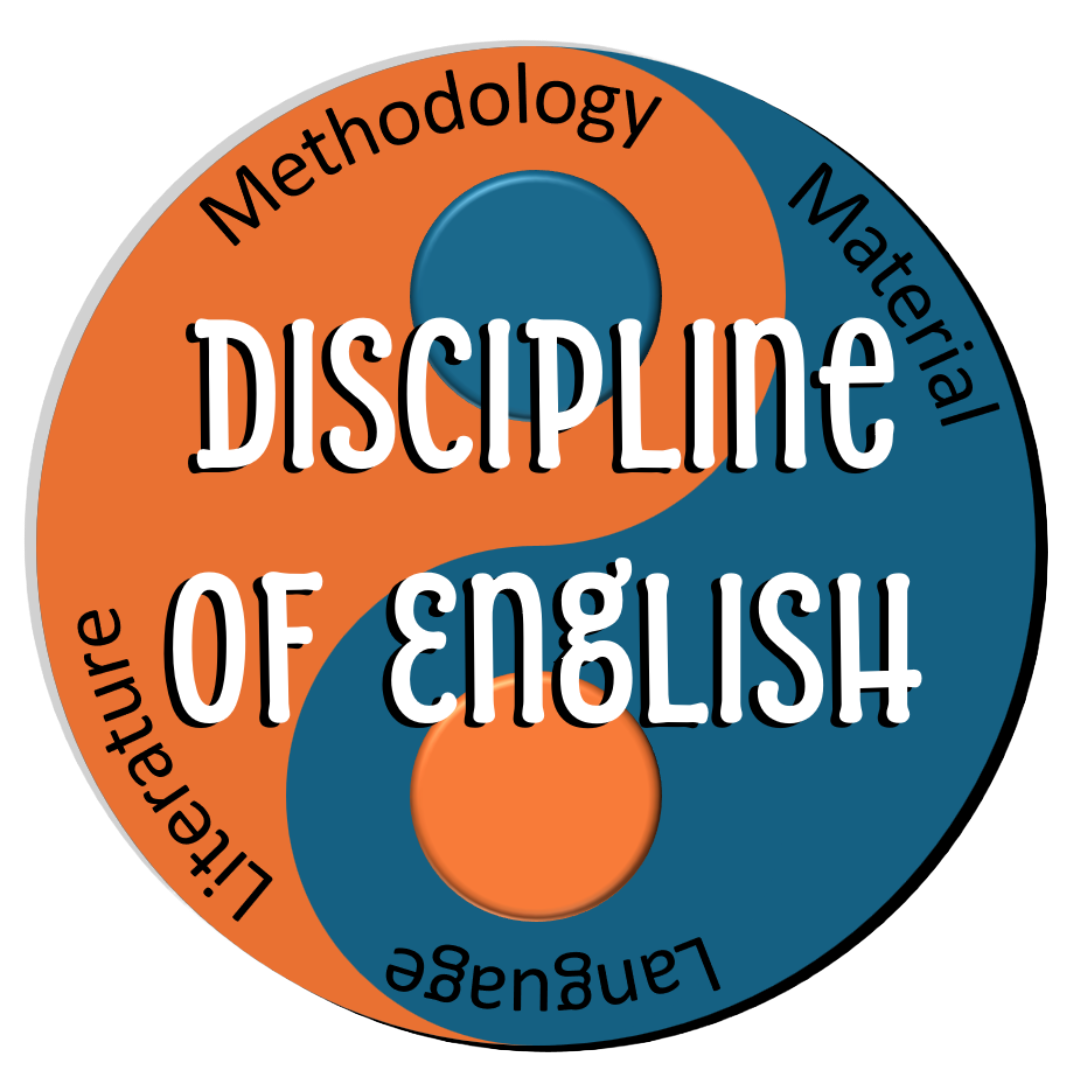
Literature as an academic field of enquiry has a methodological toolbox and this is applied to many texts – this synthesis is the way that ‘analysis’ is here conceptualised:
- Schemes of work
- Suggested extracts
- Model answers and mark schemes
- A wide range of texts
- Key Stage 3 and Key Stage 4
Methodological Knowledge
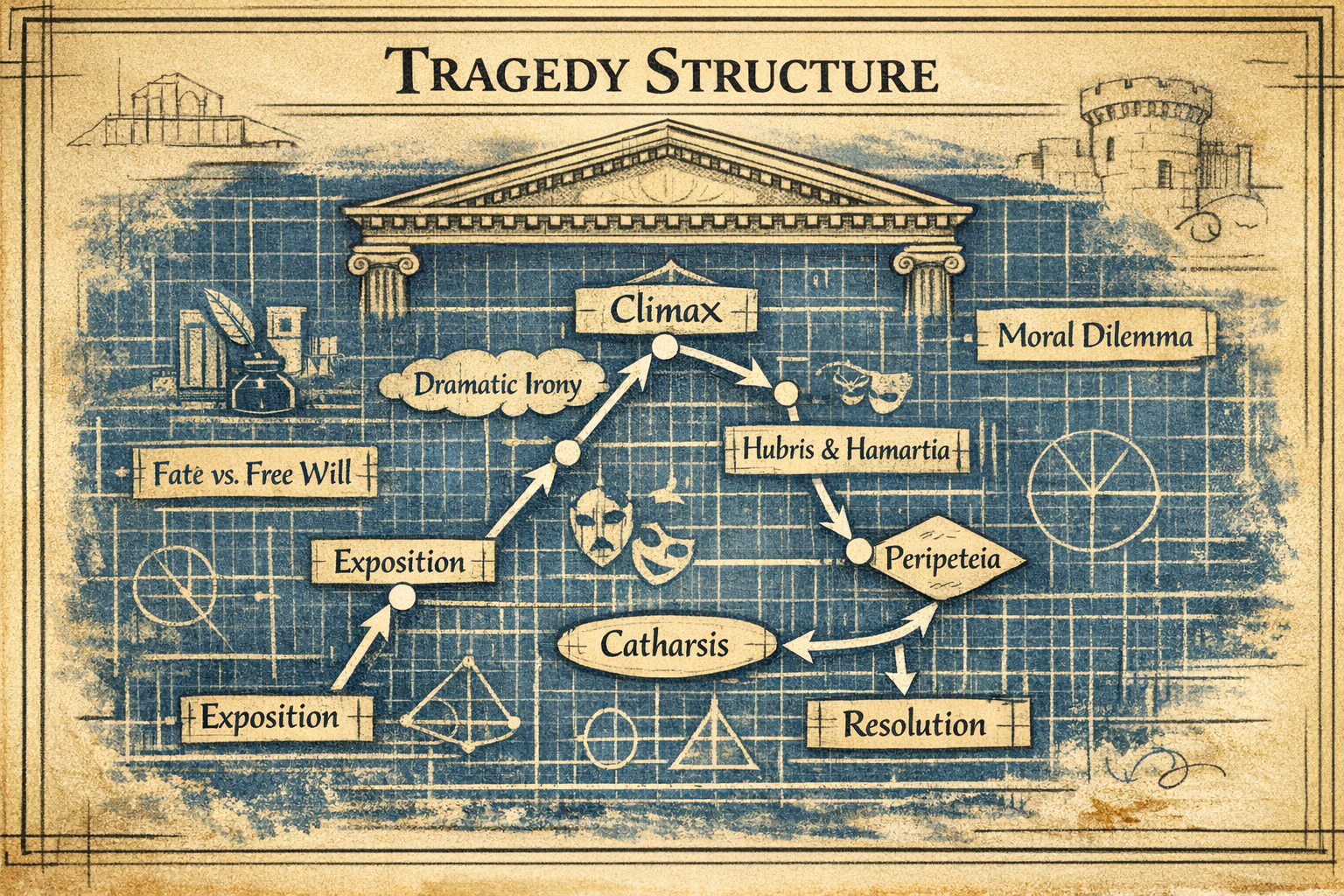
The key disciplinary knowledge that forms the basis of the two fields of English, as defined by Anderson and Krathwohl in their Taxonomy of Cognition.
- Factual knowledge
- Conceptual knowledge
- Procedural knowledge
- Metacognitive knowledge
AI Learning Assistant
We are developing the use of an AI facilitator, a voice that can support a learner through the knowledge base. The AI assistant is trained on the content of the webpage and knows what the student is learning. It is of course enhance by its large language model, and so can answer questions on the learning that fall outside of the webpage. Because the learning pages are ‘book-agnostic’ – they are not built assuming a particular text – the learner should tell the AI assistant what book is being studied. The assistant can then help the student to understand how the text in hand can be better understood through the learning objectives being studied. This means that any student can bring any text or book to the lesson, and the assistant will help to connect the learning.
Discipline of English is a UK based website intending to support the teaching and learning of English Literature and English Language. It is built by a teacher of English with 20+ years of career experience, teaching to AQA, OCR, Pearson and Eduqas examining bodies. The admin has experience as a Head Of Department, has held the TLR post of Language For Learning and undertaken a range of roles.
Discipline of English is a home for English teaching and learning. It presents core disciplinary knowledge to help support home learners, parents or tutors in establishing the content to be delivered for Secondary English education. The content is structured in a standard lesson structure, and students following these lessons can be assured an experience similar to the classroom. Importantly, the learning focuses on the substantive, methodological or disciplinary learning that is often missing from English lessons.
Regular, detailed essay on academic topics and pedagogical thoughts give opportunity for reflection and development.
Not all students learn in the classroom, nor at the same speed. By presenting the learning online, Discipline Of English creates an asynchronous / hybrid learning experience to be facilitated by tutors, parents or carers away from the classroom, but also by teachers inside the classroom.
There are many excellent websites for English, but many of them are limited to building knowledge of the material text. Pedagogy tells us that learning limited to only the material within a discipline cannot be truly analytical, no matter the degree of sophistication of the knowledge. True analysis requires disciplinary facts, concepts, theories and procedures to ‘tap into’ the material text – this disciplinary knowledge is transferable between texts and can be taught independently of texts. This website is focused on the delivery of the disciplinary learning, which the student needs to apply to their text of student.
The structural problem:
This problem is also evident in school curriculum too, where the reading of the text is prioritised ahead of learning the disciplinary method. Typical strategies of this text-focused study is the recall of characterisation and plot, the accurate recall of quotations and reading to reach the end of long novels. When this is done at Key Stage Three, students gain a deeper knowledge of texts but next to no disciplinary knowledge. This means with three years of study, students begin Key Stage Four with no real transferable knowledge for recall with their final texts.
When students reach Key Stage Four with almost no disciplinary knowledge in long term memory, they are placed in the very difficult cognitive position of having to learn very sophisticated texts and the disciplinary knowledge. This places too much cognitive load on the student. They are learning too much. Departments fall back on the reading of whole texts and the recall of textual detail.
Students at Key Stage Four are then placed into the difficult position of having to analyse texts with none of the disciplinary knowledge to do so, and then significantly under perform. This lack of analytical skill and poor attainment becomes a marker of deficiency that identifies students as unable to analyse, and so needing to spend more time reading texts.
The issue is a curricular one; students cannot learn both the disciplinary knowledge and material knowledge at the same time because both require a high degree of cognition and working memory. But, when disciplinary knowledge is already known, and is being retrieved from long term memory, it places almost no cognitive load on the learner. This is why it is so much more important to prioritise the disciplinary knowledge at Key Stage 3, and material knowledge in Key Stage 4 – KS4 students can recall the methodologies at no cost to working memory, whilst studying the text.
Facilitation versus Deficiency practitioners
People involved in education, those aiming to increase the knowledge and skills of others, can be grouped together into the paradigm of ‘practitioners’. There are many roles and types; the teacher (who delivers material), the facilitator (who helps to access material), the student mentor (often an A Level student), a classroom Teaching Assistant, the peer-to-peer co worker. The distinction is important. When a practitioner identifies themselves as a teacher, they tend to be an authority in the classroom. A teacher withholds learning material and distributes it to students at a pace decided by the teacher. The teacher is the one who must be approached by the student. The teacher imparts their authoritative knowledge downwards upon the student who should respect the teacher’s experience and qualification. The student is dependent on the teacher.
A facilitator however is a field expert who removes themselves from the position of authority, and helps the student to access what they need to make progress. The facilitator makes adjustments to the material so that it can be accessed without the need of an authority. Rather than answer questions put to them by the student, the facilitator changes the resources so that the answer is discoverable. The end of a facilitator’s journey concludes with the perfect learning material, through which the student can be entirely independent.
One of the great benefits of the facilitator is that they are removed from ‘presenting’ and are able to spend more time understanding the needs of the student. A facilitator sits alongside a student on a one-to-one basis, watches how they access the material, observing the limitations of the material. whilst in contact with student, the facilitator comes to know the personhood of the student and can listen to their emotional needs, as well as observe their learning needs. This human connection is incredibly important to the learner.
A teacher who is locked into clicking through a powerpoint can do neither of the activities of the facilitator; they are ‘teaching’ a class, controlling behaviours so that the disengagement of the few doesn’t halt the progress of the many, they are physically distant from the individuals which impacts emotional closeness.
Powerpoint is not a teaching and learning tool:
Many English departments create their own Powerpoints, and use them as the class textbook. The Powerpoint for one lesson can contain as many as 30 slides (though the upper limit is over 2 billion). Students hate sitting, head up, looking at a distant screen for 30 slides of information. They hate copying from slides. They hate having to read these slides. Some students will go faster than the rate of presentation, some will go slower. A Powerpoint cannot accommodate the needs of 30 different learners simultaneously.
But neither do teachers maintain some carefully encoded structure across their powerpoints. Titles are presented in different places, colours attributed to different information change constantly, the actual pedagogy of information changes from lesson to lesson. Students are placed into the difficult position of trying to decode some strange, ever changing, never stable structure of delivery. The difficulty of the resource adds to the total cognitive load – students are trying to work our what the slide is doing, as well as create new knowledge.
And as students become more detached from the Powerpoint, the more disruptions occur, the more their behaviour is seen as deficient from the accepted model of ‘attending carefully to the teaching’. The alternative view of behaviour however is that disruption is a reaction to the curriculum itself. Disruptive students lack the resilience to ‘overcome’ uneconomical teaching devices, and resilient students make progress despite uneconomical devices. Disruption is seen not as a consequence of bad resources, but as a dishonourable character trait.
Ultimately, Power Points do not meet the needs of learners well, and although teachers know well the phrase ‘death by Power Point’, few have established alternative teaching and learning devices.
A facilitative curriculum:
Discipline Of English attempts to provide a free and fully provisioned curriculum that actions the above philosophies. A curriculum map is described, module delivery outlined, and lessons provisioned. The use of a website as a container for knowledge means students can access any learning objective independently whilst a facilitator helps them to navigate the resources. The resources are text-agnostic and designed to be applied to any text. Whilst a department could theoretically employ this as their own curriculum, it works best when students are raised in a facilitative culture (which most schools do not), and with groups smaller than the typical 30 odd in secondary. The curriculum requires a text to synthesise with the disciplinary learning. There are some models from common secondary texts containing passages that be used in synthesis with the disciplinary learning.
Comments are opened on each page to allow for discussion, and the best questions would be as to which passages and texts best fit with the learning objective. But, AI makes an excellent companion here – giving AI the learning objective, key vocabulary and core knowledge will usually allow it to locate suitable passages.