
Learning Objectives
Teacher Framing:
This lesson develops noun phrases as expanded naming units. Lesson 131 introduced nouns as individual naming words; Lesson 141 introduced phrases as word groups working together. Lesson 142 combines those ideas by showing that a noun phrase is built around a head noun or pronoun and may include determiners, adjectives, prepositional phrases and other modifiers. Noun phrases matter because they package people, places, objects and ideas for the reader. A simple noun phrase may identify a thing, while an expanded noun phrase can specify, evaluate, describe, locate or restrict that thing. Students should understand pre-modification and post-modification in accessible terms: information before the noun and information after the noun. This lesson should remain phrase-focused and avoid becoming a full clause or sentence lesson.
Student Learning Objectives:
By the end of this lesson, students should be able to:
- identify noun phrases;
- locate the head noun or pronoun;
- and explain how expansion before or after the noun changes what the reader understands.
Core Knowledge:
A noun phrase is a group of words built around a noun or pronoun. The head noun is the main word in the phrase. Other words can come before the noun, such as determiners and adjectives, or after the noun, such as prepositional phrases. “The house,” “the silent house,” and “the silent house at the edge of the field” are all noun phrases.
Each expansion makes the noun more specific.
Key Ingredients:
Key Vocabulary:
- Noun phrase: a phrase built around a noun or pronoun.
- Head noun: the main noun in a noun phrase.
- Modifier: a word or phrase that adds information to another word.
- Pre-modification: information added before the head noun.
- Post-modification: information added after the head noun.
- Expanded noun phrase: a noun phrase made more detailed by modifiers.
Key Sentence Stems:
- The noun phrase is…
- The head noun is…
- The words before the noun add…
- The words after the noun add…
- The noun phrase packages the idea of…
- The expanded noun phrase affects meaning because…
Key Thinking:
A noun phrase is not just a noun. In “the old bicycle outside the shed,” the noun is “bicycle,” but the noun phrase is the full group of words. The added words tell us which bicycle, what it is like and where it is.
Models
Non Literary Warm Up:
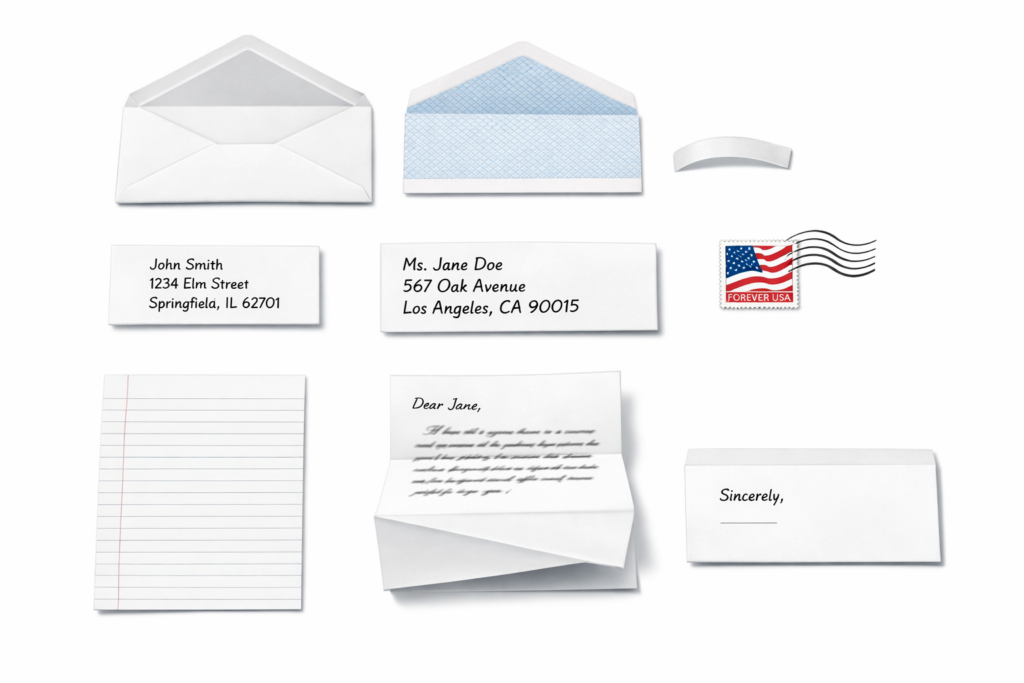
Think about receiving a letter – the letter itself requires an envelope, an address and a postage stamp for it to reach you. Noun phrases are the same, and the noun itself often requires other words around it to actually do anything. Maybe the thing you write is the ‘head word’ and the existence of everything else relies upon those words.
Literary example – :

[The cracked mirror on the wall] reflected [a pale strip of morning light].
The noun phrase “The cracked mirror on the wall” gives the reader a precise object to imagine. The head noun is “mirror,” but the adjective “cracked” makes it seem damaged, while “on the wall” locates it. The noun phrase “a pale strip of morning light” also packages the light as thin and weak. These noun phrases make the setting feel fragile and quiet.

[The narrow lane behind the old cinema] was filled with [puddles of oily water]. [A row of shuttered shops] leaned towards [the pavement], [their faded signs hanging above doorways blocked by metal grilles]. At [the far end], [a single yellow bulb above the taxi office] flickered against [the rain]. [The boy with the torn schoolbag] stopped beside [the bins] and checked [the folded note in his pocket].
The writer uses expanded noun phrases to build a detailed and uneasy setting. “The narrow lane behind the old cinema” gives the reader a precise location and makes the space feel confined. The noun phrase “puddles of oily water” adds an unpleasant physical detail, while “A row of shuttered shops” suggests closure and neglect. The phrase “the boy with the torn schoolbag” identifies the character through a detail that may suggest hardship. Finally, “the folded note in his pocket” draws attention to a specific object and makes it seem important. These noun phrases package the setting and character so that the reader notices decay, isolation and possible vulnerability.
Now Apply To This To Our Text:
Students should now read the material chosen by the teacher and complete the following sequence:
- underline five noun phrases;
- identify the head noun in each;
- mark any words before the head noun and any words after it;
- choose two noun phrases that shape meaning strongly;
- write one analytical paragraph explaining how noun phrases package people, places, objects or ideas for the reader.
Exit Question:
Consider the header image; what would you consider to be the metaphorical ‘headword’ in this image? What is the single part that cannot be removed, which validates all other components?
Homework:
Choose a short paragraph and copy out five noun phrases. Identify the head noun in each. Then expand two simple noun phrases by adding information before or after the noun and explain how your expansion changes meaning.