
Learning Objectives
Teacher Framing:
This lesson develops students’ knowledge of phrases that add circumstance, especially place, time, direction, manner and degree. Lesson 136 introduced prepositions and conjunctions as relational words; Lesson 144 now shows how prepositions can begin prepositional phrases, and how groups of words can work adverbially by modifying an action, adjective or whole clause. A prepositional phrase usually begins with a preposition and includes its object, such as “under the bench” or “after the meeting.” An adverbial phrase works like an adverb, adding information about how, when, where, how often or to what extent something happens. Some prepositional phrases can function adverbially, but the lesson should remain accessible: students should ask what relationship or circumstance the phrase adds. This prepares them for clause work without becoming sentence classification.
Student Learning Objectives:
By the end of this lesson, students should be able to:
- identify prepositional phrases;
- identify phrases working adverbially;
- and explain how these phrases position actions, people or ideas in space, time or circumstance.
Core Knowledge:
A prepositional phrase begins with a preposition and adds a relationship, often of place, time or direction. Examples include “under the bench,” “after the meeting” and “towards the river.” An adverbial phrase is a group of words that works like an adverb. It can tell us how, when, where or to what extent something happens. These phrases matter because they position actions and ideas more precisely.
Key Ingredients:
Key Vocabulary:
- Prepositional phrase: a phrase beginning with a preposition and including its object.
- Object of the preposition: the noun, pronoun or noun phrase that follows the preposition.
- Adverbial phrase: a phrase that works like an adverb by adding circumstance.
- Circumstance: information about how, when, where, why or to what extent something happens.
- Phrase of place: a phrase that shows location.
- Phrase of time: a phrase that shows when something happens.
- Phrase of manner: a phrase that shows how something happens.
Key Sentence Stems:
- The prepositional phrase is…
- The phrase begins with the preposition…
- The object of the preposition is…
- This phrase adds place/time/direction/manner…
- The phrase works adverbially because…
- This phrase affects meaning by positioning…
Key Thinking:
A preposition is one word, but a prepositional phrase is the whole group. In “under the old wooden bench,” the preposition is “under,” but the prepositional phrase is “under the old wooden bench.” Strong analysis explains the relationship created by the whole phrase.
Models
Non Literary Warm Up:
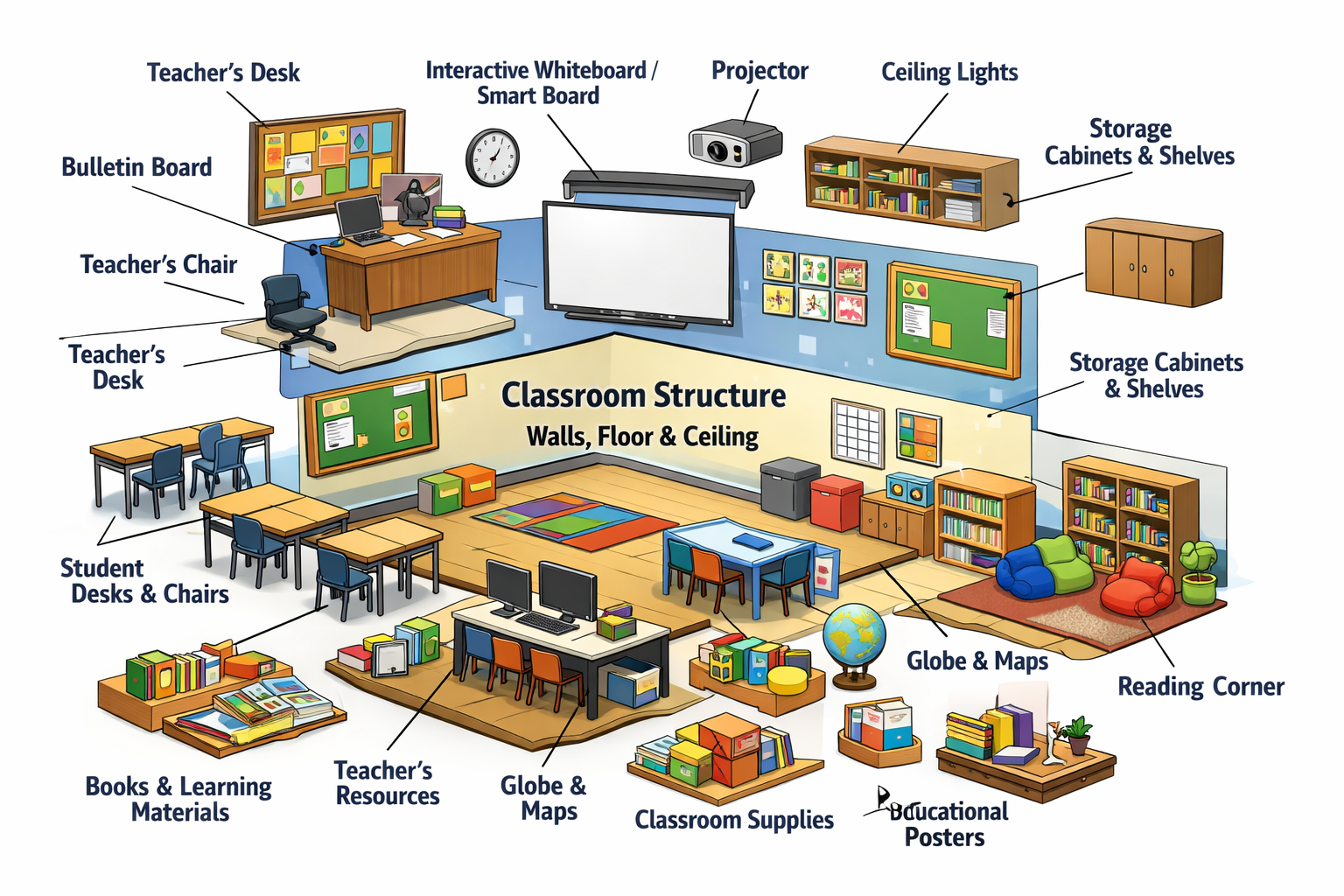
Imagine going to a lesson, the lesson isn’t some single thing. It needs a teacher, some learning objectives, some goals and activities to complete, and then some way of remembering it and recalling in future. Unless all of these things are there, the learning can’t happen. Phrases are the same, single words rarely work alone and produce work by being coordinated with multiple things.
Prepositions often require groups of words to actually do the job of telling us where or when.
Literary example – :

[After the bell], the pupils walked [through the corridor] [in complete silence].
The writer uses prepositional and adverbial phrases to control the circumstances of the action. “After the bell” places the movement in time, while “through the corridor” shows where the pupils move. The phrase “in complete silence” works adverbially because it explains how they walk. Together, the phrases make the movement seem organised, tense or unusually controlled.

[Before sunrise], the volunteers gathered [beside the river] with torches in their hands. [Along the bank], plastic bottles and torn bags lay [between the reeds]. The team worked [in small groups], lifting rubbish [from the mud] with careful movements. [By mid-morning], the path near the bridge was clear [for the first time in months].
The writer uses prepositional and adverbial phrases to organise the clean-up in time and space. “Before sunrise” suggests that the volunteers begin early, while “beside the river” places them in the setting. The phrases “Along the bank” and “between the reeds” show exactly where the rubbish has collected, making the problem visible. The phrase “with careful movements” works adverbially because it explains how the team lifts rubbish from the mud. Finally, “By mid-morning” shows progress across time. The use of prepositions in this text remind us that the location of the litter is significant because it shouldn’t be in the places we are finding it – the place of the litter is as important to the meaning as the litter itself.
Now Apply To This To Our Text:
Students should now read the material chosen by the teacher and complete the following sequence:
- underline five prepositional or adverbial phrases;
- identify the preposition or head word where possible;
- label whether the phrase adds place, time, direction, manner or degree;
- choose two phrases that strongly position the reader;
- write one analytical paragraph explaining how these phrases add circumstance and precision to the material.
Exit Question:
Look back at the header image – what preposition phrases might be used to talk through the directions on a map?
Homework:
Choose a short paragraph and copy out five prepositional or adverbial phrases. Label what each phrase adds: place, time, direction, manner or degree. Then remove two phrases and explain how the meaning becomes less precise.