
Learning Objectives
Teacher Framing:
This lesson introduces clauses as groups of words containing a subject and finite verb. Previous lessons in Unit 14X focused on phrases, which work as units but do not contain their own complete subject and finite verb structure. Lesson 145 now teaches clause hierarchy: main clauses and subordinate clauses. A main clause can stand alone as a complete grammatical unit, while a subordinate clause depends on another clause for completion. This is not yet a full sentence classification lesson; instead, students are learning the building blocks that later create simple, compound and complex sentences. In analysis, main and subordinate clauses matter because writers can make some information central and other information dependent, delayed, backgrounded or conditional.
Student Learning Objectives:
By the end of this lesson, students should be able to:
- identify clauses by finding a subject and finite verb;
- distinguish main clauses from subordinate clauses;
- and explain how clause hierarchy makes some information central and other information dependent.
Core Knowledge:
A clause is a group of words that contains a subject (the who / what that is doing)and a finite verb (carries the dominant tense of the text):
The cat (subject) sprinted (finite verb).
A main clause can stand alone and make sense as a complete unit. A subordinate clause cannot stand alone in the same way; it depends on another clause. For example, “The gate opened” is a main clause. “Because the wind pushed it” is a subordinate clause. Together, they show a complete relationship: “The gate opened because the wind pushed it.”
What makes a clause different from a phrase is that a clause has a verb; “opened / pushed”. These verbs have a tense and suit the subject.
Key Ingredients:
Key Vocabulary:
- Clause: a group of words containing a subject and finite verb.
- Subject: the person, place, thing or idea that the clause is about.
- Finite verb: a verb that shows tense and agrees with a subject.
- Main clause: a clause that can stand alone as a complete grammatical unit.
- Subordinate clause: a clause that is introduced with a subordinate connective.
- Dependency: the relationship in which one clause relies on another.
- Subordination: making one clause dependent on another clause.
Key Sentence Stems:
- The clause is…
- The subject of the clause is…
- The finite verb is…
- This is a main clause because…
- This is a subordinate clause because…
- The subordinate clause adds…
- The clause hierarchy affects meaning because…
Key Thinking:
A subordinate clause may contain a subject and verb, but still may not stand alone clearly. “Although the rain stopped” has a subject, “rain,” and a finite verb, “stopped,” but it leaves the reader expecting more. A main clause completes the central idea.
Models
Non Literary Warm Up:

Main and subordinate clauses are like stairwells with lifts. They both carry subjects through the story (storey? Get it??). The stairs are the most important one that cannot be removed, but along with the stairs is another method of conveying subjects to places – they do basically the same thing, but the lift could be removed without harm. Main and subordinate clauses both contain a subject.
Literary example – :
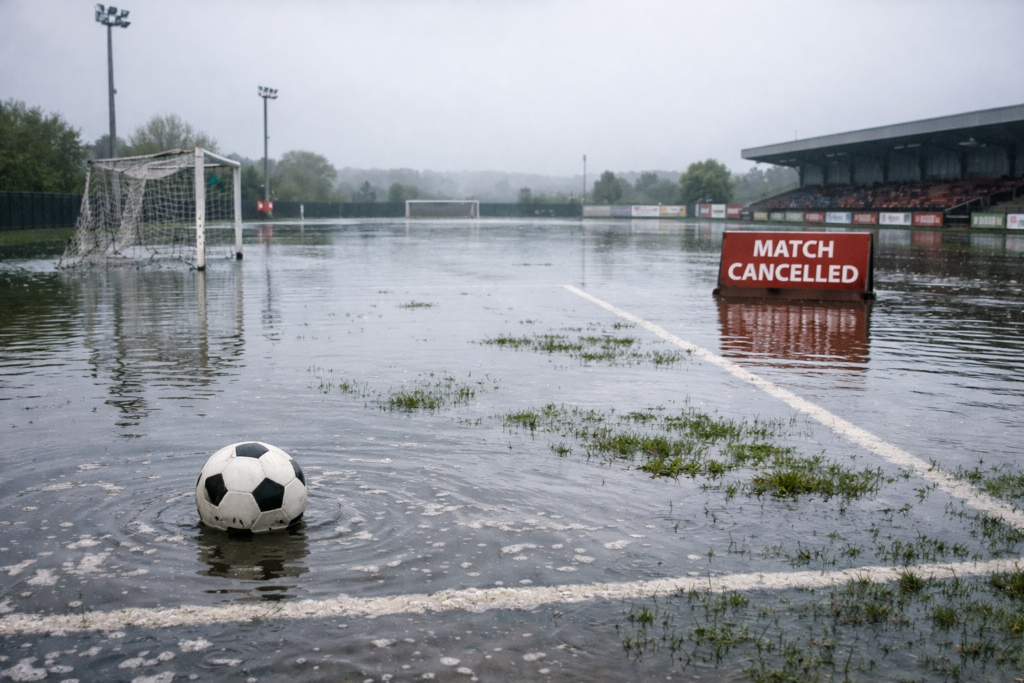
The match was cancelled because the pitch was flooded
The sentence contains a main clause and a subordinate clause. “The match was cancelled” is the main clause because it can stand alone as a complete idea. The subordinate clause “because the pitch was flooded” explains the reason for the cancellation. The clause hierarchy makes the cancellation central and the flooding dependent as its cause.
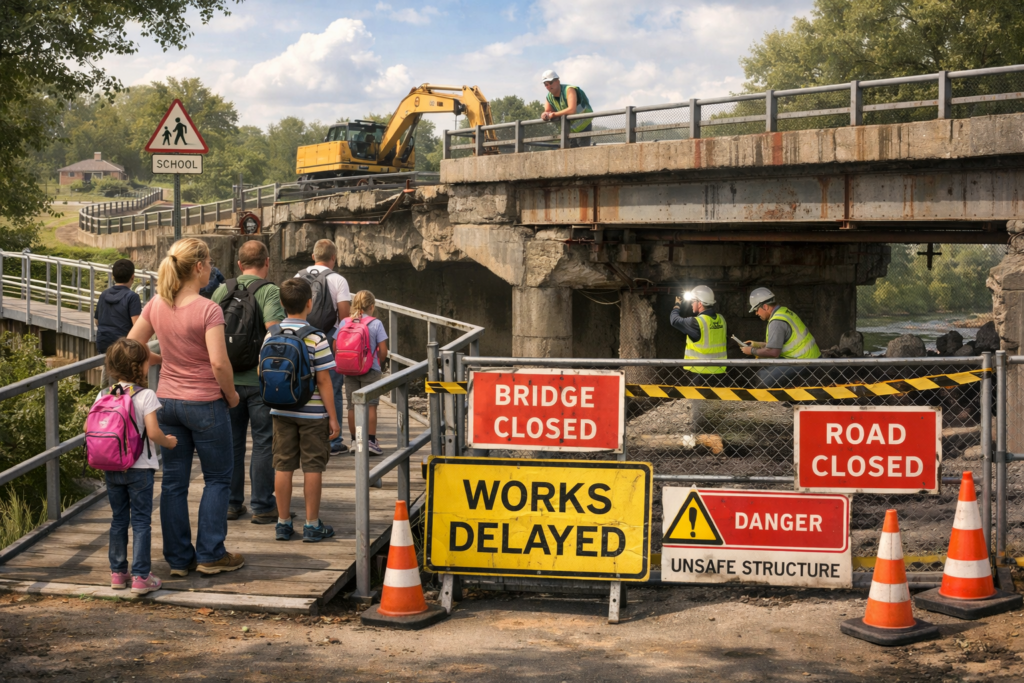
The writer uses main and subordinate clauses to organise central and dependent information. The opening subordinate clause, “Although the council had promised repairs in spring,” creates a contrast before the main clause reveals that “the bridge remained closed.” This makes the council’s promise seem ineffective. Later, “Because the route was used by children walking to school” gives the reason for the parents’ argument, so the danger becomes the basis of their complaint. The final main clauses, “The council apologised” and “it did not give a new date,” make the official response clear and blunt. Clause hierarchy therefore helps the writer foreground delay, danger and weak accountability.
Now Apply To This To Our Text:
Students should now read the material chosen by the teacher and complete the following sequence:
- identify three clauses by finding subjects and finite verbs;
- label each clause as main or subordinate;
- identify what each subordinate clause adds, such as reason, contrast, time or condition;
- choose one sentence where clause hierarchy affects meaning;
- write one analytical paragraph explaining how main and subordinate clauses organise central and dependent information – use the type of clause to make a good analysis of how language is working to build ideas.
Exit Question:
Look again at the header image, and think about how clauses have subjects and verbs (the verb is like the motion that is experienced by the subjects). How is a train a metaphor for this idea of clauses?
Homework:
Choose a short paragraph and copy out three sentences containing more than one clause. Label the main and subordinate clauses. Then rewrite one sentence so that the subordinate information becomes central, and explain how the emphasis changes.