Learning Objectives
Teacher Framing:
This lesson introduces simple sentences as sentences made from one main clause. Students often assume that “simple” means short, easy or childish, but grammatically a simple sentence can be long and detailed if it contains only one main clause. It may include expanded noun phrases, prepositional phrases, adverbial phrases or compound subjects, but it remains simple if there is only one main clause. In English Language analysis, simple sentences matter because they can create clarity, force, focus, speed, certainty, bluntness or emotional directness. This lesson should build on Unit 14X by helping students identify the number of main clauses rather than judging a sentence by length.
Student Learning Objectives:
By the end of this lesson, students should be able to:
- identify a simple sentence as one main clause;
- explain why simple does not always mean short;
- and analyse how simple sentences can create focus, clarity or force.
Core Knowledge:
A simple sentence contains one main clause. It may be short, such as “The gate opened.” It may also be longer, such as “The old gate beside the field opened slowly in the wind.” Both are simple sentences because each contains one main clause. Simple sentences can be powerful because they give the reader one complete idea without adding another clause.
Key Ingredients:
Key Vocabulary:
- Simple sentence: a sentence containing one main clause.
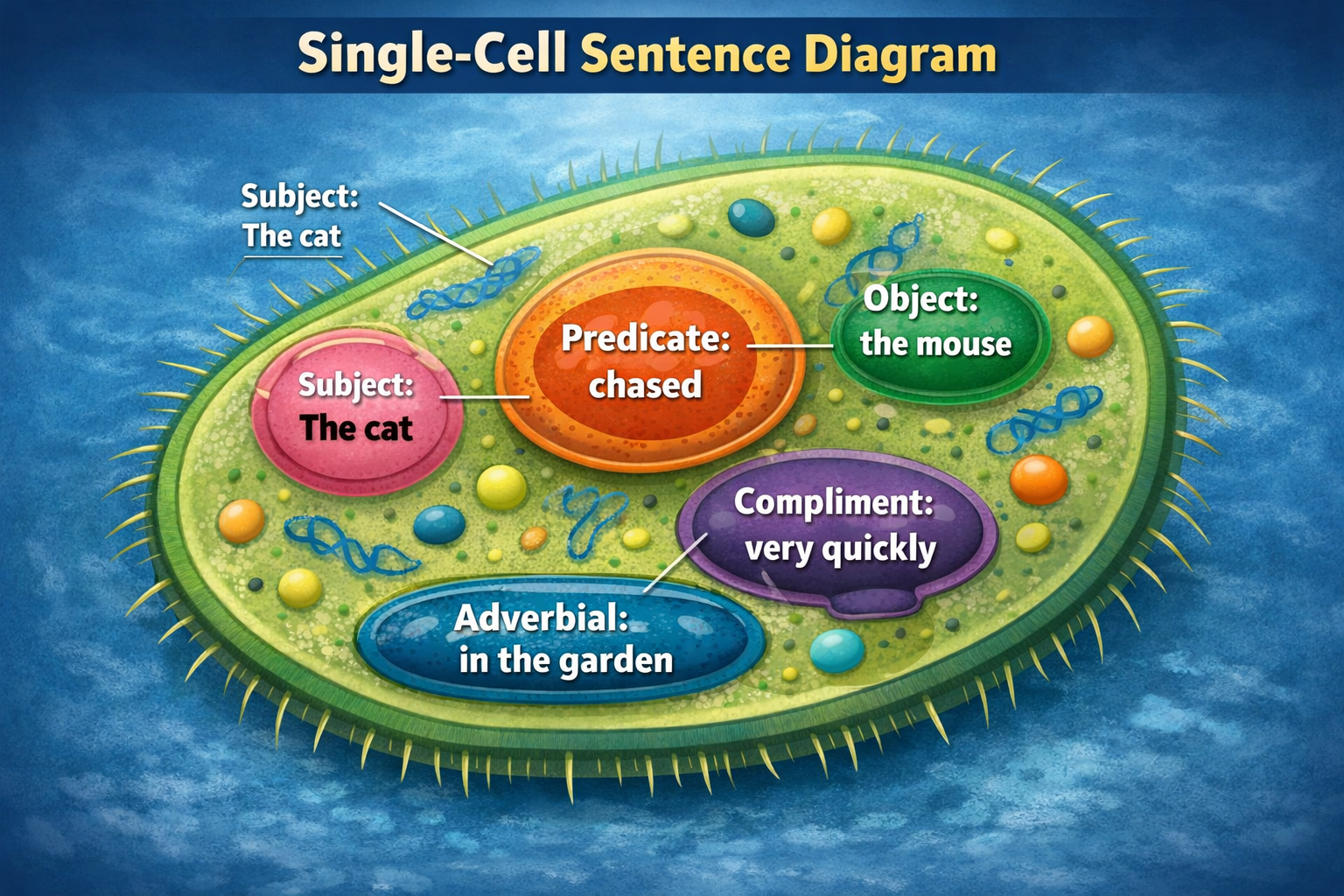
- Subject: The person of thing that is engaged in the ‘doing’
- Predicate / finite verb: The verb of the ‘doing’, which must have a tense (past / present / future) and agree with the subject (singular / plural)
- The player (s) kicked (pr)
- Direct Object: the thing receiving the action – think of the object as the what
- The player (s) kicked (pr) the ball (DrO)
- Indirect Object: Something connected to the action
- The player (s) kicked (pr) the ball (DrO) to the keeper (InO)
- Compliment: Adds detail about the subject – think of the compliment as adding who
- The player (s) is (Pr) the midfielder (C)
- Adverbial: Adds detail about the verb – think of the adverbial as adding where, when, why, how
- The player (S) kicked (Pr) the ball (DrO) powerfully (Adv)
Key Sentence Stems:
- This is a simple sentence because…
- The one main clause is…
- Although the sentence is long, it is simple because…
- The simple sentence focuses attention on…
- The sentence creates force by…
- The writer uses a simple sentence here to…
Key Thinking:
A simple sentence is not always short. “The terrified child at the back of the crowded bus gripped the seat in front of her” is a simple sentence because it has one main clause. It is detailed, but not compound or complex.
Models
Non Literary Warm Up:

Imagine a spotlight on a stage. If it shines on one performer, the audience focuses on that performer. A simple sentence works like a spotlight because it gives the reader one central grammatical unit to focus on, highlighting one concept.
Literary example – :
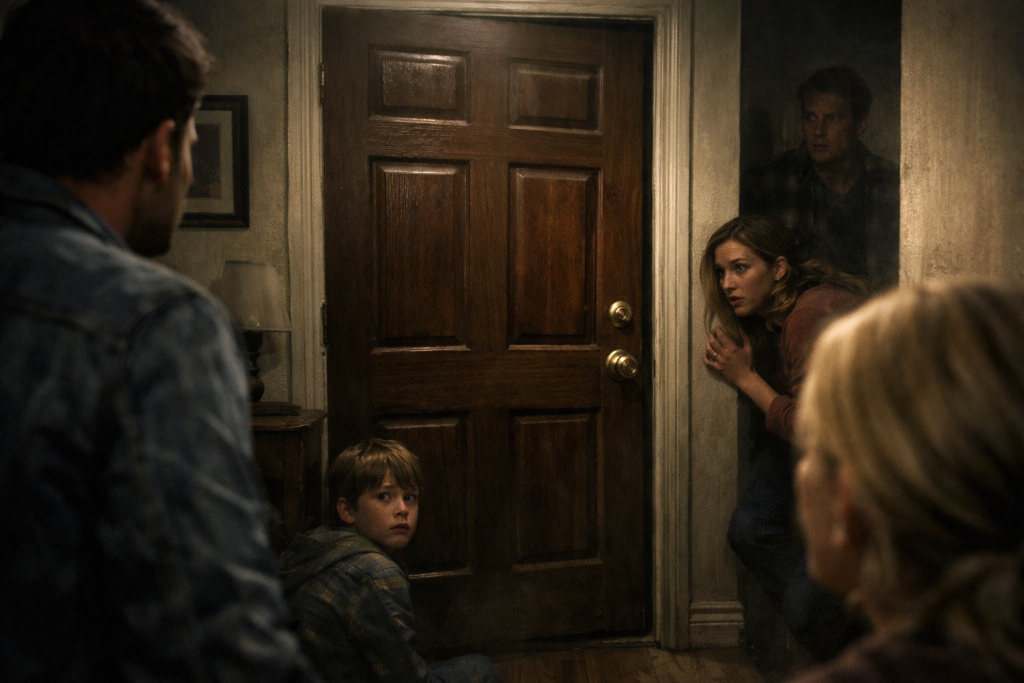
The door slammed. Everyone froze.
Each sentence contains one main clause. “The door slammed” focuses attention on the subject ‘door’ and it’s predicate ‘slammed’, and no other details distract us from this significant moment, because like the people in the scene, the audience is focused on this action. The simple sentence “Everyone froze” focuses attention on the predicate of the subjects and ‘froze’ highlights their stunned reactions, without any other distracting details.

The narrow boat at the edge of the harbour rocked gently against the wooden post. Rain gathered in the folds of the blue tarpaulin. A gull landed on the roof and watched the empty pier. The harbour master locked the office door. The storm was coming.
The writer uses simple sentences to build a controlled sequence of details. “The narrow boat at the edge of the harbour rocked gently” is still simple because it contains one main clause, even though phrases add detail. We learn the subject is a narrow boat, this is given an adverbial where ‘at the edge of the harbour’, it’s predicate ‘rocked’ is complimented with ‘gently’ and the object which receives the action is ‘the wooden post’. This close inspection of the boat gives is significant detail without adding clauses or new sentences. The following simple sentences isolate rain, the gull and the harbour master’s action. The final sentence, “The storm was coming,” is especially focused because it is limited to only the subject and predicate. The simple sentence structure makes the scene feel clear, steady and increasingly ominous.
Now Apply To This To Our Text:
Students should now read the material chosen by the teacher and complete the following sequence:
- identify three simple sentences;
- underline the one main clause in each;
- check whether any added detail is phrase expansion rather than another clause;
- choose one simple sentence that creates a strong effect;
- write one analytical paragraph explaining how a simple sentence creates focus, clarity, pace or force.
Exit Question:
Could a simple sentence actually be longer than a complex sentence? Is a simple sentence limited by detail, more so than a complex sentence?
Homework:
Choose a paragraph from a story, article or advert. Find three simple sentences. Explain how you know each contains one main clause. Then rewrite one sentence by adding phrase expansion while keeping it simple, and explain how the meaning changes.