
Learning Objectives
Teacher Framing:
This lesson introduces compound-complex sentences as sentences that combine coordination and subordination. Students should understand that a compound-complex sentence contains at least two main clauses and at least one subordinate clause. This sentence classification is useful because it shows how writers can layer multiple relationships inside one sentence: equal clauses may be connected while dependent clauses add cause, time, contrast or condition. The lesson should remain practical and analytical, not an exercise in over-labelling. Students should use the classification to explain how a sentence builds layered meaning, shifts focus, balances actions or compresses several relationships into one grammatical unit.
Student Learning Objectives:
By the end of this lesson, students should be able to:
- identify compound-complex sentences;
- distinguish coordination from subordination inside the same sentence;
- and analyse how compound-complex sentences create layered or developed relationships between ideas.
Core Knowledge:
A compound-complex sentence contains at least two main clauses and at least one subordinate clause. It is compound because it has more than one main clause. It is complex because it also contains subordinate information. For example: “Although the rain had stopped, the pitch was flooded, and the match was cancelled.” There are two main clauses and one subordinate clause.
Key Ingredients:
Key Vocabulary:
- Compound-complex sentence: a sentence containing at least two main clauses and at least one subordinate clause.
- Coordination: linking clauses of equal grammatical status.
- Subordination: making one clause dependent on another.
- Layered meaning: meaning created by combining several relationships in one sentence.
- Multiple main clauses: two or more clauses that could each stand alone.
- Dependent information: information carried by a subordinate clause.
Key Sentence Stems:
- This is compound-complex because…
- The main clauses are…
- The subordinate clause is…
- The coordination links…
- The subordination adds…
- The sentence layers meaning by…
- This affects the reader because…
Key Thinking:
A compound-complex sentence must contain both coordination and subordination. A compound sentence has two or more main clauses but no subordinate clause. A complex sentence has a main clause and subordinate clause but not two coordinated main clauses. Compound-complex has both.
Models
Non Literary Warm Up:

This sentence becomes a complex mathematical equation, of main clauses adding (and) or subtracting (but) ideas from each other, along with complex ideas that multiple (because) or divide (despite).
Literary example – :
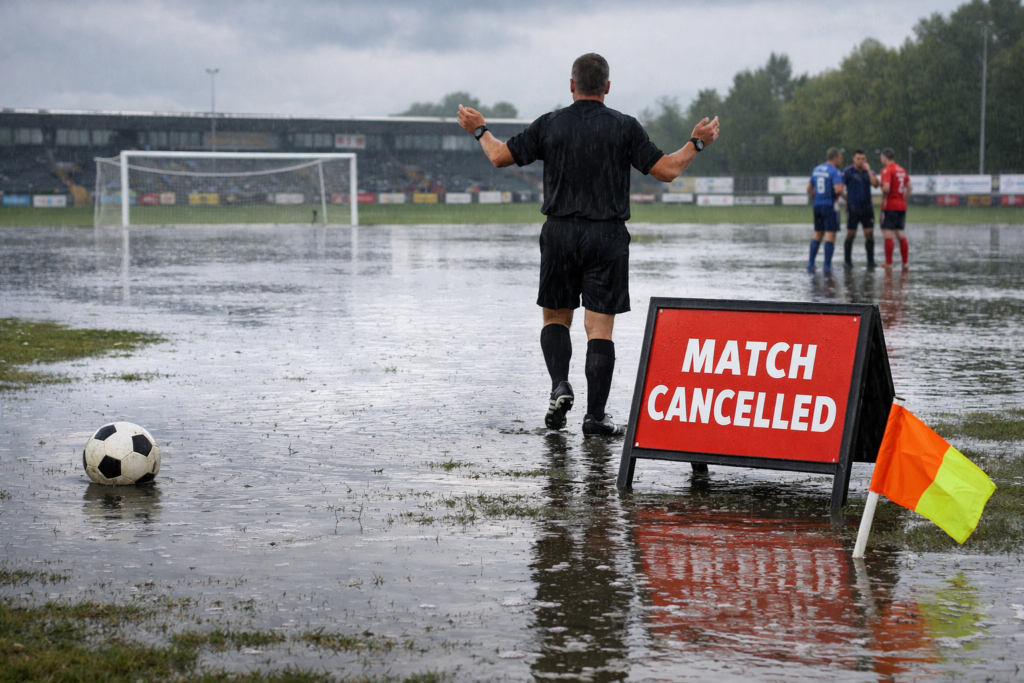
Although the rain had stopped (subordinate clause showing contrast), the pitch was flooded (main clause), and (coordinating conjunction linking two main clauses) the referee cancelled the match (main clause).
This is a compound-complex sentence because it contains a subordinate clause and two main clauses. “Although the rain had stopped” adds contrast, while “the pitch was flooded” and “the referee cancelled the match” are coordinated main clauses. The sentence layers meaning by showing that the rain ending does not solve the problem, and that the flooded pitch leads directly to cancellation.

Although the museum had advertised the exhibition for months (subordinate clause of contrast), the main gallery remained half empty (main clause), and (coordinating conjunction linking equal main clauses) the volunteers began moving the display boards closer together (main clause showing an attempt to hide the emptiness) before the mayor arrived (subordinate time clause). When the first school group entered (subordinate time clause), the curator smiled at the cameras (main clause), but (coordinating conjunction showing contrast) her assistant quietly counted the unused name badges on the desk (main clause showing private disappointment). The event was supposed to show public enthusiasm (main clause), yet (coordinating conjunction creating contrast) the silence between the speeches made the room feel larger than it was (main clause showing the disappointing reality).
The writer uses compound-complex sentences to layer public appearance and private disappointment. In the first sentence, “Although the museum had advertised the exhibition for months” creates contrast before the main clause reveals that “the main gallery remained half empty.” The second main clause, “the volunteers began moving the display boards closer together,” shows an attempt to hide the emptiness. In the next sentence, the subordinate clause “When the first school group entered” sets the public moment, while the coordinated clauses contrast the curator smiling with the assistant counting unused badges. These compound-complex structures allow the writer to combine timing, contrast and simultaneous action, making the event feel carefully managed but unsuccessful.
Now Apply To This To Our Text:
Students should now read the material chosen by the teacher and complete the following sequence:
- find any sentence with more than one main clause and at least one subordinate clause;
- underline the main clauses;
- bracket the subordinate clause;
- identify the coordinating conjunction or coordination;
- write one analytical paragraph explaining how the sentence layers relationships between ideas.
Exit Question:
Can you come up with a sentence that reflects the mathematical operators of the header image?
Homework:
Choose a short paragraph and find one compound-complex sentence if possible. If there is not one, combine two related sentences and one subordinate clause to create your own. Label the main clauses and subordinate clause, then explain how the sentence layers meaning.