
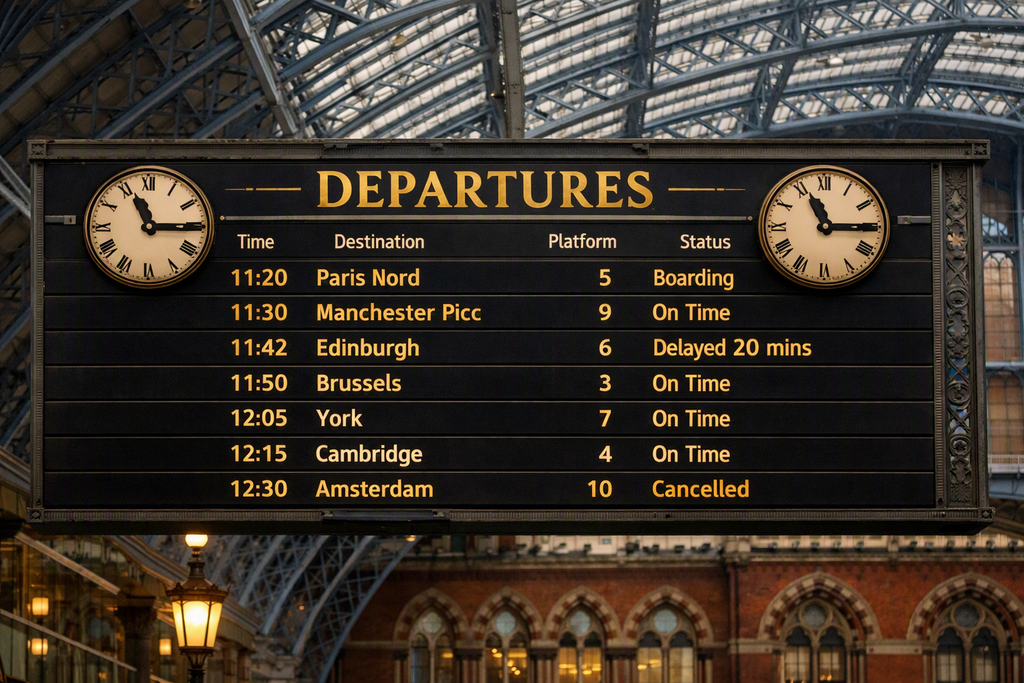
Imagine a train departure board. Its form is the physical board, not print based or web based. It functions as a transmitter of practical knowledge: destinations, times, platforms and delays. It does not need to entertain the reader. Its value comes from clear organisation and quick access to information. It isn’t boring, it is functional.
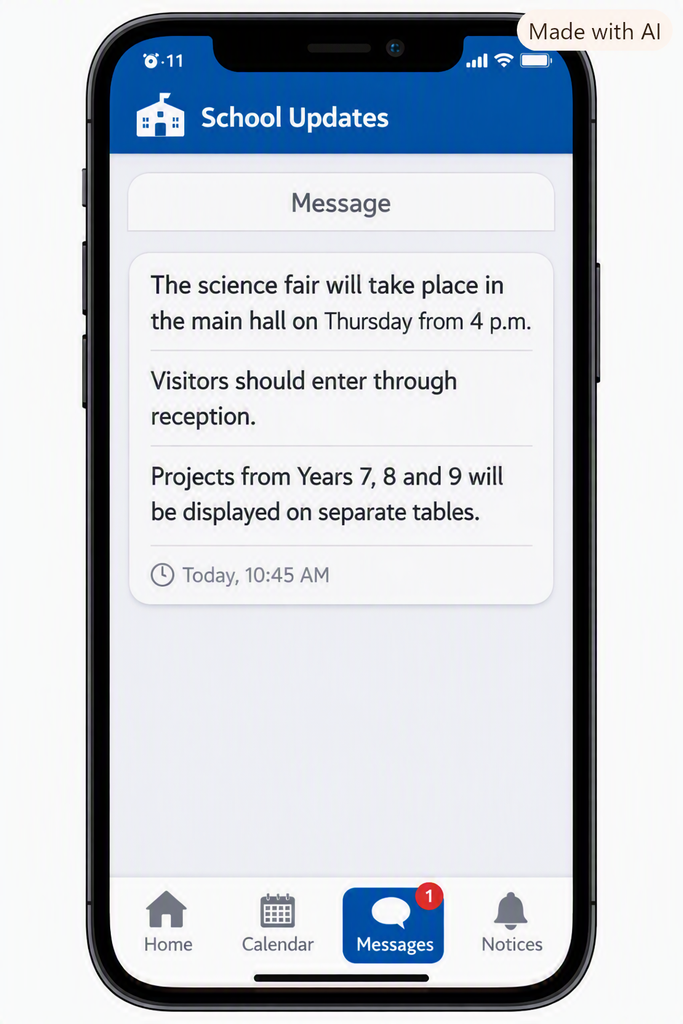
“The science fair will take place in the main hall on Thursday from 4 p.m. Visitors should enter through reception. Projects from Years 7, 8 and 9 will be displayed on separate tables.”
Annotations: The material gives practical information about what, where and when. “Visitors should enter through reception” gives guidance. “separate tables” clarifies organisation. The form resembles a notice or guide.
Model answer: The material uses an informative form because it gives practical details about the science fair. It tells the reader what is happening, where it will happen and when it will take place. The instruction “Visitors should enter through reception” helps the audience know what to do. The form is useful because it organises information clearly rather than trying to create suspense or emotion.
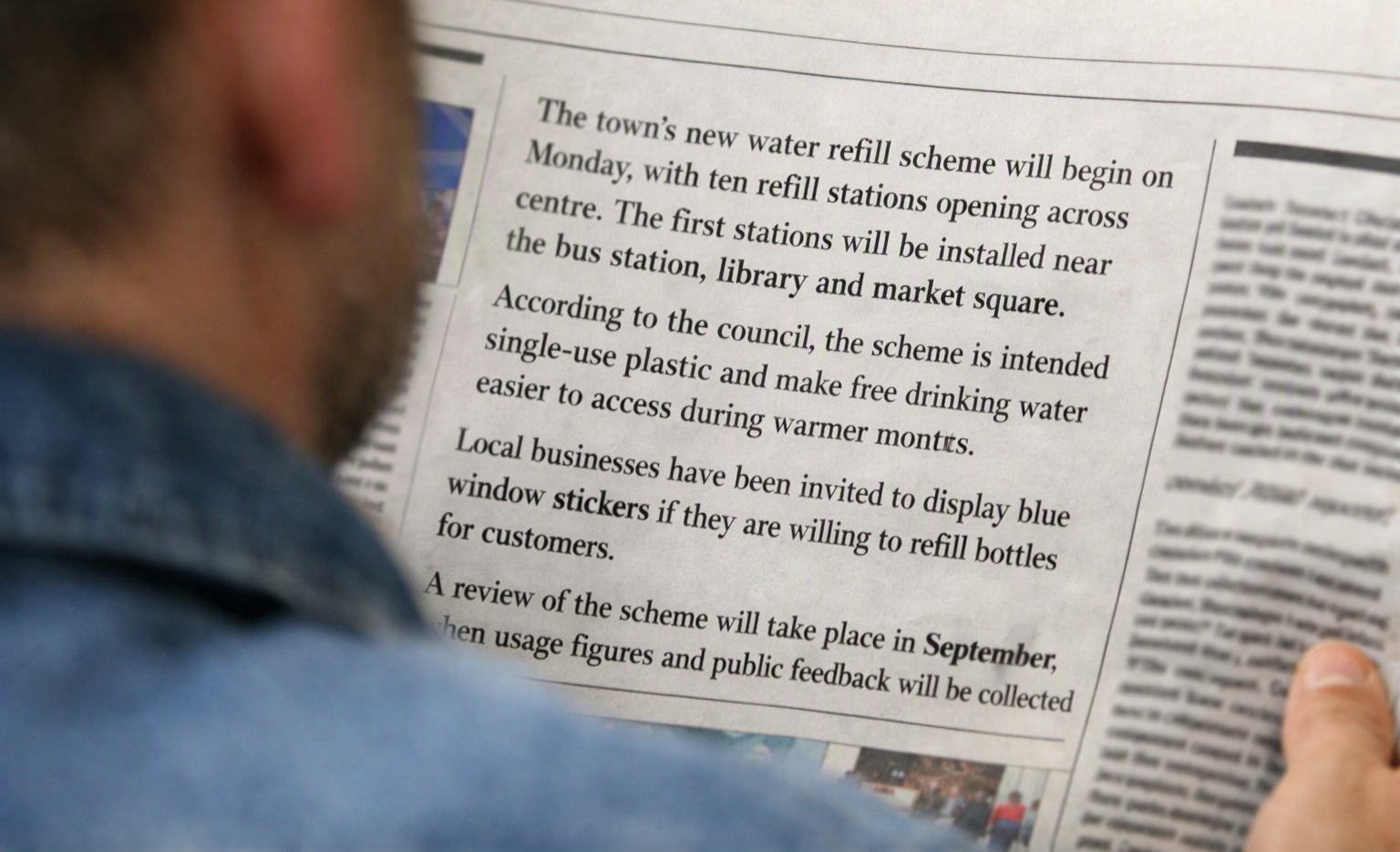
Textual example hard: “The town’s new water refill scheme will begin on Monday, with ten refill stations opening across the centre. The first stations will be installed near the bus station, library and market square. According to the council, the scheme is intended to reduce single-use plastic and make free drinking water easier to access during warmer months. Local businesses have been invited to display blue window stickers if they are willing to refill bottles for customers. A review of the scheme will take place in September, when usage figures and public feedback will be collected.”
Annotations: The opening gives the main information first. Locations such as “bus station, library and market square” make the information practical. “According to the council” introduces an official source. “intended to reduce single-use plastic” explains purpose. “A review… in September” gives future follow-up.
Model answer: The material takes an informative form because it explains a public scheme in a clear sequence. The opening gives the main information first: the water refill scheme “will begin on Monday.” The text then gives practical locations, including the “bus station, library and market square,” so readers know where the stations will be. The phrase “According to the council” introduces an official source, which supports the factual register. The final sentence explains how the scheme will be reviewed in September. The form helps readers understand what is happening, why it is happening and what will happen next.
Students should now read the material chosen by the teacher and complete the following sequence: first, decide whether the material is informative or uses informative features; second, identify what knowledge the reader is given; third, label how the information is ordered; fourth, identify one convention such as factual register, heading, source, date, definition or practical detail; finally, write one analytical paragraph explaining how informative form supports clarity.
What do you remember about structure that helps you to establish information types in informative forms?
clue -there are five Ws, and an H…
Find a short informative text, such as a notice, report, article, guide or school email. Identify the key information it gives, the order in which that information appears, and two conventions that make it clear for the reader.
How did you do? Remember, this is the disciplinary knowledge for Language – it needs combining with the text you are studying now. Can you use this knowledge to write differently about the text you are studying? When you are ready, access the next lesson in this series.