
Learning Objectives
Teacher Framing:
This lesson develops the relationship between audience, form and function. Lessons 1 and 2 established that readers must identify how meaning is expressed and why a text exists. Lesson 3 now asks students to understand who the text is designed for and how that intended audience influences the writer’s choices. Writers rarely address an abstract universal reader. They usually write for a particular readership, shaped by context, publication, age, knowledge, interests, values, expectations and needs. Students should learn that audience is not simply a label such as “teenagers” or “adults”; it is a set of reader characteristics that affects the material’s tone, register, vocabulary, level of explanation, examples, detail, form and purpose. This knowledge supports more precise analysis because it helps students explain why a text has been shaped in a particular way.
Student Learning Objectives:
By the end of this lesson, students should be able to:
- identify the likely intended audience of a text;
- explain what that audience may know, need, expect or value;
- and show how the writer adapts form, function, tone or vocabulary to suit that audience.
Core Knowledge:
A writer chooses how to communicate based on who they expect to read the text. The intended audience is the reader or group of readers the text is designed for. Audience affects what the writer includes, what they leave out, how formal or informal the language is, how much explanation is needed, and what kind of tone will be effective. A children’s science book, a government report and a social media advert might all discuss the same topic, but they would not use the same form, vocabulary or style because they are designed for different audiences.
Key Ingredients:
Key Vocabulary:
- Audience: the reader, listener or viewer a text is aimed at.
- Intended audience: the specific reader or group of readers the writer appears to have designed the text for.
- Readership: the regular or expected audience for a publication, platform or form.
- Demographic: a group described by features such as age, location, interests, occupation or life stage.
- Prior knowledge: what the audience is likely to already understand before reading.
- Values and attitudes: the beliefs, concerns or assumptions an audience may bring to a text.
- Expectations: what the audience expects the text to provide, such as information, entertainment, guidance, challenge or reassurance.
- Register: the level of formality in the language.
Key Sentence Stems:
- The intended audience appears to be…
- This audience may already know…
- This audience may need…
- The writer adapts the text for this audience by…
- The level of formality suggests that the audience is…
- The vocabulary is suitable for the audience because…
- The form and function are shaped by the audience because…
Key Thinking:
It is too vague to say, “The audience is everyone.” Most texts are designed with a more specific reader in mind. It is stronger to say, “The intended audience appears to be local parents because the text refers to school travel, children’s safety and practical changes to the morning routine.” It is also important not to assume the audience only from the topic. A text about climate change could be written for scientists, school pupils, voters, business owners or young children. The audience must be inferred from evidence such as vocabulary, tone, detail, form and publication context.
Models
Non Literary Warm Up:
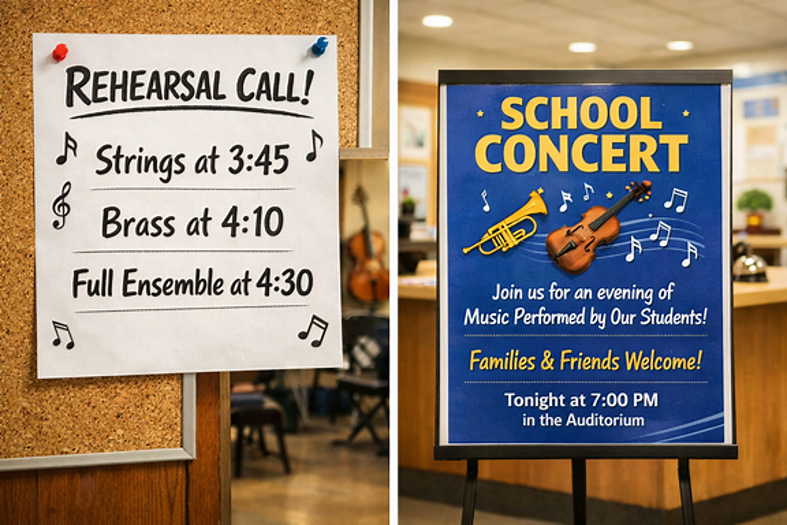
Imagine two posters about the same school concert. One is placed outside the music room and says, “Rehearsal call: strings at 3.45, brass at 4.10, full ensemble at 4.30.” The other is placed at reception and says, “Join us for an evening of music performed by our students. Families and friends welcome.” The topic is the same, but the intended audience changes the form and function. The first poster is aimed at performers who already know the event and need instructions. The second is aimed at visitors who need an invitation and basic information.
Literary example – :
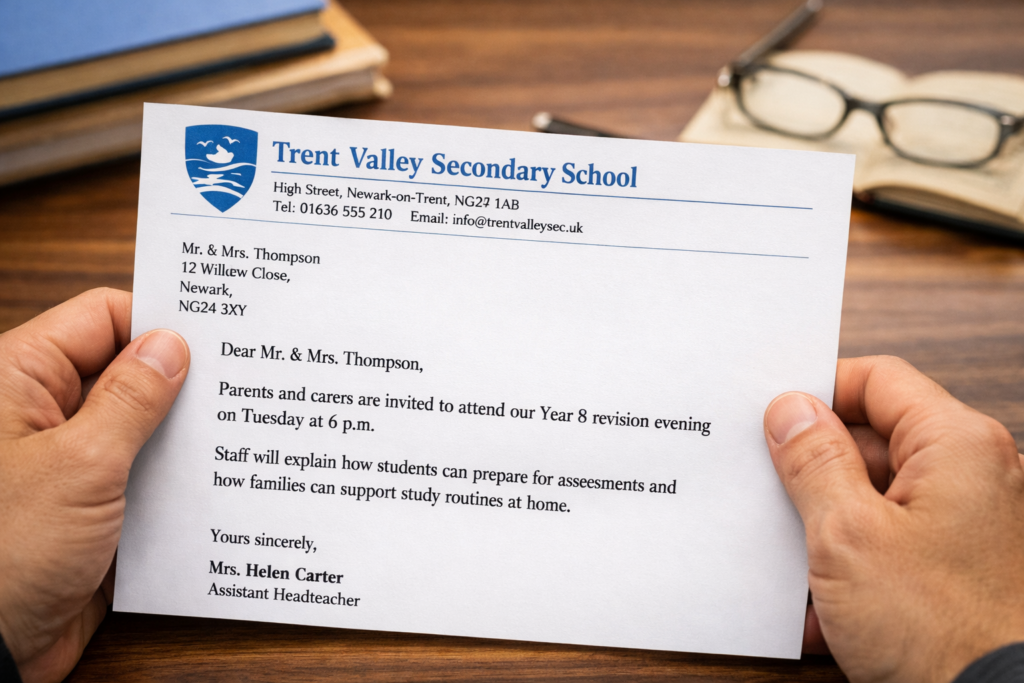
Parents and carers are invited to attend our Year 8 revision evening on Tuesday at 6 p.m. Staff will explain how students can prepare for assessments and how families can support study routines at home.
The intended audience appears to be parents and carers because the text directly addresses them and refers to “families” supporting study at home. The writer adapts the message by using a clear and formal register, which is suitable for a school communication. The phrase “Staff will explain” suggests that the audience may not already know how assessments work, so the text promises guidance. This shows that the form and function are shaped by the needs of the audience: the text mainly informs adults and encourages them to attend.

You probably know the feeling: the bus is late, your phone is on 2%, and the rain starts just as you remember your homework is still on the kitchen table. That is why the new student travel app has been designed around real school mornings, not perfect ones. It gives live bus updates, sends reminder alerts before you leave, and lets you save your favourite routes so you do not have to search every day. There is also a quiet mode for lessons, so notifications will not interrupt class. Download it before Friday and your school can enter the prize draw for sports equipment, music vouchers or new library books.
The intended audience appears to be secondary school students because the text refers to “homework,” “lessons” and “real school mornings.” The writer adapts the text by using direct address in “You probably know the feeling,” which makes the message sound personal and familiar. The informal detail that “your phone is on 2%” also suits a teenage audience because it reflects an everyday problem many students would recognise. The function of the text is partly to inform students about the app, but it is also persuasive because it encourages them to “Download it before Friday.” The audience drives both form and function here: the advert uses a relatable tone and school-based examples so that students see the app as useful in their own lives.
Now Apply To This To Our Text:
Students should now read the material chosen by the teacher and complete the following sequence: first, identify the likely intended audience; second, list three things that audience may know, need, expect or value; third, select evidence that shows how the writer has adapted the text for that audience; fourth, explain how audience affects the text’s form and function; finally, write one analytical paragraph showing how the writer shapes meaning for a particular reader. Students should avoid vague audience labels and must support their judgement with evidence from the material.
Exit Question:
You are in charge of producing promotional material for the opening of a new cycle trail, which should attract experienced rider, families, and elderly riders. How would you frame the advert differently? Think about what each group wants to get from their experience, and how knowing their motivations influences your word choices.
Homework:
Find two short texts about the same topic but aimed at different audiences, such as a children’s explanation and an adult news article, a school email and a student poster, or a product advert for teenagers and one for parents. Identify the intended audience of each text. Then explain how the vocabulary, tone, form or information changes because the audience is different.