
Learning Objectives
Teacher Framing:
This lesson makes explicit the disciplinary movement from reading to analysis. Lessons 1 to 3 have taught students to identify meaning, purpose and audience within material. Lesson 4 teaches students how to prove those claims and how to develop them using methodological knowledge. In this curriculum, material knowledge is knowledge taken from the text itself; methodological knowledge is knowledge taught by the subject, such as terminology, concepts and procedures that are not simply found in the material. Synthesis occurs when students place material knowledge and methodological knowledge into the same response. Analysis occurs when the methodology changes or deepens what the student can understand about the material. Students therefore need to select precise quotations, attach them to a clear claim, introduce an appropriate method, and explain how that method changes their reading of the material. The lesson should avoid premature teaching of later units by using general methodological terms already established in Unit 1, such as explicit meaning, implicit meaning, purpose, audience, form, function, tone and register, rather than detailed grammar, structure or form terminology reserved for later units.
Student Learning Objectives:
By the end of this lesson, students should be able to:
- select short and relevant quotations from the material;
- combine material knowledge with methodological knowledge in the same paragraph;
- and explain how a method changes what we understand about the material.
Core Knowledge:
A quotation is evidence from the material. It proves that our ideas are based on something we have actually read. However, evidence alone is not analysis. Synthesis happens when we bring together what the material says and what we have learned in English Language. Analysis happens when the English Language method helps us understand the material more deeply. For example, noticing that a detail is implicit, aimed at a particular audience, or linked to a primary purpose can change how we understand the material. A strong paragraph therefore does four things: it makes a claim, selects evidence, names or uses a method, and explains how that method affects meaning.
Key Ingredients:
Key Vocabulary:
- Evidence: a quotation or precise reference from the material that supports a claim.
- Quotation: the exact words copied from the material and placed inside quotation marks.
- Precise quotation: a short, carefully selected part of the material that directly supports the point.
- Material knowledge: knowledge gained from the text or extract being studied.
- Methodological knowledge: knowledge from English Language that helps us understand the material, such as audience, purpose, meaning, tone, register or function.
- Synthesis: placing material knowledge and methodological knowledge together in the same response.
- Analysis: explaining how the methodological knowledge changes, sharpens or deepens what we understand about the material.
Key Sentence Stems:
- The material shows this when…
- A precise quotation is…
- This quotation is relevant because…
- Using the method of…, we can understand that…
- This is synthesis because it combines the material with…
- This becomes analysis because the method helps us realise that…
- Without this method, we might only think…, but with it we can see…
Key Thinking:
Evidence is not analysis by itself. Writing “The boy ‘flinched’” is only quotation selection. Writing “The boy ‘flinched’, which shows he is scared” is a basic inference. Writing “The boy ‘flinched’, and because this fear is implicit rather than directly stated, the reader has to infer his vulnerability from behaviour rather than explanation” is analysis because the method of implicit meaning changes what we understand about how the material works.
Models
Non Literary Warm Up:

Imagine a detective looking at muddy footprints near a window. The footprints are the evidence. Saying “There are muddy footprints” is material knowledge. Saying “Footprints can be evidence of people” introduces a basic inference. Bringing out rulers to measure the exact size, shape and depth, then adding this into a database to calculate the size and weight of the person changes what you know about the footprint. This new knowledge allows the police to dramatically reduce the range of possible suspects. Combining tools with material in this way, so that we can know something new and precise is the nature of analysis, because the method changes how the evidence is understood. In English Language, quotations work in a similar way: they are clues, and students will need to learn the tools to will be synethesised to create the potential for analysis to occur. For true analysis, one must change what we know about the other.
Literary example – :

“Lena folded the invitation twice and slipped it into the bottom of her bag. When her friend asked if she was going, Lena smiled and said, ‘Maybe.’”
“Folded the invitation twice” is a precise quotation that shows Lena physically hiding or minimising the invitation. “Bottom of her bag” suggests she does not want it easily seen. “Maybe” is a short quotation that creates uncertainty. The material never directly states that Lena does not want to attend, so the meaning is implicit. Now that these quotes have been selected, we need to learn and bring to the quotes some methodological tools. If the tools change what we know about the evidence, then we are being analytical.
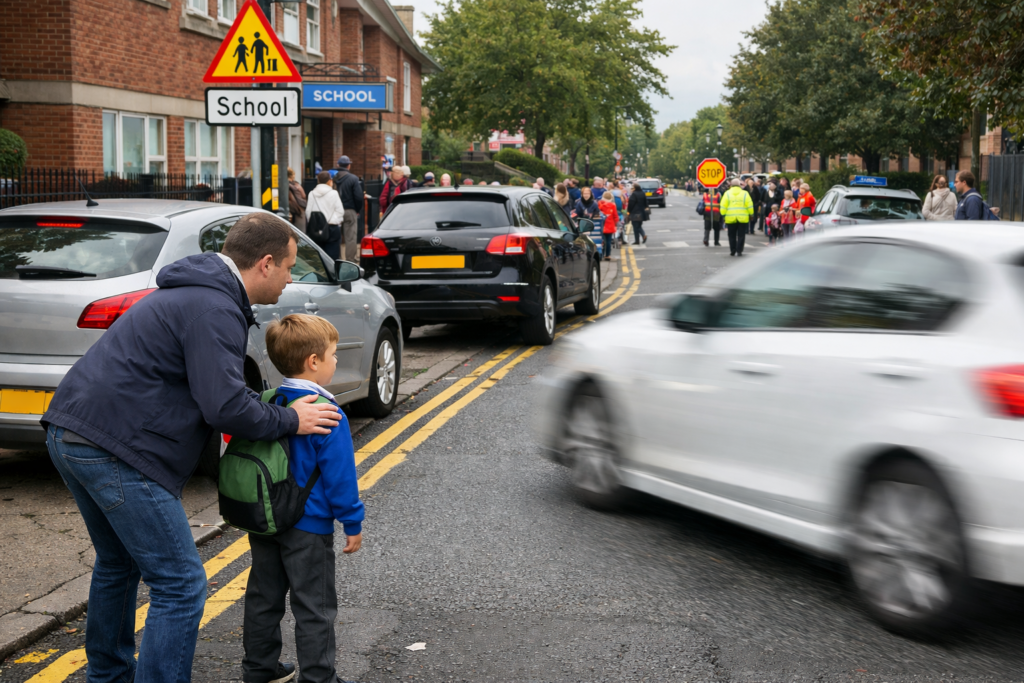
The leaflet was pushed through every door on the estate before breakfast. Across the top, in large blue letters, it said: ‘Your street, your say.’ Beneath this, the council promised a listening meeting about the proposed traffic changes. The leaflet did not begin with statistics or legal terms. Instead, it opened with a question: ‘Are you tired of cars speeding past your front window?’ It then listed three concerns: children walking to school, older residents crossing the road, and parked cars blocking driveways. At the bottom of the page, the meeting time was printed in bold, followed by the sentence, ‘Come and help us make the road safer for everyone.’
“Your street, your say” is a precise quotation showing direct address and community ownership. “Are you tired of cars speeding past your front window?” targets residents’ everyday experience. The concerns about “children,” “older residents” and “driveways” reveal the intended audience: local people affected by the road. The method of audience changes our understanding because the leaflet is not simply giving information; it is adapting its evidence and tone to local residents. The method of primary purpose also matters because the leaflet mainly persuades people to attend while also informing them about the meeting. We need to look for patterns in the language and connect them to methods that we will come to learn – when the methods change what we know about the language then we are being analytical.
Now Apply To This To Our Text:
Students should now read the material chosen by the teacher and complete the following sequence: first, write one claim about meaning, purpose or audience; second, select the shortest quotation that proves the claim; third, identify one relevant method from Unit 1, such as explicit meaning, implicit meaning, overt meaning, covert meaning, purpose, function, intended audience, tone or register; fourth, write a synthesis sentence that places the quotation and the method together; finally, turn the synthesis into analysis by explaining how the method changes or deepens what they understand about the material. Students should avoid long quotations, unsupported claims and method spotting that does not affect interpretation.
Exit Question:
Which other subjects do you think share a similar toolbox with English Language? Which subjects are ultimately trying to reach the same outcomes?
A clue – it isn’t Literature…
Homework:
Choose a short paragraph from any suitable article, advert, story extract, letter or school communication. Select a range of quotes that all seem to be doing the same thing – maybe they are making the same claim, or maybe its the same language type. We are learning in future the methods to name and analyse these quotes, but for now simply look for patterns. State why you have grouped them as similar.