
Learning Objectives
Teacher Framing:
This lesson develops students’ knowledge of pronouns and determiners as word classes that control reference, specificity, ownership and distance. Pronouns replace or refer back to nouns, helping a text avoid repetition and track people, objects or groups. Determiners introduce or specify nouns, showing whether the noun is definite or indefinite, near or far, owned, counted or generalised. These classes are grouped because both affect how nouns are managed in the material. In analysis, pronouns and determiners matter because they can create closeness, distance, inclusion, exclusion, certainty, possession, vagueness or collective identity. This lesson should remain word-class focused and avoid becoming a full study of perspective or noun phrases, though it may connect back to Lesson 122 and Lesson 131 where useful.
Student Learning Objectives:
By the end of this lesson, students should be able to:
- identify common pronouns and determiners;
- explain how they refer to or specify nouns;
- and analyse how they create closeness, distance, ownership, inclusion or vagueness.
Core Knowledge:
Pronouns are words that stand in for nouns, such as “he,” “she,” “it,” “they,” “we” and “you.” Determiners are words that come before nouns and make them more specific, such as “a,” “the,” “this,” “that,” “my,” “their,” “some,” “many” or “all.” Pronouns and determiners help the reader track who or what is being discussed and how specific, close, owned or shared something seems.
To test for a determiner, try placing your word before a noun such as: ___ cat, ___ books, or before a noun like ___ creaked.
Key Ingredients:
Key Vocabulary:
- Pronoun: a word that replaces or refers to a noun.
- Personal pronoun: a pronoun such as I, you, he, she, it, we or they.
- Possessive pronoun or determiner: a word showing ownership, such as mine, yours, my, her or their.
- Determiner: a word placed before a noun to specify it.
- Article: a determiner such as a, an or the.
- Demonstrative determiner: a determiner such as this, that, these or those.
- Quantifier: a determiner showing amount, such as some, many, few, each or all.
- Reference: the connection between a pronoun or determiner and the noun it points to.
Key Sentence Stems:
- The pronoun… refers to…
- The determiner… specifies the noun…
- The article “the” makes the noun seem…
- The pronoun “we” includes…
- The pronoun “they” creates distance from…
- The determiner “this/that” suggests closeness/distance because…
- This choice affects meaning because…
Key Thinking:
Pronouns and determiners are small words, but they can have large effects. “A problem,” “the problem,” “this problem” and “our problem” do not mean exactly the same thing. The noun is similar, but the determiner changes specificity, distance and responsibility.
Models
Non Literary Warm Up:

Imagine a teacher says, “A mess has been made.” Then they say, “The mess has been made,” “This mess has been made,”, “Our mess has been made,” or “You have made a mess”. The noun “mess” stays the same, but the determiner changes how specific, close or shared the responsibility feels. They can hide blame, be accusatory, show ownership or responsibility, and number too.
Literary example – :
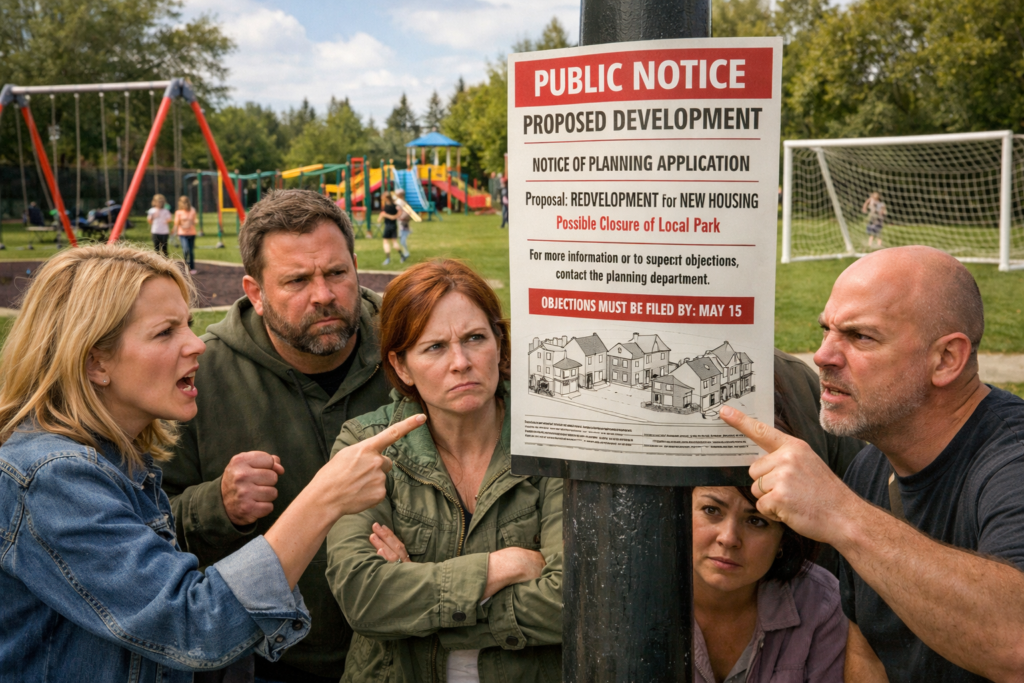
We need to protect this park before they turn it into another car park. Our park must not be taken! Many developers have tried. It must stay green for the children.
“We” includes the speaker and audience together. “this” makes the park feel close and immediate. “they” creates distance from an unnamed outside group. “another” suggests the change is part of a repeated problem. “our” creates an ownership and responsibility that excludes the developers. “Many” makes it seem as if this is not the first time. “It” and “the” gives us a definite park and children, not ‘any’ park or children.

At first, the notice called it ‘a temporary change.’ By the following week, residents were calling it ‘the closure.’ Our street, they said, had lost its only bus route. Some people blamed the council, while others blamed the company. But for Mrs Lewis, who had used that bus every morning for twenty years, those explanations did not matter. ‘This is not a change,’ she said. ‘It is our isolation.’
The pronouns and determiners show how the issue becomes more serious and personal. At first, the notice calls it “a temporary change,” using the article “a” to make it seem like one small alteration. Later, residents call it “the closure,” where “the” makes the problem specific and definite. The possessive determiner “Our” in “Our street” creates a shared local identity, while “our isolation” turns the bus route into a collective problem. The demonstrative “This” also makes Mrs Lewis’s statement immediate and forceful. These choices show that the language has shifted from official vagueness to personal and communal impact.
Now Apply To This To Our Text:
Students should now read the material chosen by the teacher and complete the following sequence:
- Underline five pronouns or determiners;
- Identify what each one refers to or specifies;
- Choose two that affect inclusion, distance, ownership, specificity or vagueness;
- Explain how each choice changes the reader’s understanding;
- Write one analytical paragraph explaining how pronouns and determiners control reference in the material.
Exit Question:
Think about the header image to this lesson; how do pronouns and determiners help to identify things and reduce confusion?
Homework:
Choose a short paragraph from a speech, advert, article or story. List five pronouns and five determiners. Then rewrite two sentences by changing a pronoun or determiner and explain how the meaning changes.