
Learning Objectives
Teacher Framing:
This lesson completes Unit 13X by introducing prepositions and conjunctions as relational word classes. Prepositions show relationships of place, time, direction, cause or association, usually linking a noun or pronoun to another part of the sentence. Conjunctions connect words, phrases, clauses or ideas. They are grouped here because both help readers understand relationships between parts of the material. The lesson should be carefully bounded: students should identify these words and analyse their relational effect, but detailed phrase and clause classification should be reserved for Unit 14X. In analysis, prepositions and conjunctions matter because they show where things are, when events happen, how ideas connect, whether ideas are added, contrasted, explained or made conditional, and how the writer guides relationships between information.
Student Learning Objectives:
By the end of this lesson, students should be able to:
- identify common prepositions and conjunctions;
- explain what relationship they create;
- and analyse how they connect places, times, actions, people or ideas in the material.
Core Knowledge:
Prepositions show relationships, often of place, time or direction. Words such as “under,” “beside,” “through,” “before,” “after,” “towards” and “with” can be prepositions. Conjunctions join words or ideas. Words such as “and,” “but,” “or,” “because,” “although,” “when” and “if” can be conjunctions. These words matter because they show how parts of meaning are connected.
Key Ingredients:
Key Vocabulary:
- Preposition: a word that shows a relationship between a noun or pronoun and another part of the sentence.
- Preposition of place: a preposition showing location, such as under, beside, near or above.
- Preposition of time: a preposition showing time, such as before, after or during.
- Preposition of direction: a preposition showing movement, such as into, across or towards.
- Conjunction: a word that connects words, phrases, clauses or ideas.
- Coordinating conjunction: a conjunction such as and, but or or that links equal elements.
- Subordinating conjunction: a conjunction such as because, although, when or if that links an idea to another idea by showing cause, contrast, time or condition.
Key Sentence Stems:
- The preposition… shows a relationship of place/time/direction because…
- The preposition positions… in relation to…
- The conjunction… connects…
- The conjunction “but” creates contrast between…
- The conjunction “because” creates a cause by…
- The conjunction “although” creates contrast or concession by…
- This relational word affects meaning because…
Key Thinking:
Prepositions and conjunctions are not just “small connecting words.” A preposition usually positions something in relation to something else, while a conjunction connects words or ideas. “The cat is under the table” uses “under” to show position. “The cat hid because it was scared” uses “because” to show cause.
Models
Non Literary Warm Up:

Think about a football game and how the commentator must constantly talk about the motion of the ball; up the wing, over the players, towards the corner, over the line, before a tackle, after the whistle…
Literary example – :

The cat waited under the bench because the rain had started.
The preposition “under” shows the cat’s position in relation to the bench, making the scene clear and sheltered. The conjunction “because” links the cat’s action to a cause: “the rain had started.” These relational words help the reader understand both where the cat is and why it is there.
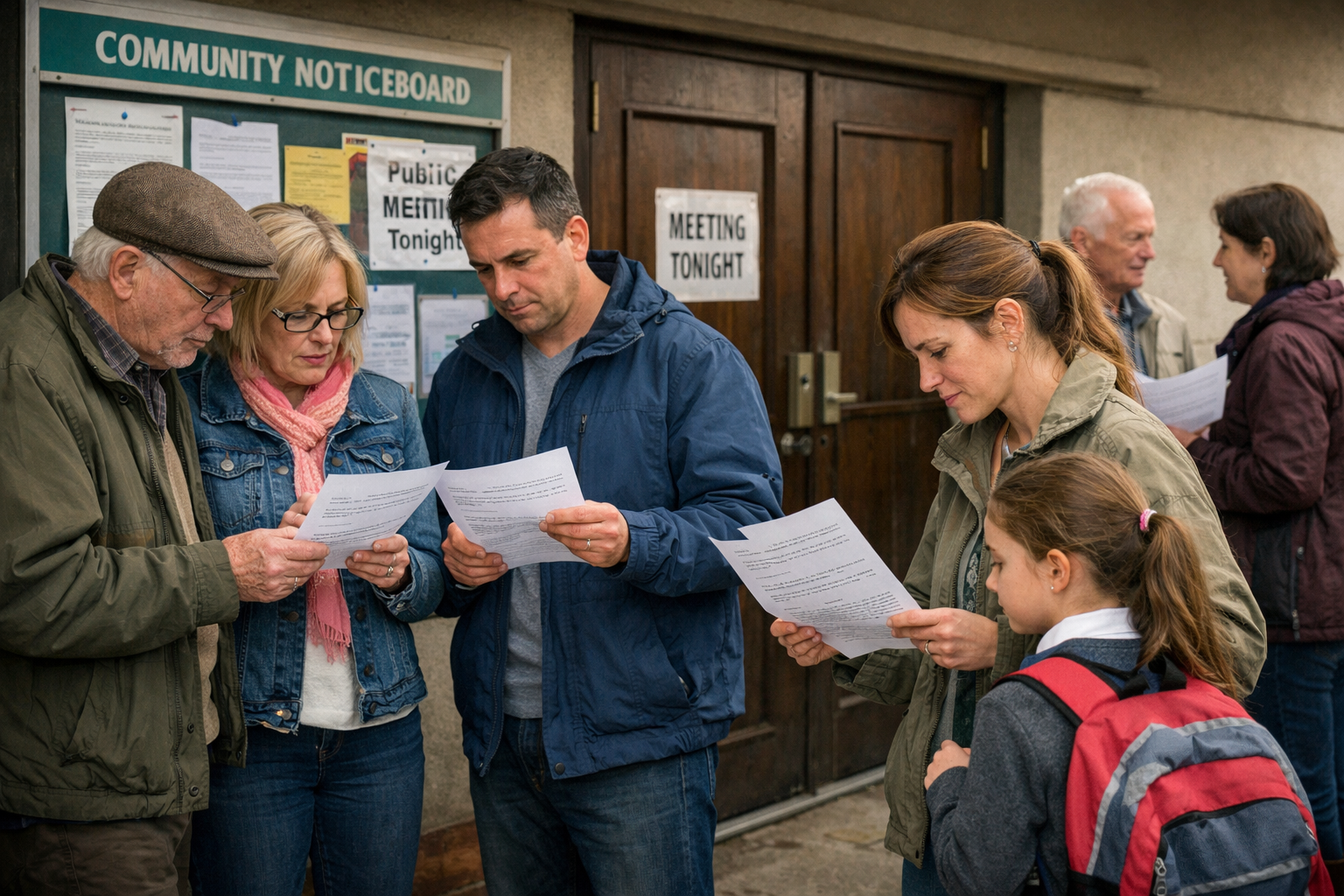
Before the meeting, residents gathered outside the hall and compared letters from the council. Some stood beside the noticeboard, while others waited near the locked doors. The plan sounded simple on paper, but it would move the crossing away from the school entrance. Although officials described the change as minor, parents argued that children would have to walk across a busier road because the new route passed between two car parks.
The writer uses prepositions and conjunctions to connect space and argument. Prepositions such as “outside,” “beside” and “near” position residents around the hall, while “away from,” “across” and “between” help the reader understand the physical danger of the proposed route. The conjunction “but” creates contrast between the plan sounding “simple on paper” and its real effect near the school. “Although” contrasts the officials’ description with the parents’ objections, while “because” explains the cause of their concern. These words guide the reader through both the physical layout and the logic of the disagreement.
Now Apply To This To Our Text:
Students should now read the material chosen by the teacher and complete the following sequence:
- Underline five prepositions and five conjunctions if present;
- Label whether each preposition shows place, time or direction;
- Label whether each conjunction adds, contrasts, explains, conditions or sequences ideas;
- Choose two relational words that matter most;
- Write one analytical paragraph explaining how prepositions and conjunctions connect meaning in the material.
Exit Question:
Where are all the best hiding places? You could look at the header image for ideas!
Homework:
Choose a short paragraph from an article, story or notice. List five prepositions and three conjunctions. Explain what relationship each one creates. Then rewrite two sentences by changing a preposition or conjunction and explain how the relationship between ideas changes.