
Learning Objectives
Teacher Framing:
This lesson begins Unit 14X by moving from individual word classifications into groups of words that function together. Unit 13X taught students to classify words such as nouns, verbs, adjectives, adverbs, pronouns, determiners, prepositions and conjunctions. Unit 14X now asks how those words combine into larger grammatical units before students move to sentence classifications in Unit 15X. A phrase is a group of words that works together as a unit but does not contain its own complete subject and finite verb structure. Phrases often expand a head word, add detail, specify information or compress meaning. Students should understand that phrases are not failed sentences; they are useful units inside clauses and sentences. This lesson establishes the difference between phrase, clause and sentence so that later lessons on noun phrases, verb phrases, prepositional phrases and clause types have a secure foundation.
Student Learning Objectives:
By the end of this lesson, students should be able to:
- identify a phrase as a group of words working together;
- explain how a phrase differs from a clause;
- and analyse how phrases add, specify or compress meaning in material.
Core Knowledge:
A phrase is a group of words that works together as one unit. A phrase may name something, describe something, show an action, or add information about place, time or manner. Unlike a clause, a phrase does not contain its own subject and finite verb structure. For example, “the broken window” is a phrase because the words work together to name and specify something. “The window broke” is a clause because it has a subject and a verb. Phrases matter because they allow writers to add detail without always creating a new clause.
Key Ingredients:
Key Vocabulary:
- Phrase: a group of words that works together as a unit inside a clause or sentence.
- Head word: the main word in a phrase that the other words depend on or modify.
- Expansion: adding words to make a phrase more detailed or specific.
- Modification: adding information to a word or phrase to change or refine its meaning.
- Clause: a group of words containing a subject and finite verb.
- Finite verb: a verb that shows tense and agrees with a subject.
Key Sentence Stems:
- The phrase in this sentence is…
- The head word of the phrase is…
- This is a phrase rather than a clause because…
- The phrase expands the idea of…
- The writer uses the phrase to add…
- This phrase affects meaning because…
Key Thinking:
A word cannot be used alone for complete sense, and requires other words to accompany it. Phrases and clauses are ways of establishing word groups that give meaning. “Behind the locked door” is a phrase because it does not contain its own subject and finite verb. “The door was locked” is a clause because “door” is the subject and “was” is a finite verb. Strong analysis explains what the phrase adds, rather than simply naming it.
Models
Non Literary Warm Up:
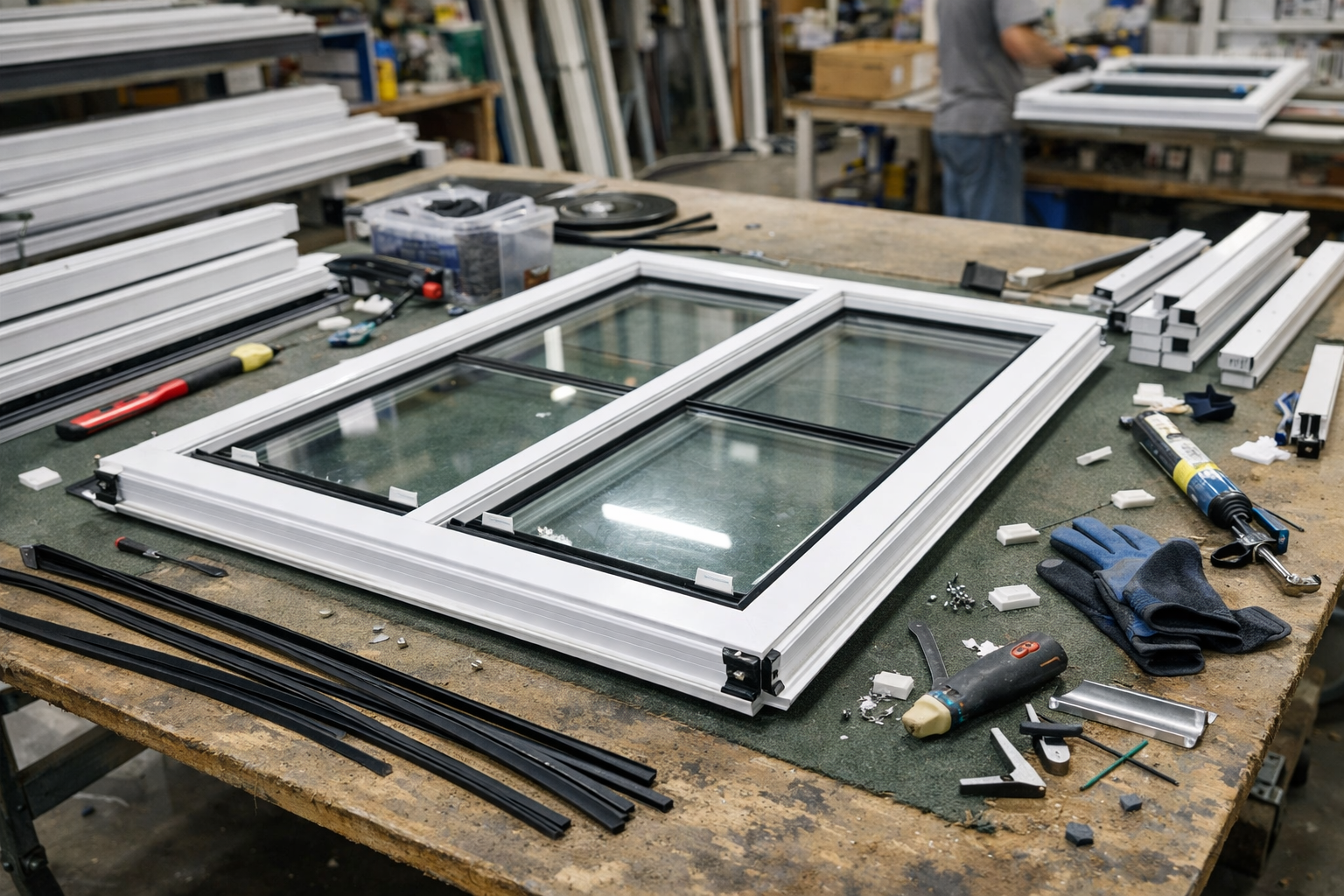
Imagine building with blocks. A window for instance is not just a pane of glass; for it to do its job it consists of two panes of glass, a gas between them, a silicon seal around them, a frame to hold them together and screws to hold them into the wall. Phrases are the same – a single word (like a pane of glass) needs other words (bead, gas, frame, screws) before it can do a job. The glass is like the head word – all the other components are only there to faciltate the pane of glass.
Literary example – :

[The old gate] [beside the field] [creaked] [in the wind].
The writer uses phrases to add detail around the main action. The phrase “The old gate” identifies the object and makes it seem aged. The phrase “beside the field” locates it, while “in the wind” explains the circumstance of the sound. These phrases do not form full clauses by themselves, but they expand the reader’s understanding of the scene. Without any of these phrases, the sentence becomes “Gates creak” which is quite useless in most contexts.

At the end of the platform, under the broken clock, a woman in a green coat waited with two suitcases and a folded ticket. The announcement above her crackled through the speakers, but the words dissolved into static. Near the ticket barrier, a child with a red backpack counted the trains on the departure board. Nobody moved towards the exit.
The writer uses phrases to compress and layer information. The phrases “At the end of the platform” and “under the broken clock” position the woman in a specific part of the station. The phrase “a woman in a green coat” identifies her visually, while “with two suitcases and a folded ticket” suggests travel and waiting. These phrases add detail without creating separate clauses for every piece of information. As a result, the reader receives a dense but controlled picture of the station before focusing on the uncertainty created by the broken announcement. Without the phrasing, the sentence is simply “a woman waits”.
Now Apply To This To Our Text:
Students should now read the material chosen by the teacher and complete the following sequence:
- split sentences into groups of words by dividing them with ’/’;
- identify the head word in each group to see which one is the driver of the others;
- choose two phrases that add important detail and write one analytical paragraph explaining how phrases expand, specify or compress meaning in the material.
Exit Question:
Consider header image; how do phrases add detail, and how does the header image reflect this idea?
Homework:
Choose a short paragraph from an article, story or notice. Copy out five phrases. For each phrase, identify its head word if possible and explain what information the phrase adds. Then rewrite one sentence by removing a phrase and explain how the meaning becomes less precise.