Under development
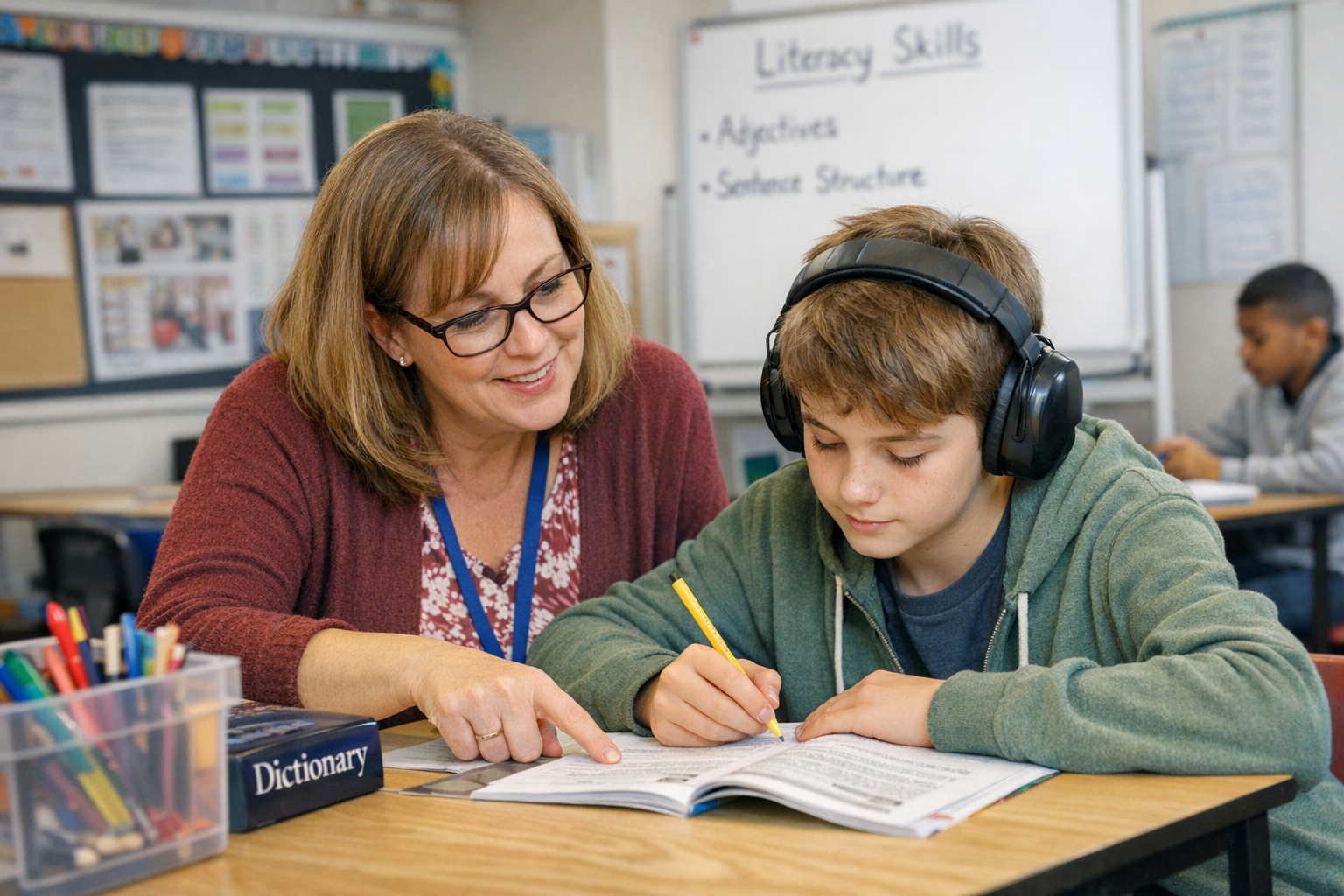
Literacy refers to the ability to read, understand, and interpret written language, as well as the ability to write, compose, and communicate ideas effectively through written forms. It encompasses both the receptive skill of decoding texts and the productive skill of creating coherent written communication.
Why Literacy Matters Across the Secondary Curriculum
Literacy underpins learning in every subject because it enables students to access, process, and communicate knowledge. In secondary education—where concepts become more abstract and disciplinary language becomes more specialised—strong reading and writing skills are essential for genuine understanding.
Key reasons literacy is central to the wider curriculum:
- Access to subject knowledge: Students need reading skills to interpret textbooks, exam questions, data sets, historical sources, scientific explanations, and technical vocabulary.
- Thinking through writing: Writing helps students organise ideas, reason logically, and demonstrate understanding—whether they’re explaining a scientific process, analysing a poem, or evaluating a historical argument.
- Fluency with disciplinary language: Each subject has its own ways of reading and writing (e.g., analysing evidence in History, interpreting problems in Maths, writing hypotheses in Science). Literacy enables students to participate in these “ways of thinking.”
- Equity and inclusion: Strong literacy skills reduce barriers to learning, helping all students—especially those from disadvantaged backgrounds—engage confidently with the full curriculum.
- Preparation for exams and life beyond school: Almost all assessment relies on reading and writing. Beyond school, literacy supports employability, civic participation, and lifelong learning.
Why Literacy Requires Qualified, Specialist Teaching
Although it’s often said that “all teachers are teachers of literacy,” high‑quality literacy instruction demands expertise that goes well beyond general classroom practice. Literacy is a complex, multi‑component discipline involving phonics, morphology, syntax, disciplinary vocabulary, reading comprehension strategies, and the craft of written communication. These areas require specialist knowledge to teach effectively and safely.
Key reasons specialist staff are essential
- Complexity of reading development: Understanding how students decode, infer, summarise, and process increasingly abstract texts requires training in linguistics, cognitive development, and evidence‑based reading pedagogy.
- Precision in writing instruction: Teaching writing involves modelling sentence construction, cohesion, argumentation, and genre conventions—skills that need deep subject knowledge and experience to teach well.
- Addressing misconceptions: Literacy difficulties often stem from subtle gaps in foundational knowledge. Identifying and correcting these requires diagnostic skill and pedagogical expertise.
- Equity and intervention: Students with weaker literacy need targeted, research‑informed support. Without trained specialists, interventions risk being ineffective or even counterproductive.
- Disciplinary literacy demands: Each subject has its own ways of reading and writing. Literacy specialists help staff understand these differences and design coherent, cross‑curricular approaches.
All teachers contribute to literacy, but not all teachers teach literacy. Specialist staff ensure that whole‑school literacy is coherent, evidence‑informed, and responsive to student need—something generalist practice alone cannot guarantee.