
Defamiliarising the world by hiding meaning with some layering of iconography

Lit302 Procedures of Formalism

Accessibility options: Use your browsers translation, screen reader and AI summary tools to help your studies.

Formalism is a critical perspective that is fundamental to many handbooks on critical reading. It generally covers two similar but not entirely compatible approaches; New Criticism and Russian Formalism. The history of these is beyond the space for an article here and so just the limited agreement between the approaches will do for now, and is given by Rylance;

Both groups of critics address basic theoretical questions: how do we define literary as opposed to other language uses? By what criteria do we assess success or quality in literary works? How do we describe the structure of whole literary works? (p31)

The overall intent of Formalism is in the close attention to the physical makeup, the object rather than the human or social content of the work. It was felt that in the labelling and discussion of language usage, presentation and structure that an objective critique could be made. An analysis that focused on the human and social content would be tainted by the perspective of the reader. But herein lies the problem with Formalism; there is as much subjectivity in the ranking and preference of literary technique as there is in debating the human and social content. What is worthy of selection, labelling and discussion to one reader is no bearing on the selection, labelling and discussion of another reader. A critic makes choices based on preferences.

This problem sounds very familiar to those directed against F.R. Leavis – that there is often to little clarity in what makes a text or its style valuable to a critic other than their own subjective authority. How can we teach procedures to students when the very procedure critics follow seems unteachable?

Within the maze of questions such as these both new criticism and Russian formalism claimed to be objective, even scientific. Both groups were eager to boost criticisms professional standing and metal to logical rigour. Both centred attention on the literary language of texts and tried to describe their internal properties and relations. It was in the precise definition of literary language, they believed, that the key to objectivity lay. (p32)

In this sense, resources like that of literarydevices.net seem firmly routed in the tradition of formalism. A device can be identified, tested against a definition and criteria, and done so in a repeatable way with the same classification being decided upon. This is the scientific approach of formalism; it achieves a universal agreement that mere aesthetic reading cannot.

Formalism stands in complete contrast to the first of Rylance’s procedures. Where The Force Of Tradition places texts at the end of a long taxonomy of texts, a last word in a dialogue between writers, Formalism places texts in an autonomous, isolated and non-linear space. The intertextual or bibliographic quality of a text is irrelevant compared to the free-standing nature assessment. To what end is the study of literary language then if not to recognise its place in the timeline of literary tradition?

Formalism doesn’t simply take the labelling of literary language as the end, but rather the way of experiencing a very different type of expression that juxtaposes the scientific language. Rich, poetic language serves as a foil to the transactional statement of scientific empiricism. This language demonstrates the power of authors through words on the page to express human qualities and situations. Finding this language proves that writers are not bound by the strict grammar of science. In practise, the language of Literature actively avoids the strictness of grammar as an intent.

This literary language intends to defamiliarise the accepted world around us, making readers experience something they are normally familiar with, in new and strange ways.

This defamiliarisation is an intent in and of itself, not an accident. Victor Shklovsky;

The technique of art is to make objects unfamiliar, to make forms difficult, to increase the difficulty and length of perception because the process of perception is an aesthetic end in itself and must be prolonged. Art is a way of experiencing the artfulness of an object; The object is not important (p49).

So, the steps that an author makes to decrease the familiarity is a process of stretching the length of time, or increase the degree of perception needed before the familiar is recognised. That process of decoding the new as actually something old is an emotional and desirable experience for the reader.

Metaphor, riddles, and figurative language lie at the heart of defamiliarisation by creating puzzles for us to work through toward to meaning within. Word play, puns and inuendo are all part of this demaliarisation.

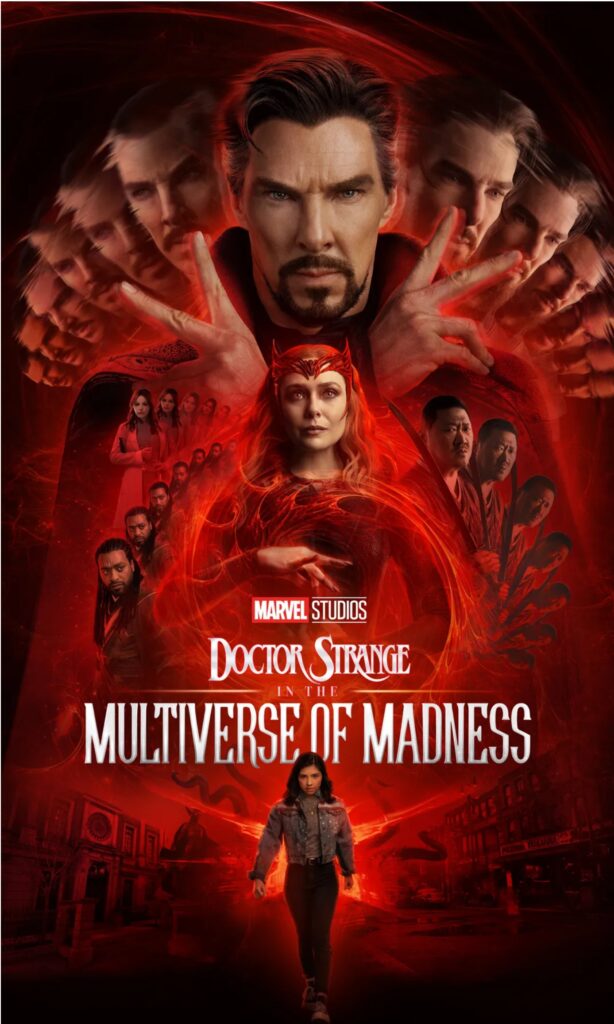
Defamiliarisation can also be achieved through collisions of genres and themes, what we might today call hybridization. And readers here will be familiar with this at even a pop culture level. Look at Marvel’s cinematic universe; dozens of films in the superhero genre playing essentially the same archetypes through the same narratives and structures. But the way the various films hybridized genres and themes together in unexpected ways kept the universe from stagnating. The gothic horror of Dr Strange and the Multiverse Of Madness; the buddy comedy of Thor Ragnarok; the psychological thriller of Wandavision. Defamiliarisation takes what we know and makes the experience changed. Defamiliarisation hides what we know behind an iconography that is not associated with it – hence the cover image. An industrial machine masked behind verdure.

Ask of an author; why not just say it as it is? Why, if your text is about the capacity of a man to change doesn’t the text simply state; Scrooge has the potential to transform when he is reconciled with his own failings and shortcomings, and the potential within all men that is being attained by those around him, no matter their social status. The author would end up with a headline statement that would be technically true but would lack any of the aesthetic value placed around such a message. What Shlovsky might argue is that anything not an explicit referent for this meaning is the act of defamiliarisation; it is an arbitrary distance produced through story telling and word play that with-holds the meaning from us, not a structure that makes it clearer. Literature is not the language of science and grammar.

Poetry or proverb is often the essence of this defamiliarisation. It cannot use length and space as a process of holding meaning back from the reader.

I repeat that the perception of disharmony in a harmonious context is important in parallelism. The purpose of parallelism, like the general purpose of imagery, is to transfer the usual perception of an object into the sphere of a new perception- that is, to make a unique semantic modification. In studying poetic speech in its phonetic and lexical structure as well as in its characteristic distribution of words and in the characteristic thought structures compounded from the words, we find everywhere the artistic trademark-that is we find the material obviously created to remove the automatism of perception; The author’s purpose is to create the vision which results from the D automized perception. A work is created artistically so that its perception is impeded and the greatest possible effect is produced through the slowness of the perception. As a result of this lingering, the object is perceived not in its extension in space, but, so to speak, in its continuity. This poetic language gives satisfaction. According to Aristotle, poetic language must appear strange and wonderful; And, in fact, it is often actually foreign (p34).

Poetry must compress its defamiliarisation and can become the least accessible kind of meaning so that the effort is comparable to that of longer texts. Clear meaning is harmony, and diffusion of clear meaning is disharmony. The reader who experiences the meaning through a slow clearing of the fog is more greatly rewarded than the reader who sees the meaning in the first instance. Or a better analogy, the reader who climbs the mountain is rewarded at the end of their exhaustion with perspective; it is the understanding gained through effort that is rewarding, the aesthetic experience. The reader who is helidropped at the peak has no effort to be rewarded and so can never experience meaning in the same way as those who battled the scree.

The procedure for a student then is in measuring the distance created by ‘literary language’. The greater the distance between disharmony and harmony, the greater the literary appeal; the greater the aesthetic effect. Which brings to mind one of my most frustrating experiences as a teacher of English – the students who write onto the pages of Steinbeck’s Of Mice And Men the climactic moment. Of course students want to know, but the ascension through novel, the drudge through the characterisation, the distance from first page to last creates the aesthetic effect, stollen away by a single comment. Because the meaning – that men need a stable relationship of any kind is more important than money, or even a home – can be said as a headline statement but cannot be felt as a powerful experience unless the disharmony of literature is being deployed.

Formalism is the almost scientific accounting of the ways and means in which the message is distorted. The aim is to turn this into a procedure for the study of Literature, suitable for secondary education. This lesson will be found under Literature and Procedures.

This lesson aims to build help understand what the procedure of Formalism looks for. You should be able to:

  • Identify how Formalism looks closely at the text itself rather than the author or context
  • Spot techniques, patterns, and language choices that shape meaning
  • Explain why Formalists treat these features as the key to understanding literature

Formalism is a way of reading literature that focuses only on the text itself. It asks you to look closely at the language, patterns, and techniques a writer uses. Formalists believe writers make ordinary things feel strange to slow you down and make you notice more. This “defamiliarisation” creates the special effect of literature. By spotting where the writing becomes unusual, you can explain how the text creates meaning and impact.

  • Formalism – the focus on nameable elements that can be tested against criteria, and objectively agreed upon even as the time and place changes. It revokes the personal, contextual response.
    • Literary language – phrasing that can be classified and tested against a definition
    • Internal properties – a focus on the elements of the text and not the human or social commentary of the text
    • Perception – when we understand that meaning or value of the text, the argument being that increasing the length of time it takes to reach perception is a desirable end, and overall strategy of art.
    • Objectivity – the value is in different readers being able to come to the same conclusions, despite their different situations
    • Grammar – literary language is the foil to grammar and scientific language, and is held in high esteem by Formalism
    • Defamiliarisation – to make something that is familiar seem strange and new, which is desirable
    • Disharmony – the effect of making what should be plain and clear, hazy and unsettling.
    • Parallelism – the act of depicting a truth through some fiction.
    • Hybridization – the collision between unexpected styles into new kinds of artforms
    • Aesthetic effect – the emotional experience gained from artwork (as opposed to effective experience which is about information and knowledge).
  • The writer uses structural/language patterns such as… to create…
  • The writer makes the familiar strange by…
  • This moment slows the reader down because…
  • The unusual phrasing forces the reader to notice…
  • The hybridisation of genres makes the ordinary seem abnormal…
  • The emotional effect depends on the reader recognising…
  • The writer’s choice to obscure meaning here allows…

✅ Acceptable phrasing:

  • “I’m analysing what the text is doing — the language, structure, and patterns — rather than guessing what the author intended.”

🚫 Do not accept:

  • “The writer probably meant this because of their life, personality, or feelings.”

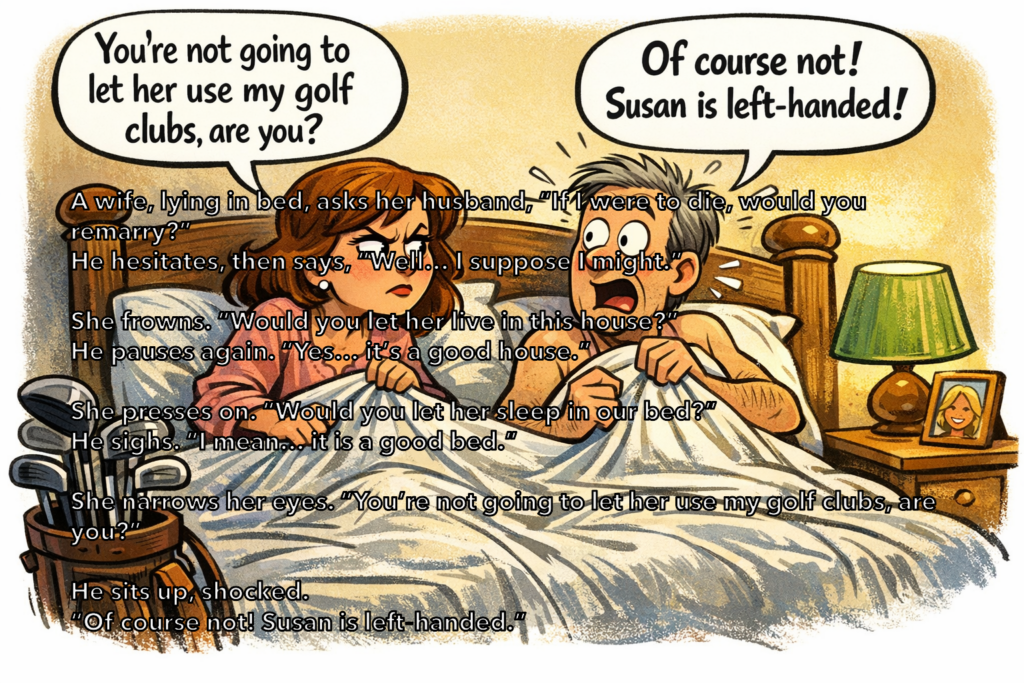
Jokes are a great way of holding an audience back from the punch line. This joke can have many layers of questions added – internal properties that increase the period of time before perception – before the punchline – to create tension and intrigue (these are the aesthetic effects).

Movies within a same genre or brand often repeat the same old characters and narratives. But audiences want to see what they know but in unfamiliar ways. In The Multiverse Of Madness, the old Superhero genre was hybridised with horror giving audiences a highly beguiling experience.

Exploded diagrams are important; they show the labels we give to all the various parts. Mechanics all share in the same naming convention – its how we purchase spare parts. We don’t subjectively decide what the text is but objective apply learnt knowledge of labels.

Steinbeck’s Of Mice And Men is a masterclass in constructing the novel. It is constructed from many of the elements that have been defined in the earlier lesson; Defining Characteristics of Literature.

Steinbeck’s overall message is that the relationships we have are the most important survival tool in a challenging world. Steinbeck wants us to see how relationships make survival possible, but also what one must be willing to do for that relationship.

Steinbeck could present this as some headline statement: People need relationships and must be willing to protect the dignity of those who we value. But Steinbeck, authors, and all artists don’t simply make these statements explicitly. The message is only perceived by the observer at the end of the journey, not the beginning of the journey. The length of time for perception is extended by the structure of the text; the study and labelling of the elements used to increase the length of time for perception is called formalism.

In front of the climactic moment are many structural elements; the equilibrium of migrant workers (and the remnant of a previous disruption from an untold narrative cycle); The establishment of a new setting; The establishment of characterisations of many minor characters; various misdirection disruption events that could incite some repair stage but do not. These structural elements turn the theme of the text into a novella to be experienced.

Steinbeck also creates a parallelism of the concrete ‘homestead’ that is so regularly alluded to (Tell about the dream George) as a reference to what is really being sought – that of a stable relationship. The homestead stands in as an indirect referent to quality relationships, creating some disharmony between what the author is telling us really matters, and our perception of this message. It is only by the climactic moment that we realise Steinbeck is talking about relationships and not real-estate. The parallelism makes the message hazy, a haze that clears by the ending.

Steinbeck also uses a highly vernacular style of speech for the characters focusing on the genre of text called realism – the text is not striving for readability, nor a wide audience, it is creating layers of difficulty in interpretation. Again, this internal property is selected over a more grammatical style. Prose wins out over verse. The writing style lacks the disharmony of verse, but gains disharmony through dialect.

The aesthetic effect of this is one of immersion. We become a kind of virtual witness to ordinary lives as opposed to privileged lives. Increasing the length of perception increases our exposure to the non-fiction of the realism and so readers become exposed to realities that are unfamiliar to them. The emotional effect is one of compassion and sympathy for the relationships.

Steinbeck’s use of figurative language throughout the text is another method of increasing the length of perception. Whilst Lennie is imagined as a powerful animal, dragging paws, snorting like a horse, we might understand this as ‘beautiful, natural, organic’. It isn’t until the fight with Curley that we see the parallel focuses on raw instinct of fight that is almost predatory and unthinking. The way a horse can kill through fear, or a bear can kill through power.

Can you see how the writing style is about labeling the many things that an author has done, before unveiling our perception to the significant statement?

Consider Romeo and Juliet, which actually unveils our perception to the significant statement at the beginning through the prologue. Now, the reader approaches with a clear and unhazy view of the text. This is a very different kind of experienced. Unlike Steinbeck whose elements distract or misdirect from the climactic moment, making it seem more shocking, Shakespeare uses elements to constantly remind us of what the ending will be. Every element of Shakespeare’s work provokes Romeo and Juliet’s death. Every element of Steinbeck’s work provokes a harmonious ending. We experience Romeo and Juliet knowing that their efforts are futile and the ending is harmonious with what we knew to be true. We experience Of Mice And Men thinking the efforts of George and Lennie will be rewarded and the ending is disharmonious with what we ‘knew’ to be true.

Romeo and Juliet’s ending is confirmatory of its internal forms. Of Mice And Men’s ending is contradictory to its internal forms.

How do we turn this into a procedure for reading texts?

Unfortunately, you need a spoiler. You need to know how the text ends, and what the author’s theme is.

You need to keep in mind some glossary of forms available to the author. Much of these can be found in the Defining Characteristics lessons.

  • Keep a list of elements that the author is using,
  • Focus on forms that appear multiple times,
  • Focus on how these forms create distance from perception, or disharmony,
  • Consider how the forms used by the author foreshadowed the ending, thus being harmonious with our expectations.
  • Consider how the forms might have contradicted the ending, creating disharmony with what we at last perceive to be true.

What do you think are the most common forms that authors use to increase the length of time that it takes to fully perceive the author’s message?

These become the conventions of Literature – the general approaches taken by authors within the artform.

a) Pre-reading of the next lesson – read through the knowledge so you can be ready to discuss in class.

b) Apply the learning of today’s lesson to your own private reading text. Write a paragraph explaining how today’s learning changes how you might conceive your text. Be sure to use the key vocabulary and sentence stems.

c) Write a paragraph about the discipline of Literature, explain how key words from today’s lesson impact the field overall.

d) Add today’s vocabulary and sentence stems to your own glossary. Highlight any that you are unsure about, but you must also research the meanings yourself and develop your glossary to include this differentiated support.

How did you do? Remember, this is the disciplinary knowledge for Literature – it needs combining with the text you are studying now. Can you use this knowledge to write differently about the text you are studying? When you are ready, access the next lesson in this series.