This lesson introduces the central shift of Modernity:
Meaning is no longer authorised by faith or tradition alone.
It is increasingly authorised by reason, observation, and human enquiry.
- The rise of natural philosophy and scientific enquiry challenges religious authority.
- Humans are understood as agents with free will, not merely subjects of fate or divine order.
- Literature begins to explore human potential, responsibility, and consequence.
- Truth is tested, questioned, and argued — not simply inherited.
This lesson positions Modernity as a new way of knowing, not a date range.
Today we are learning how Modern literature created meaning through reason and enquiry. By the end of the lesson, you will understand that:
- Modern texts explore human choice and responsibility
- Meaning is shaped by scientific and rational thinking
- Literature begins to question inherited beliefs and authority
- Modernity values reason, observation, and enquiry as sources of truth.
- Natural philosophy encourages the study of the world through evidence.
- Humans are viewed as having free will and responsibility.
- Literature explores human potential, ambition, and consequence.
- Modern texts, Modernity or Modernism refers to a period of time roughly staring in the 1600s until the 1900s. In Literature, it does not refer to ‘today’.
- Modernity – a period focused on reason and enquiry
- Natural philosophy – early scientific thinking about the natural world
- Scientific enquiry – testing ideas through observation
- Free will – the ability to make choices
- Human potential – what humans are capable of achieving
- Skepticism – distrust, disbelief in accepted narratives
- “This reflects Modern ideas about reason and enquiry because…”
- “The text explores free will by showing…”
- “Human potential is presented as both powerful and dangerous…”
✅ Acceptable phrasing:
- “This reflects modern thinking about…”
- “The text questions traditional authority…”
🚫 Do not accept:
- “They stopped believing in religion”
- “Science replaced everything”
- “Modernity is books that are current and up-to-date”
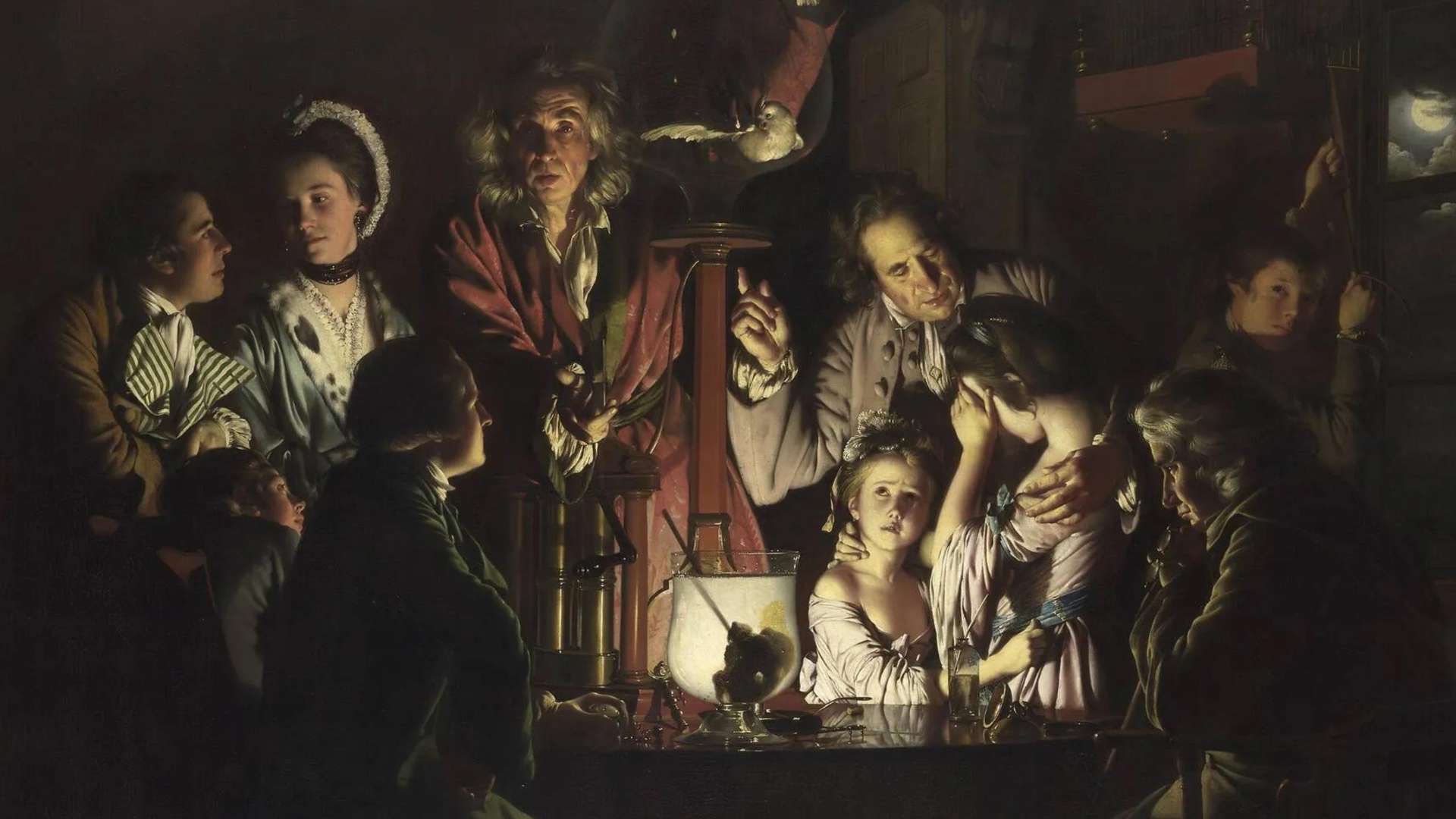
🔍 A Science Experiment
Ask:
- Do you accept results because someone powerful says so?
- Or because the evidence supports them?
Establish:
- Knowledge comes from testing, not obedience.
Teacher line:
“Modernity trusts investigation over inheritance.”
Around the World in Eighty Days was written in 1872, at a time when the world was being transformed by science, invention, and new technologies. Railways, steamships, and precise timetables suddenly made the world feel smaller and more connected than ever before.
The novel follows Phileas Fogg, a calm and extremely logical gentleman who believes that human reason and scientific progress can overcome any obstacle. When others doubt that it is possible to travel around the world in just eighty days, he calculates the routes, trusts the new technologies of the age, and wagers that he can do it.
‘It is quite possible,’ said Phileas Fogg calmly.
‘It is impossible!’ replied one of the gentlemen.
‘I will wager twenty thousand pounds,’ said Fogg, ‘that I will make the tour of the world in eighty days.’
The bet was accepted immediately, for the others believed no man could master such distances in so short a time…
In order to get around the world in eighty days,’ said Phileas Fogg, ‘we must calculate the exact time needed for each stage, allowing for steamers, railways, and every delay that rationally may be foreseen.’
He unfolded a large map and pointed calmly to each route.
‘The journey is possible,’ he added, ‘because science has placed the globe within our reach.’
What does it look like to synthesis the methodologies from this lesson with a text?
This extract reflects Modern thinking because Fogg’s confidence comes from reason and calculation, rather than chance or belief. When Fogg says “we must calculate”, he is showing the scientific enquiry which was in conflict with the faith systems of religion. While the other men doubt the journey is possible and agrue that “no man could master such distance”, Fogg trusts the new scientific systems of his Modernity— timetables, railways, steamships, and the ability to measure the world accurately. His wager shows how Modernist literature treats the world as something that can be understood and mastered through enquiry, not inherited tradition. The meaning of the scene is produced by the clash between skepticism and rational progress, proving that Fogg believes human potential expands when guided by rationality.
Why it is strong:
- Clearly references scientific enquiry
- Shows the Modern shift from faith → reason
- Uses methodological vocabulary:
- Modern thinking
- reason and calculation
- scientific systems
- enquiry, rational progress, measurement
- Explains how literary meaning changes over time, not just what happens
Mary Shelley’s Frankenstein expresses deep belief in the power of science and reason. He uses this new form of enquiry to create life, something previously only attributed to God, but Frankenstein fails in his duty to care for his creation.
One of the phenomena which had peculiarly attracted my attention was the structure of the human frame…
So much has been done, exclaimed the soul of Frankenstein, more, far more, will I achieve: treading in the steps already marked, I will pioneer a new way, explore unknown powers, and unfold to the world the deepest mysteries of creation.
Question: In what way does Frankenstein reflect the literary style of Modern English?
- Explicit advocacy for scientific enquiry
- Human confidence in progress
- Modern shift from belief → reason
- Science as a tool of human potential
Victor believes science allows humans to “explore unknown powers” and “unfold… the mysteries of creation.” This is pure Modernity: reason and science as the path to mastery and truth. Victor’s claim that “So much has been done… more will I achieve” echoes the same faith in progress that we see in Fogg’s calculations in Around the World in Eighty Days. Instead of relying on divine order or inherited knowledge, Victor turns to anatomy, natural philosophy, empirical experimentation, and rational investigation. Victor treats the world as something that can be measured, understood, and overcome — matching the intellectual climate of the early 19th century.
Task 1: Which explanation reflects Modern thinking?
A. “Events happen because fate decides them.”
B. “Events happen because characters make choices and test limits.”
Correct answer: B
This distinguishes Modernity from Early English and Premodern sign systems.
Student Task
Choose one moment in our current text where a character makes a decision or challenges limits.
- Explain how reason, enquiry, or choice shapes the moment.
- Explain what this reveals about human potential or responsibility.
Provide scaffold:
This moment reflects Modern thinking because __________.
It shows human free will / potential by __________.
Encourage focus on:
- ambition
- experimentation
- choice
- consequence
- responsibility
Finish the sentence:
“Modern literature focuses on reason and free will because __________.”
You are listening for:
- Progress from faith and belief of Premodernity
- Belief in human potential
- Belief in rationalism
- Skepticism of faith
- Within the period of Modernity, roughly 1600s – 1900s.
a) Pre-reading of the next lesson – read through the knowledge so you can be ready to discuss in class.
b) Apply the learning of today’s lesson to your own private reading text. Write a paragraph explaining how today’s learning changes how you might conceive your text. Be sure to use the key vocabulary and sentence stems.
c) Write a paragraph about the discipline of Literature, explain how key words from today’s lesson impact the field overall.
d) Add today’s vocabulary and sentence stems to your own glossary. Highlight any that you are unsure about, but you must also research the meanings yourself and develop your glossary to include this differentiated support.
How did you do? Remember, this is the disciplinary knowledge for Literature – it needs combining with the text you are studying now. Can you use this knowledge to write differently about the text you are studying? When you are ready, access the next lesson in this series.