
🎧 Music for Mood
Does that make the feeling less real?
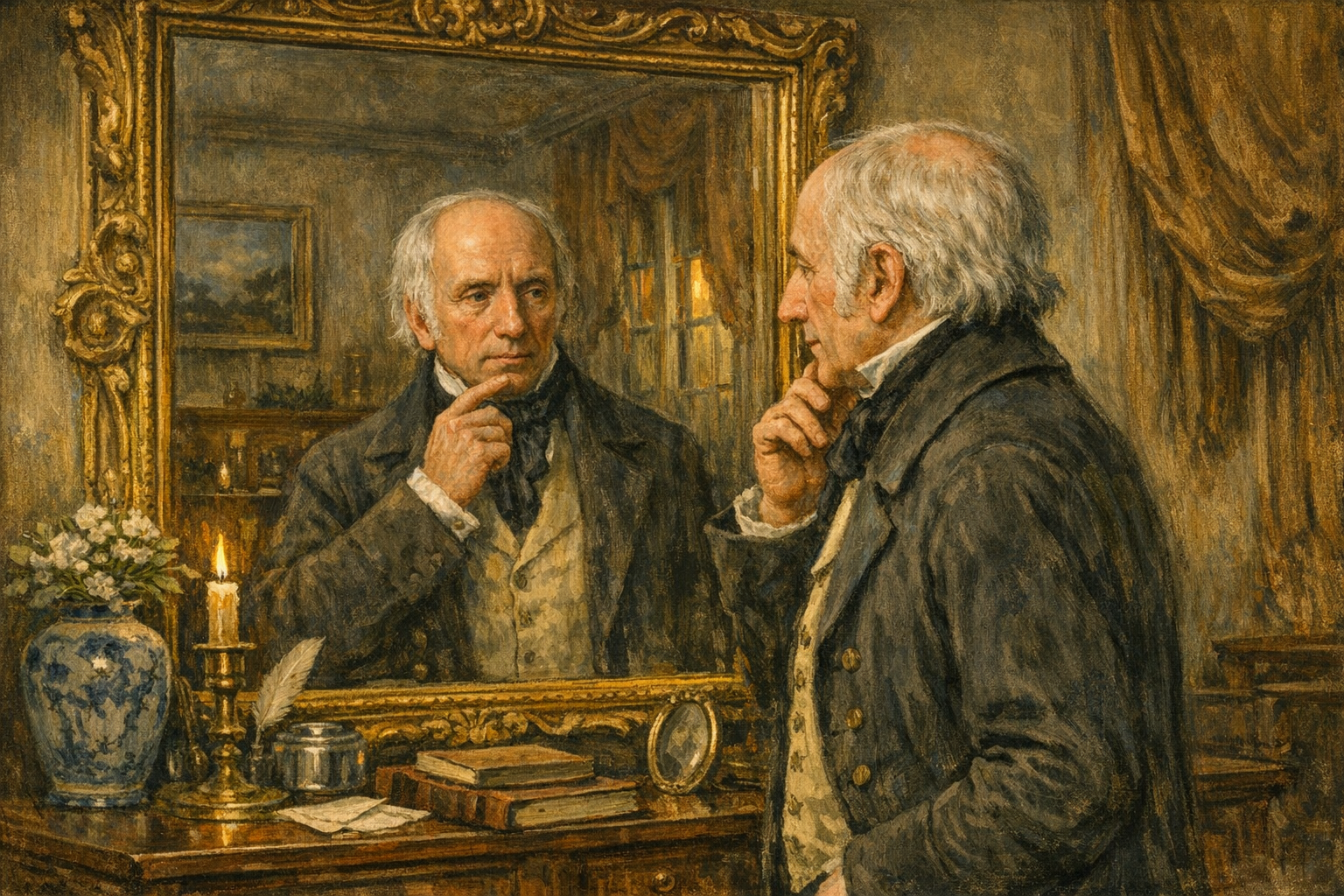
Why do people listen to music to understand how they feel?
Establish:
- Emotion is a way of knowing, music can be cathartic (a permitted release of emotion)
- Reflection deepens understanding
“Romantic writers treat feeling as knowledge.”
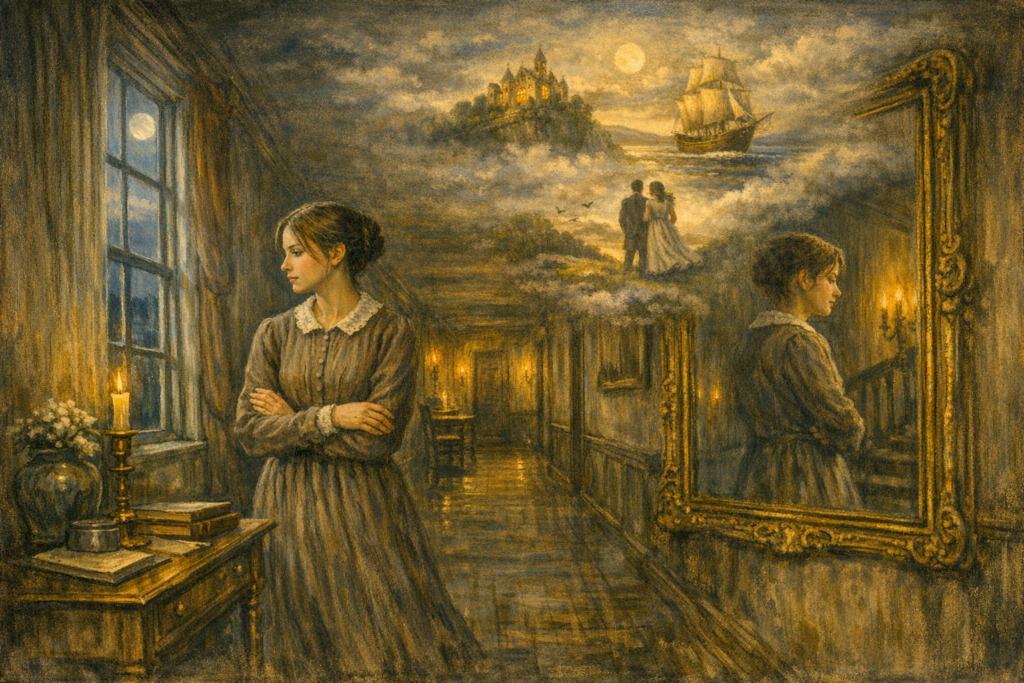
This is the moment where Jane expresses her Romantic longing, emotional restlessness, and inner self‑awareness. This passage appears when Jane is reflecting outside on the battlements/roof of Thornfield, looking over the fields and longing for a richer, more meaningful life:
“Who blames me? Many, no doubt; and I shall be called discontented. I could not help it: the restlessness was in my nature; it agitated me to pain sometimes. Then my sole relief was to walk along the corridor of the third storey, backwards and forwards, safe in the silence and solitude of the spot, and allow my mind’s eye to dwell on whatever bright visions rose before it—and, certainly, they were many and glowing; to let my heart be heaved by the exultant movement, which, while it swelled it in trouble, expanded it with life; and, best of all, to open my inward ear to a tale that was never ended—a tale my imagination created, and narrated continuously; quickened with all of incident, life, fire, feeling, that I desired and had not in my actual existence.
It is in vain to say human beings ought to be satisfied with tranquillity: they must have action; and they will make it if they cannot find it. Millions are condemned to a stiller doom than mine, and millions are in silent revolt against their lot. Nobody knows how many rebellions besides political rebellions ferment in the masses of life which people earth. Women are supposed to be very calm generally: but women feel just as men feel; they need exercise for their faculties, and a field for their efforts, as much as their brothers do; they suffer from too rigid a restraint, too absolute a stagnation, precisely as men would suffer; and it is narrow-minded in their more privileged fellow-creatures to say that they ought to confine themselves to making puddings and knitting stockings, to playing on the piano and embroidering bags. It is thoughtless to condemn them, or laugh at them, if they seek to do more or learn more than custom has pronounced necessary for their sex.”
What does it look like to synthesis this lesson’s methodologies with material?
This extract demonstrates Romantic sensibility because Jane uses her inner emotional life to understand her place in the world. When she insists that “human beings ought to be satisfied with tranquillity” only in theory, she reveals that powerful feelings and restless imagination provide genuine insight into her identity. By reflecting on her desire for “action,” Jane recognises that emotion is not a weakness but a source of knowledge, which matches Modern literature’s shift toward self‑awareness and inner experience. Her reflections challenge the social expectation that women must remain passive, showing how Romantic writing uses feeling, longing, and introspection to produce meaning.
Why it succeeds:
- Uses Lesson vocabulary: Romantic sensibility, self‑awareness, inner emotional life, imagination, feeling as knowledge
- Shows the methodological shift from Enlightenment → Romanticism
- Explains how the meaning is created through emotion
- Connects the extract to broader literary movements
Task 1: Romantic or Not?
Give students statements and ask which reflect Romantic sensibility:
- “The character obeys authority without question.”
- “The character reflects on their feelings to decide what is right.”
- “Nature offers comfort and guidance.”
Student Task
Choose one moment from our current text where a character reflects, remembers, or responds emotionally.
- Explain how emotion or self‑awareness shapes meaning.
- Explain what this reveals about the character’s identity or values.
Provide scaffold:
This moment reflects Romantic sensibility because __________.
The character’s feelings help them understand __________.
Encourage focus on:
- memory
- childhood
- nature
- independence
- moral choice
Finish the sentence:
“Romantic writers believe emotion matters because __________.”
You are listening for:
- understanding
- self‑awareness
- moral insight
- human experience
a) Pre-reading of the next lesson – read through the knowledge so you can be ready to discuss in class.
b) Apply the learning of today’s lesson to your own private reading text. Write a paragraph explaining how today’s learning changes how you might conceive your text. Be sure to use the key vocabulary and sentence stems.
c) Write a paragraph about the discipline of Literature, explain how key words from today’s lesson impact the field overall.
d) Add today’s vocabulary and sentence stems to your own glossary. Highlight any that you are unsure about, but you must also research the meanings yourself and develop your glossary to include this differentiated support.
How did you do? Remember, this is the disciplinary knowledge for Literature – it needs combining with the text you are studying now. Can you use this knowledge to write differently about the text you are studying? When you are ready, access the next lesson in this series.