
Characters of Literature are not well described as ‘fictional’, because so much of what the characters does, says, thinks and feels is a reflection of the real world. We call them fiction because there is often no direct referent in the real world that the character points to, but maybe also there is by the real person has been anonymized behind a made up name. Characters are not not wholly ‘made-up’.
One of the things that makes a character a better reflection of the real world, us to imbue them with human emotions. The emotional reactions in the text have a real world referent that is not fictional. We can draw a direct connection between the emotional journey of the characters with the emotional journey of real people, and like real people, the characters can often be surprising or highly ‘normal’. So what is a normal emotional reaction?
We use the field of Psychology to map the human potential for emotions. Critics can map a range and intensity of emotions using Plutchik’s wheel (8 primary emotions; intensity from mild→strong; dyads). We then connect emotional profiles to authorial design (why this blend here?). Plutchik’s primary emotions and dyads as a robust vocabulary for reading impact.
When students are analysing the emotional potential or journey of the character, they are actually building their empathy for the emotional potential and journey of real people. By analysing the characters however, we can avoid the scrutiny and consent concerns with real subjects. Literature allows us a consent-free subject to scrutinise, which develops are ability to do so in the real world.
- To be able to name and define a range of emotions,
- To be able to show sympathy for others, including fictional characters,
- To be able to use knowledge of emotions to analyse texts
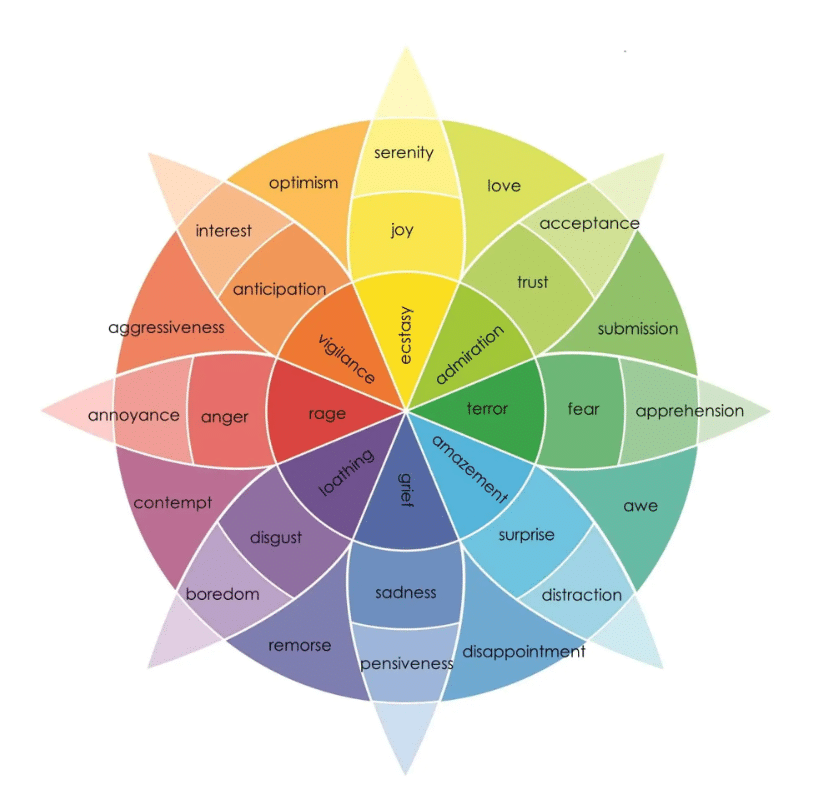
Plutchik suggests eight core emotions (joy, trust, fear, surprise, sadness, disgust, anger, anticipation), each with intensity levels and combinations (dyads). Complex feelings (e.g., remorse) emerge as blends (e.g., sadness + disgust), and intensity shifts (from pensiveness → grief) change a scene’s impact.

A sports loss: sadness (mild) → grief (intense). Next match approaching = anticipation; if you blame yourself = disgust with the self → remorse.

Shelley’s 1818 novel follows Victor’s collapse after William’s murder and Justine’s execution. The scenes of remorse and fear are ideal for mapping intensity and dyads to dramatic effect.
At these moments I wept bitterly and wished that peace would revisit my mind only that I might afford them consolation and happiness. But that could not be. Remorse extinguished every hope. I had been the author of unalterable evils, and I lived in daily fear lest the monster whom I had created should perpetrate some new wickedness. I had an obscure feeling that all was not over and that he would still commit some signal crime, which by its enormity should almost efface the recollection of the past. There was always scope for fear so long as anything I loved remained behind. My abhorrence of this fiend cannot be conceived. When I thought of him I gnashed my teeth, my eyes became inflamed, and I ardently wished to extinguish that life which I had so thoughtlessly bestowed. When I reflected on his crimes and malice, my hatred and revenge burst all bounds of moderation. I would have made a pilgrimage to the highest peak of the Andes, could I, when there, have precipitated him to their base. I wished to see him again, that I might wreak the utmost extent of abhorrence on his head and avenge the deaths of William and Justine.
Our house was the house of mourning. My father’s health was deeply shaken by the horror of the recent events. Elizabeth was sad and desponding; she no longer took delight in her ordinary occupations; all pleasure seemed to her sacrilege toward the dead; eternal woe and tears she then thought was the just tribute she should pay to innocence so blasted and destroyed. She was no longer that happy creature who in earlier youth wandered with me on the banks of the lake and talked with ecstasy of our future prospects. The first of those sorrows which are sent to wean us from the earth had visited her, and its dimming influence quenched her dearest smiles.
Why this extract fits:
- Tracks intensity from despair to acute remorse.
- Shows dyads (e.g., sadness + disgust → remorse; fear + anticipation of “new wickedness”).
- Links emotion design to reader’s experience (sublime nature interludes regulating intensity).
Question: Explore how the characters are impacted by the events of the story
Think back to some of the children’s stories you might have read when young – are the characters motivated by emotions from the wheel? Do the emotions make sense as motivating the actions?
Select a character from your text, and a moment in which they are impacted emotionally.
- Connect what they are saying to emotions on Plutchik’s wheel of emotions.
- Do you think the character is experiencing dyads?
- Explain how the character is ‘well made’ because of the way they mirror human reactions.
Do you think there are any important emotions missing from Plutchik’s wheel / do you agree that the dyads are actually a combination of the two surrounding emotions?
a) Pre-reading of the next lesson – read through the knowledge so you can be ready to discuss in class.
b) Apply the learning of today’s lesson to your own private reading text. Write a paragraph explaining how today’s learning changes how you might conceive your text. Be sure to use the key vocabulary and sentence stems.
c) Write a paragraph about the discipline of Literature, explain how key words from today’s lesson impact the field overall.
d) Add today’s vocabulary and sentence stems to your own glossary. Highlight any that you are unsure about, but you must also research the meanings yourself and develop your glossary to include this differentiated support.
How did you do? Remember, this is the disciplinary knowledge for Literature – it needs combining with the text you are studying now. Can you use this knowledge to write differently about the text you are studying? When you are ready, access the next lesson in this series.