251 Representation & Misrepresentation

Accessibility options: Use your browsers translation, screen reader and AI summary tools to help your studies.

Students will understand how authors construct representations and misrepresentations through bias, selection, exclusion, amelioration, and pejoration, and how these choices impact the portrayal of individuals, groups, ideas and events. This lesson draws on theoretical positions outlined by Feminism, Post Colonialism, Queer Theory and Marxism.

These perspectives note that authors are making selections of signs within a text, and signs within a text can only be considered ‘inauthentic’ – they are not the original, but a re-presentation. This literary form must use the sign systems of language and literary symbolism which are not always well placed to express the human experience. Thus the re-presentation into the literary form can only ever be a secondary experience.

There are losses and gains to the representation however; importantly there will always be elements excluded in the secondary experience, and possibly some elements added that are not present in the primary experience. Representations are made through processes of exclusion and inclusion, but what elements make up the final representation will come down to the author’s ideological position; the representation is impacted by the authorial a bias

By the end of this lesson, students will be able to:

  • Explain how writers choose which parts of reality to present or exclude.
  • Identify examples of bias, selection, exclusion, amelioration and pejoration in texts.
  • Analyse how misrepresentation affects how we view people, groups or events.

Authors do not recreate reality — they rebuild it using inauthentic signs, which means the version we receive is always influenced by choice and bias. All representation involves selection, and all selection causes misrepresentation (because something real is left out, or minor facets are made into identifying features). This can result in amelioration (making something seem more positive) or pejoration (making something seem more negative). These choices shape how readers understand individuals, groups, ideas, and events.

  • Representation – the reconstructed version of reality in a text.
  • Selection – the chosen elements an author includes from reality.
  • Exclusion – the parts of reality left out, either deliberately or unintentionally.
  • Bias – an author’s perspective influencing representation.
  • Misrepresentation – inaccurate or distorted depiction created through selective signs.
  • Amelioration – representation that makes something appear better than reality.
  • Pejoration – representation that makes something appear worse than reality.
  • “The author represents the subject through a selective focus on…”
  • “This misrepresents reality because the writer excludes…”
  • “The representation is shaped by bias, as suggested by…”
  • “This portrayal ameliorates the subject by emphasising…”
  • “The pejorative depiction relies on the exclusion of…”

✅ Acceptable phrasing:

  • “The selections made by the author are making the subject appear [better / worse] than reality, because…”

🚫 Do not accept:

  • “Literature is made up fiction and we cannot learn about individuals, groups, ideas or events.”
  • “Literature is a valid experience that is true to life.”

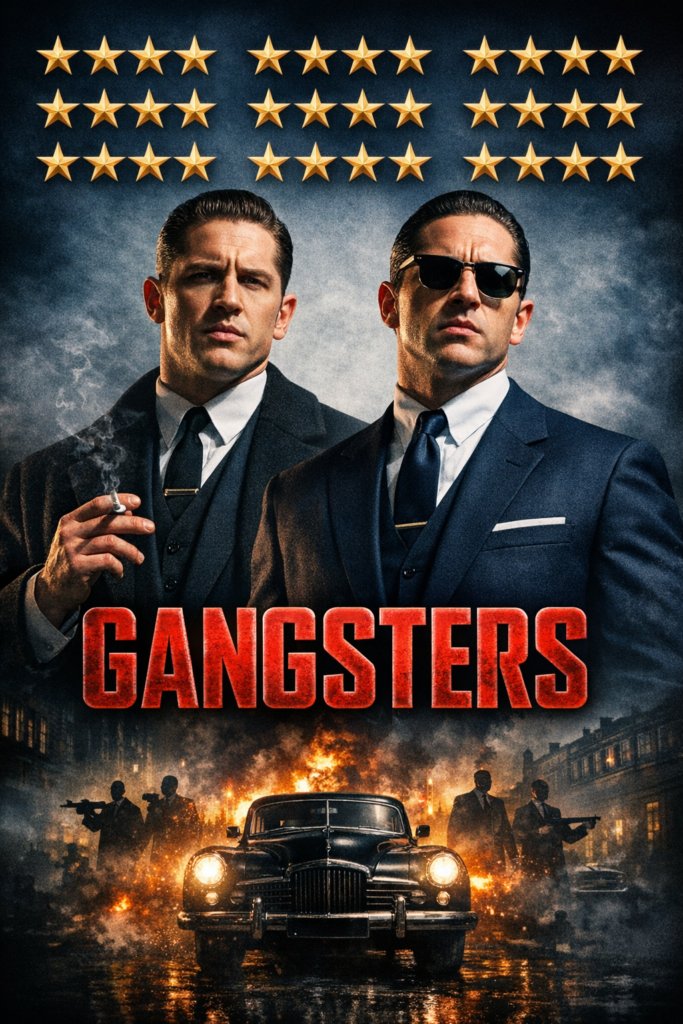
Think of a movie promotional poster: it will often carry reviewer ratings, stars and names of influential newspapers. But it will only be a selection, not the full range. It will also select only the highest awards, and exclude presenting the poorest awards. This reflects the bias behind the poster, they want audiences to think the movie is well rated even it is isn’t.

Marketing campaigns want to use a selection of reviews to ameliorate (improve) our view of the product. This will usually be a misrepresentation motivated by the bias of profit. They are misrepresentations because they will exclude any negative responses; claims that food is unhealthy, claims that the product is poor value, claims that the product is badly made.
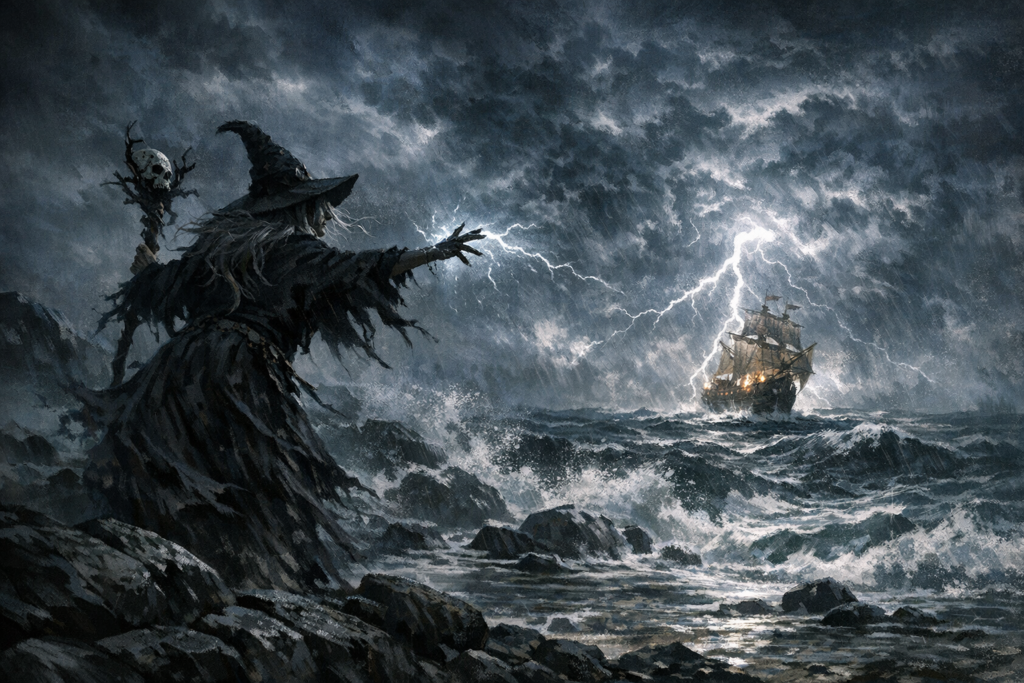
This scene, in which a witch curses the captain of the ship ‘The Tiger’, makes representations of women, or ritual behaviour, possibly of paganism (which was oppressed by the new dominant narrative of Christianity after the Normans arrived). There is a clear bias motivating the way that women, ritual and paganism is being represented because the society was becoming less accepting of diversity.

FIRST WITCH 
A sailor’s wife had chestnuts in her lap
And munched and munched and munched. “Give me,” quoth I.
“Aroint thee, witch,” the rump-fed runnion cries.
Her husband’s to Aleppo gone, master o’ th’ Tiger;
But in a sieve I’ll thither sail,
And, like a rat without a tail,
I’ll do, I’ll do, and I’ll do.

SECOND WITCH 
I’ll give thee a wind.

FIRST WITCH 
Th’ art kind.

THIRD WITCH 
And I another.

FIRST WITCH 
I myself have all the other,
And the very ports they blow;
All the quarters that they know
I’ th’ shipman’s card.
I’ll drain him dry as hay.
Sleep shall neither night nor day
Hang upon his penthouse lid.
He shall live a man forbid.
Weary sev’nnights, nine times nine,
Shall he dwindle, peak, and pine.
Though his bark cannot be lost,
Yet it shall be tempest-tossed.

Why this extract suits the objectives:

  • It demonstrates deliberate selection of signs: What is selected is chants, occult behaviour, curses. What is excluded is pagan identity, medicine and wisdom
  • This leads to a misrepresentation of women and paganism; it is seen as anti-Christian, demonic and heathen.
  • This representation leads to misogyny, and bigotry. Misrepresentation comes to hard its subjects for decades or even centuries afterwards.

Question: How have the witches in this scene been represented?

The witches are engaged in occult actions; they are creating curses which make people miserable such as the sailors on a ship called The Tiger. The witch creates terrible storms which will put their lives at risk or at least give them an awful time at sea. The witch does this as revenge against a woman that wouldn’t share her food. The witches are evil, malicious and we can see a pattern in their behaviour, because they treat Macbeth in a similar way. They seem to have no motivation other than to cause mischief and harm. The audience would have been rightfully scared of witches.

Why if fails

  • It summarises content instead of analysing the representation decisions (selection, bias, exclusion).
  • It presents the witches as an entirely fictional creation, and not based on some reality of women.
  • It hasn’t recognised the harm that literary texts can have when the author’s bias leads to a misrepresentation of real people.

“Shakespeare writes in a country that was deeply pagan before it was Christian – paganism is often associated with a close relationship with the natural world, with local spirits and gods of the Earth. Heathen people (as in, living on the heath) would have attempted early forms of medicine and magic using herbs. This has been turned into a scene of witchcraft and devilry through a bias selection of signs. It is a misrepresentation of heathen culture, and attributes to the witches all sorts of terrible signs; “scale of dragon, liver of blaspheming jew, ingredients for our cauldron”. These signs pejorate women who were often midwives or village elders, helping people through a very basic knowledge of the natural world. Women have suffered misogyny and when literary texts support or perpetrate stereotypes, literature harms the lived experience of the people being represented.”

Question: Do texts change reality, and if so, why or how?

  • Reality can’t fit into a story, it is reduced through a process of selection and exclusion
  • The process of reduction is arbitrated by bias,
  • Bias shapes the way the real world appears within the text,
  • We can begin to think that the non-fiction world is an accurate representation even when it isn’t,
  • When the real world doesn’t look like the non-fictional world, we might feel that it is the non-fiction world that is reliable.

Explore representations in our text:

  • Select an individual, a group, an event or an idea,
  • Connect this to a real, authentic subject,
  • Gather together a range of signs attached to the fictional representation,
  • Consider what signs were excluded from the representation,
  • Do you think the real, authentic subject is being ameliorated or pejorated through the representation?
  • What might the authors bias be which motivates this misrepresentation?

Can a literary text ever be an accurate representation? Are all signs in a text fundamentally a misrepresentation?

Indicative ideas:

  • Literature will always be a misrepresentation because of the limitations of the form.
  • Reality is a long and complex experience,
  • A literary text cannot hope to impart accurately the full reality and so something has to be left out,
  • What ever is left out will always be at the behest of the author; the author selects what different happens,
  • Literature also wants to be dramatic to appeal to the audience, and real life isn’t always dramatic,

a) Pre-reading of the next lesson – read through the knowledge so you can be ready to discuss in class.

b) Apply the learning of today’s lesson to your own private reading text. Write a paragraph explaining how today’s learning changes how you might conceive your text. Be sure to use the key vocabulary and sentence stems.

c) Write a paragraph about the discipline of Literature, explain how key words from today’s lesson impact the field overall.

d) Add today’s vocabulary and sentence stems to your own glossary. Highlight any that you are unsure about, but you must also research the meanings yourself and develop your glossary to include this differentiated support.

How did you do? Remember, this is the disciplinary knowledge for Literature – it needs combining with the text you are studying now. Can you use this knowledge to write differently about the text you are studying? When you are ready, access the next lesson in this series.