
This lesson establishes the purpose of literary writing:
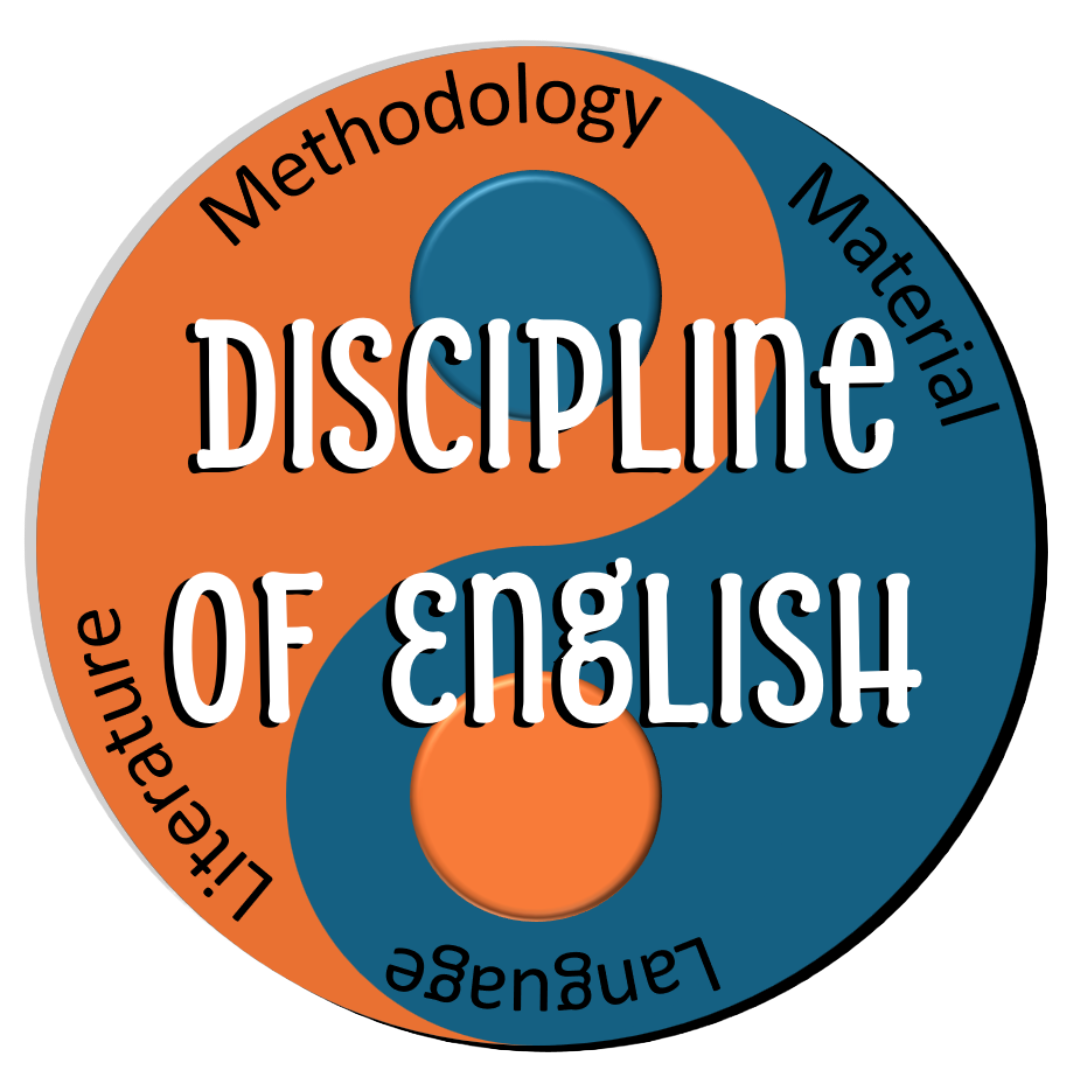
Students are not writing to show they remember the story or spot techniques. They are writing to synthesise material knowledge (the text) with methodological knowledge (how literature produces meaning).
This lesson directly displaces:
- PEE / device-spotting
- “This shows / this suggests” loops
- Text-as-object thinking
And replaces it with:
- Text-as-material
- Literature-as-discipline
- Meaning-as-produced through methods
This follows on the key distinction in the work of Bloom, Anderson and Krathwohl who refer to Material and Methodological knowledge forms. Michael Young’s work on “Powerful Knowledge” is the backbone of the knowledge-rich curriculum movement. His theory argues that schools should give all students access to specialised, structured disciplinary knowledge that they cannot acquire through everyday experience. This idea directly underpins contemporary knowledge-rich curriculum design. E,D, Hirsh also explored the importance of ‘core’ knowledge’ that is the transferable and mandatory element within a discipline. It might also go by the terms of substantive knowledge or epistemic knowledge. This is referred to by these lessons as the methodological. It is important that students recognise that Literature as a field of enquiry contains a substantive knowledge that is not within the text, but to be applied to the text. These lessons are built around the substantive knowledge to be applied to any text being studied.
The issue for studying Literature as an academic discipline is that the ‘academia’ of Literature is not a fixed, nor an agreed-upon construct. Firstly, Literature is rather surprisingly not an old and obvious field of enquiry. The universities of Oxford and Cambridge had been established for 800 years before English studies were established as courses.
Part of the problem with defining the course is that there exists a literary text to read, but knowing the text alone is not particularly academic. No investigation, no hypothesis, no tools are being used when a report merely knows the text. It took early lecturers of English studies such as F.R. Levis to begin defining some ‘procedure’, some ‘selection process’ and some ‘method to apply’ upon the text that became the tools of literary investigation. Levis’ approach has not been widely adopted however, in part because his process was not well defined, nor replicable. It still suffered from subjectivity meaning different investigations were going to arrive at wildly different conclusions.
A general solution as to the ‘ways and means’ that comprise the field of enquiry has been to adopt those of other literary fields; Marxism, Freudianism, structuralism, feminism, semiotics for instance. These conceptual positions did not originate within Literature, but their approaches are deeply informative. They each provide a terminology and procedure that allows readers to dismantle texts in ways that refer to external agents, as opposed to the non academic approach which circulates discussions internally within the logic of the text. These conceptual frameworks apply cultural logic texts.
These cultural logics are of course non-fiction – they engage in the real world around us and attempt to observe and parse elements of society; attaching signifiers to abstract phenomena. This requires us to read the text as a non-fiction artifact, so that the theoretical (which is ultimately the language of non-fiction ) can apply.
These three distinctions (that literature is a methodology applied to a text, that literature is not well conceived as ‘fiction’, and that literature is a historical structure) mean that PEE, PEAL, PETAL, SQUID type writing frames are not well placed to support students in writing their essays. These scaffolds do not impart any disciplinary knowledge. This curriculum is also cynical of mere ‘semiotic’ or ‘linguistic’ curriculum which does not teach students to interpret the history of literary signs.
Here are the learning objectives for today:
- Good literary writing combines what the text contains with how literature works
- Analysis is not just describing the text, but using concepts about Literature to understand the text better
❌ What Students Often Think:
“If I explain the quote and name a technique, I’ve analysed it.”
“If I simply recall the events of the story in increasing detail, I am increasing my analysis”
✅ What Literary Study Actually Does:
“I use ideas about how literature works to explain why this text means what it does.”
You already have the material. What is important is understanding via the methods. Retelling the material without the methods is just a paraphrase of what was read.
- Material – the text itself (story, characters, events, language). This cannot be found from reading about the methodology.
- Methodology – the range of knowledge being applied to the text. This knowledge cannot be found from the text; reading the text does not give you the methodological knowledge.
- Synthesis – using methodological knowledge to think differently about material. Applying methods to the material.
- Analysis – the act of seeing a text differently because of the methods. Analysis is a changed position or new thinking. It can only be done through synthesis of methods to material.
- The material that we are trying to understand is…
- We are applying the methodologies of Literature to help us understand that…
- The method that I am using is…
- A passage from the text that really demonstrates this concept is…
- We can see the concept of ___ applies well to the concept of…
- Synthesising the text and the methodologies has allowed me to see the text very differently. I have analysed the text to mean…
✅ Acceptable phrasing:
- “I use ideas about how literature works to explain why this text means what it does.”
- You already have the material. What is important is understanding via the methods. Retelling the material without the methods is just a paraphrase of what was read.
🚫 Do not accept:
- “If I explain the quote and name a technique, I’ve analysed it.”
- “If I simply recall the events of the story in increasing detail, I am increasing my analysis.”

Any analytical process requires some common tools, which are used across different material:
• A Mechanic will have a toolbox which will contain wrenches, hammers, screwdrivers… and they will use these tools upon cars, motorbikes, boats…
• A Joiner will have a toolbox containing planes, saws, miters, mallets… and they will use these tools upon chairs, cupboards, drawers…
• An architect will have a toolbox containing CAD software, calculation charts, budget plans… and these will be used repeatedly on different houses, buildings or projects.
Literature is the same; there is a box of tools that should students should become skilled in using, like the skill of hammering, planning or calculating. These tools will be applied to different texts.
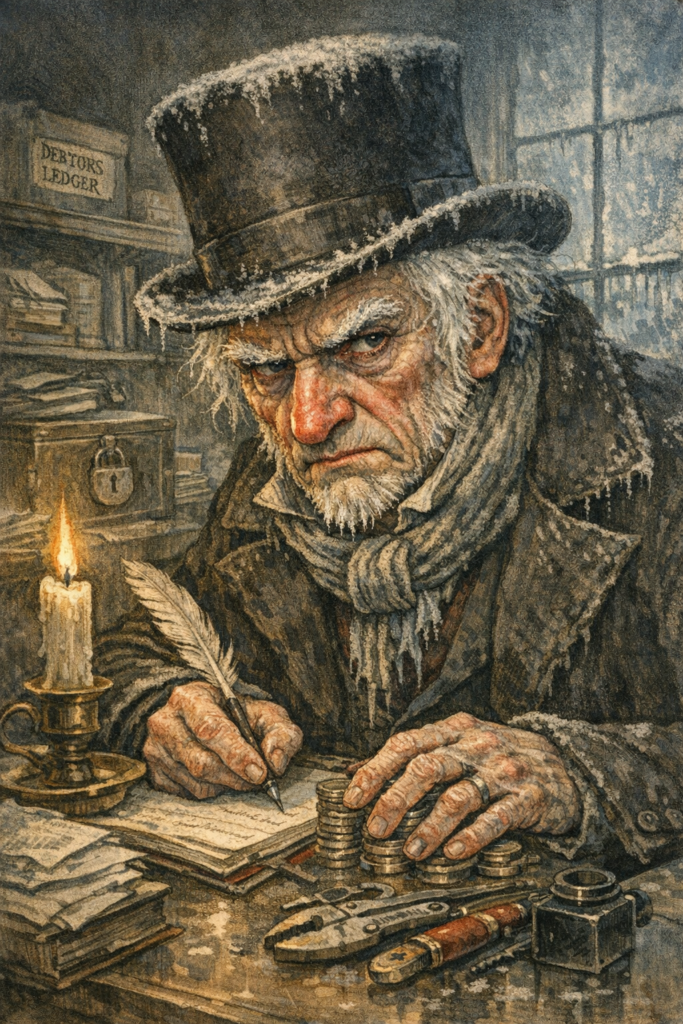
Dicken’s A Christmas Carol carries one of the most important themes of modern novels; that of transformation. It is a theme that was not always important to literature, and to talk about modern novels means reflecting on how content changes over time.
And he did it; yes, he did! The clock struck nine. No Bob. A quarter past. No Bob. He was full eighteen minutes and a half behind his time. Scrooge sat with his door wide open, that he might see him come into the Tank.
His hat was off, before he opened the door; his comforter too. He was on his stool in a jiffy; driving away with his pen, as if he were trying to overtake nine o’clock.
“Hallo!” growled Scrooge, in his accustomed voice, as near as he could feign it. “What do you mean by coming here at this time of day?”
“I am very sorry, sir,” said Bob. “I am behind my time.”
“You are?” repeated Scrooge. “Yes. I think you are. Step this way, sir, if you please.”
“It’s only once a year, sir,” pleaded Bob, appearing from the Tank. “It shall not be repeated. I was making rather merry yesterday, sir.”
“Now, I’ll tell you what, my friend,” said Scrooge, “I am not going to stand this sort of thing any longer. And therefore,” he continued, leaping from his stool, and giving Bob such a dig in the waistcoat that he staggered back into the Tank again; “and therefore I am about to raise your salary!”
Bob trembled, and got a little nearer to the ruler. He had a momentary idea of knocking Scrooge down with it, holding him, and calling to the people in the court for help and a strait-waistcoat.
How do we write about this scene?
Dickens presents Scrooge as transformed when we read “I am not going to stand this sort of thing any longer.” This is significant in Literature because we witness some cultural change in the way people are presented in texts. Only 200 years prior, Shakespeare was defining characters such as Romeo, Juliet, Macbeth, maybe even Othello, as characters that were not in control of their futures. The Jacobean period had people believe their lives were in the hands of God, their futures prewritten, destiny in place. But By the time we come to Dickens, authors are expressing a very different culture; one of self-determination. Scrooge is able to change who he becomes in life because his future is no written. Even though the Ghost of Marley tells him what will become of Scrooge, it is only a hypothetical and Scrooge is able to define is outcomes. This is a cultural belief held strongly today still, and reading texts like A Christmas Carol reminds us that culture changed from one in which people were helpless, to one in which people have authority in their own lives. It’s a powerful and positive message that many still need to read and know so that they do not descend into subjugation and subordination – we individuals can decide our futures, if only we are motivated to reflect on the past and choices about what we do now, so that we become what we want to be.
What changed?
- The quote stayed the same
- The explanation changed
- A methodological idea was added: What literature commonly does and how stories speak back to earlier traditions.
This is likely to be one of your very first lessons in Literature – it’s Literature 101! So for now, you need to familiarise yourself with the material. Read summaries, watch adaptations, and scan through characters.
Whilst you are reading, you should look for all the ways the text feels similar to other texts, rather than unique. Literature methodologies ultimately focus on how stories share patterns and rules.
1. A 3 minute crash course
2. A 10 minute summary
3. A film adaptation
This will take a few lessons, before we continue with Literature 102.
1. What texts have you noticed that feel the same as each other?
2. Can you think of an analogy in which someone has to balance two things; some material, and a skillset to apply to the material?
a) Pre-reading of the next lesson – read through the knowledge so you can be ready to discuss in class.
b) Apply the learning of today’s lesson to your own private reading text. Write a paragraph explaining how today’s learning changes how you might conceive your text. Be sure to use the key vocabulary and sentence stems.
c) Write a paragraph about the discipline of Literature, explain how key words from today’s lesson impact the field overall.
d) Add today’s vocabulary and sentence stems to your own glossary. Highlight any that you are unsure about, but you must also research the meanings yourself and develop your glossary to include this differentiated support.
How did you do? Remember, this is the disciplinary knowledge for Literature – it needs combining with the text you are studying now. Can you use this knowledge to write differently about the text you are studying? When you are ready, access the next lesson in this series.

