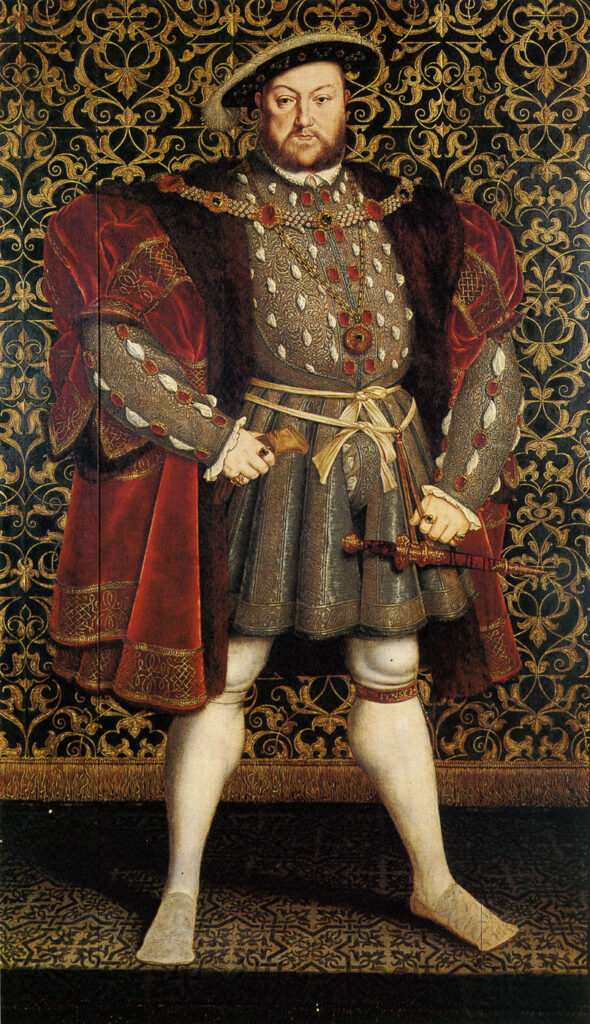
In the Whitehall full‑body portrait of Henry VIII, there is non‑fiction elements because it refers to a real king (Henry VIII) and real features of Tudor power like royal clothing, jewels and wealth; it is trying to make the viewer a kind of virtual witness to monarchy and authority by suggesting it is realistic. But there is also fiction, because the image is carefully made up and staged to create a message: Henry is shown front‑facing, massively wide and dominant, with expensive fabrics and controlled posture that encode strength, control and unquestionable power.
The portrait leaves out anything that might weaken that meaning (ageing, illness, doubt, ordinary humanity), so the “truth” we decode is not just “what he looked like” but “what kingship is supposed to feel like.” An original audience would have an aesthetic experience of fear, awe and divinity. In other words, the painting blends reality and invention: the non‑fiction is the real historical figure and context, and the fiction is the visual story of power the portrait constructs so that viewers respond emotionally — through awe, mood and impact, not just realism.
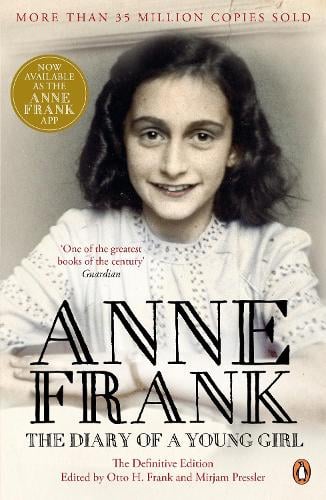
A great fit for this is the opening of The Diary of Anne Frank, because it’s non‑fiction (real person, real date, real situation) but it’s written in a way that creates a strong aesthetic mood.
“I hope I will be able to confide everything to you, as I have never been able to confide in anyone, and I hope you will be a great source of comfort and support.”
SUNDAY, JUNE 14, 1942
I’ll begin from the moment I got you, the moment I saw you lying on the table among my other birthday presents. (I went along when you were bought, but that doesn’t count.)
On Friday, June 12, I was awake at six o’clock, which isn’t surprising, since it was my birthday. But I’m not allowed to get up at that hour, so I had to control my curiosity until quarter to seven. When I couldn’t wait any longer, I went to the dining room, where Moortje (the cat) welcomed me by rubbing against my legs.
(Anne Frank, The Diary of a Young Girl)
Diary Of A Young Girl is our material in Literature, by the author Ann Frank. It is in the form of a diary. Diaries are non-fiction, meaning they are based on reality. But authors will often mix fiction in too, so the made-up can enhance the reality (or vice versa). When reading this text, we are seeing a events that happened in the real world and we can look for this reality. When looking for elements of the real world, we are undertaking an efferent reading. But sometimes we don’t care for the real world and want to simply enjoy the book in an aesthetic way.
Frank tells us about the experiences of Jews in WWII and so an efferent reading discovers the racism and prejudice she faces. But she also writes in detail about the little joys and terrifying moments that thrill us as readers, and so we are impacted in an aesthetic way. Importantly, we can learn efferently about Frank’s dangers without risk to ourselves; we a re a virtual witness to the horrors of WWII.
Your text will be made up of fictions and non-fictions. You can read your text in an efferent way, trying to find information about the real world by focusing on the non-fictions. Or you can read the text in an aesthetic way, focusing on the tone, mood and emotion that author wants you to feel. Remember that single quotes can contain both.
Select your passage, refine down to a single quote, and explain the two different readings that can be drawn from the words.
When reading a newspaper, which stance should the reader take and why?
When reading a poem, which stance should the reader take and why?
A newspaper is a transactional item – ie we read it specifically for information. A poem is verse, but can also be informative. Many poems are protest in nature, and they are trying to use the aesthetic reading to make the efferent reading ‘stick’.
a) Pre-reading of the next lesson – read through the knowledge so you can be ready to discuss in class.
b) Apply the learning of today’s lesson to your own private reading text. Write a paragraph explaining how today’s learning changes how you might conceive your text. Be sure to use the key vocabulary and sentence stems.
c) Write a paragraph about the discipline of Literature, explain how key words from today’s lesson impact the field overall.
d) Add today’s vocabulary and sentence stems to your own glossary. Highlight any that you are unsure about, but you must also research the meanings yourself and develop your glossary to include this differentiated support.
How did you do? Remember, this is the disciplinary knowledge for Literature – it needs combining with the text you are studying now. Can you use this knowledge to write differently about the text you are studying? When you are ready, access the next lesson in this series.