Learning Objectives
Teacher Framing:
This lesson challenges a persistent but misleading student assumption: that writers create stories ex nihilo, inventing narratives from nothing. Literary scholarship overwhelmingly rejects this view. As Roland Barthes argues, the figure of the “Author” as an originator is a cultural myth; texts are “a tissue of quotations drawn from innumerable centres of culture,” not autonomous acts of invention. Literature is therefore never truly original in the sense students often imagine.
Across the twentieth century, theorists repeatedly demonstrated that no text stands outside tradition, structure, or prior meaning systems. Vladimir Propp’s Morphology of the Folktale (1928) shows that stories share deep structural functions that recur across cultures. Northrop Frye’s Anatomy of Criticism (1957) identifies literature as an organised system of archetypes and narrative modes that writers inherit rather than invent. Claude Lévi‑Strauss, analysing myth, argues that stories are transformations of earlier stories — variations within a cultural matrix rather than creations with a single point of origin. More recently, Gérard Genette’s theory of transtextuality makes explicit that every text exists in a network of relations with other texts, genres, and discourses.
Taken together, these thinkers dismantle the idea of a true Ur‑form — a single, original, foundational story from which all others derive. Instead, literature is best understood as a field of repetition with variation, where meaning emerges through patterns, echoes, and transformations.
This lesson therefore aims to:
- Displace myths of originality by showing that literary creation is always intertextual and historically situated.
- Explain similarity without invoking plagiarism, helping students recognise shared structures as features of literary tradition rather than evidence of copying.
- Strengthen students’ understanding of historical sign systems, enabling them to see how genres, motifs, and narrative patterns circulate across time.
- Make literary tradition visible and usable, giving students conceptual tools to recognise how writers work within — and creatively reshape — inherited forms.
The goal is not to diminish creativity, but to reposition it: writers do not invent from nothing; they transform what already exists.
Student Learning Objectives:
Today we are learning how texts are connected to other texts. By the end of the lesson, you will understand that:
- Meaning comes from how texts connect to other texts
- Stories are built from earlier story patterns
- Writers reuse and transform existing ideas
Core Knowledge:
Stories are not created from nothing. There is no single original story that all others copy, even though we sometimes imagine there is one. Instead, writers build new stories using ideas, patterns, characters, and structures from earlier texts and traditions. This network of connections between texts is called intertextuality. A text gains meaning because it draws on what readers already recognise from other stories, and then changes, adapts, or reshapes those ideas to create something new. Literature moves forward by transforming old stories, not by inventing everything from scratch.
“Stories come from other stories.”
Key Ingredients:
Key Vocabulary:
- Ur‑form – the idea of a single original story (which doesn’t really exist)
- Intertextuality – connections between texts
- Tradition – repeated story patterns and ideas over time
Key Sentence Stems:
These now join the cumulative toolkit.
- “This text draws on earlier traditions of…”
- “Rather than inventing something new, the writer transforms…”
- “The meaning develops through intertextual links to…”
These stems are unit‑proof and transferable.
Key Thinking:
Tell students:
- “Intertextuality is not copying.”
- “It is how literature moves forward.”
This protects students from simplistic plagiarism thinking.
Models
Non Literary Warm Up:
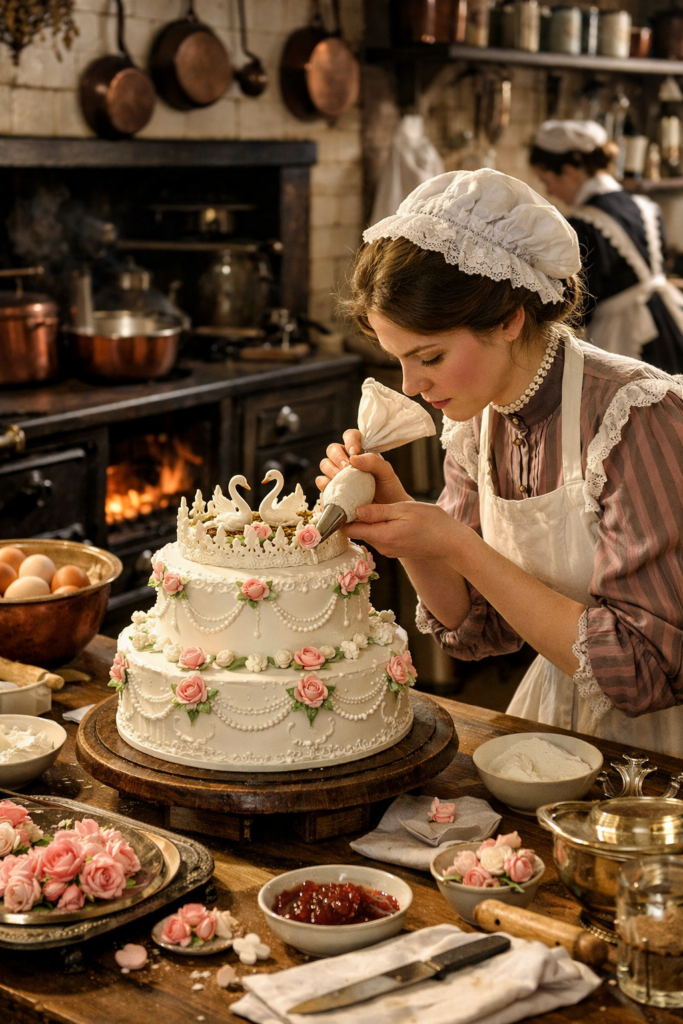
🧩 A Recipe or product
What did the first cake look like?
Did someone invent “cake” once and everyone else copied?
Establish:
- There is no single original cake, everything is derived right back to mixing flour with water.
- From the very first recipe to today’s complex culinary skills, techniques and dishes are continual variations and adaptations of what went before.
Stories make references to one-another, and it is impossible to find any ‘original’ that copies nothing.
Literary example – Never Let Me Go:
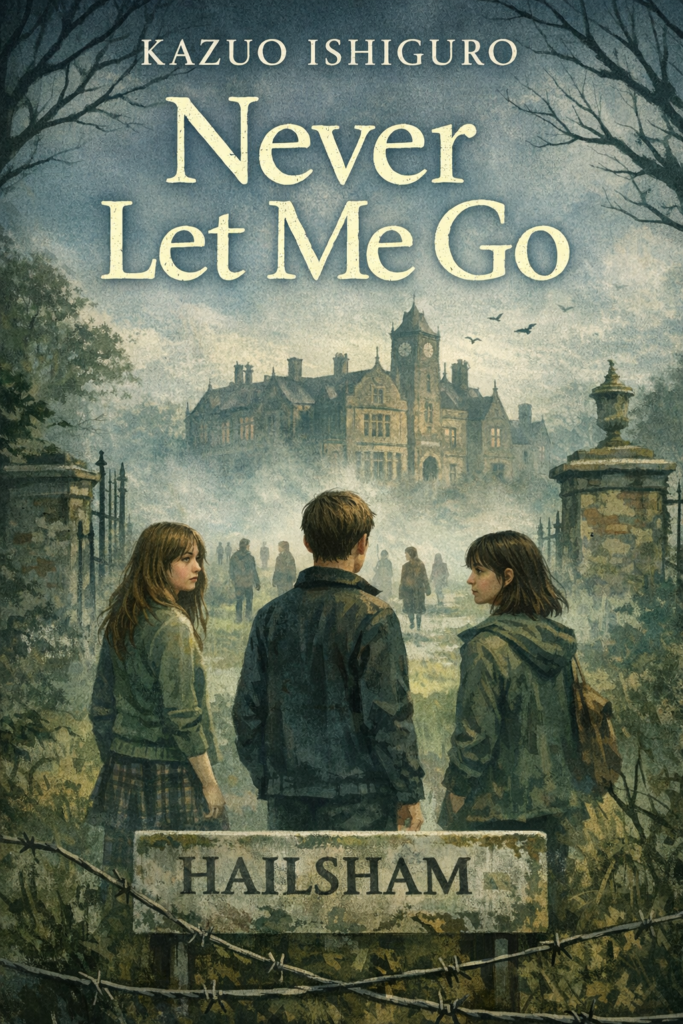
Ishiguro’s Never Let Me Go tells a story of children ‘made’ to benefit society; they are clones, raised to give themselves willingly when society needs them. The children are raised to accept their fate as simply serving society, and by the end of the tale, their world feels deeply exploitative.
“…But the point is, whoever decides, Madame or whoever it is, they need something to go on.”
I nodded slowly. “So that’s why they took away our art…”
“It could be. Madame’s got a gallery somewhere filled with stuff by students from when they were tiny. Suppose two people come up and say they’re in love. She can find the art they’ve done over years and
years. She can see if they go.If they match. Don’t forget, Kath, what she’s got reveals our souls. She could decide for herselfwhat’s a good match and what’s just a stupid crush.”
I started to walk slowly again, hardly looking in front of me. Tommy fell in step, waiting for my response.
“I’m not sure,” I said in the end. “What you’re saying could certainly explain Miss Emily, what she said to Roy…
Why it fits:
- Grapples with whether they are human or not, like other ‘monster’ stories,
- Refers to art and souls as a way of testing humanity, like other texts.
Never Let Me Go makes a twist on the common theme of creation and authority. This novel feels intertextual with Shelley’s Frankenstein, in which a part of the novel speaks from the creatures perspective about growing up, knowing he has a creator but is abandoned by him. Never Let Me Go is similar, in that the created children are abandoned by their ‘originals’ until they are needed to serve some purpose. Both Frankenstein and Never Let Me Go feels intertextual to the Victorian morality test, in which people exhibited art work to demonstrate their inner essence. Never Let Me Go takes a modern, science fiction twist on these earlier texts, but there is no ur-form, no unique original, and Ishiguro’s work is intertextual to earlier traditions – it’s a constant chain of connections going backwards through literary heritage and each author takes themes of old and adapts them for a modern audience.
Now Apply To This To Our Text:
Choose one idea, character type, or story pattern in our current text.
- Explain what earlier tradition it draws on / repeats / seems similar to.
- Explain how the writer changes or updates it to suit a modern audience.
Use the following scaffold to help:
- This text draws on the tradition of __________.
- The writer transforms this by __________.
Encourage focus on:
- heroes
- villains
- journeys
- conflicts
- endings
- moral lessons
Exit Question:
Finish the sentence:
“Texts gain meaning through intertextuality because __________.”
You are listening for:
- transformation
- inherited ideas
- connections
- traditions
Homework:
a) Pre-reading of the next lesson – read through the knowledge so you can be ready to discuss in class.
b) Apply the learning of today’s lesson to your own private reading text. Write a paragraph explaining how today’s learning changes how you might conceive your text. Be sure to use the key vocabulary and sentence stems.
c) Write a paragraph about the discipline of Literature, explain how key words from today’s lesson impact the field overall.
d) Add today’s vocabulary and sentence stems to your own glossary. Highlight any that you are unsure about, but you must also research the meanings yourself and develop your glossary to include this differentiated support.