
This lesson answers the next inevitable student question:
“We learnt already that meanings don’t change, so how can literature reflect changing societies?”
Your disciplinary answer:
Change happens very slowly and only with significant cultural effort – changing sign systems is a seismic event, not a constant evolution. We can reduce these seismic events to just the most significant for a basic study of disciplinary Literature.
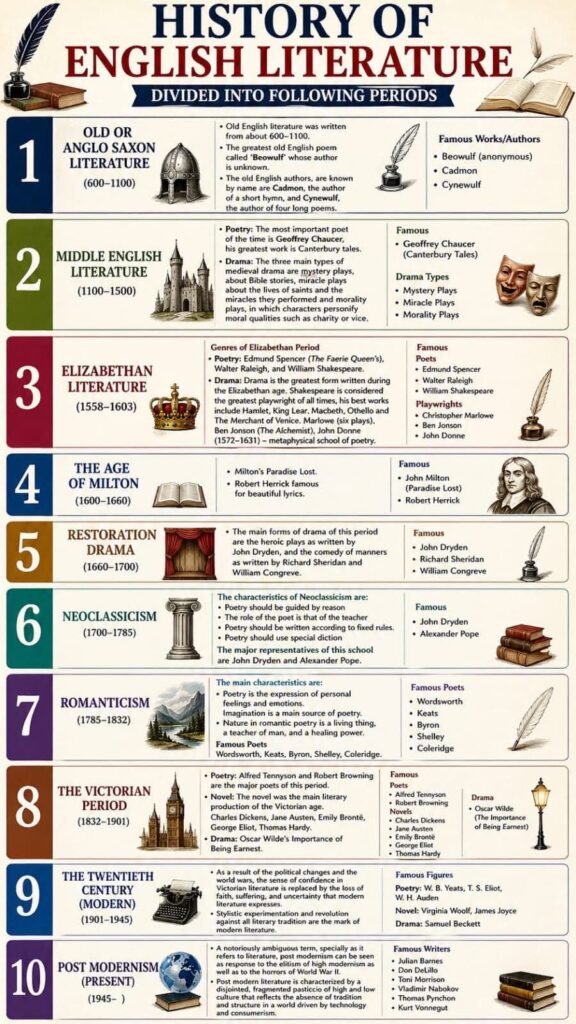
This lesson explores the significant signs-systems of:
- Early English is defined by Pagan ritual, feudalism, and warrior ethics
- Premodernity is defined by a rapid rise in the Christian narrative
- Modernity is defined by the rise is rationalism, enlightenment, humanism, the middle classes and industry
- Postmodernism is defined by the rise in global interconnectedness, the digital landscape and consumerism
- That no era disposes of prior eras, but become a new layer atop the old – archaic sign-systems live as a geological substrata beneath the new and these layers give complexity and sophistication to meaning. The particular geology of meaning that is ‘English’ Literature could be unique to any other Literature, it reflects our history.
From this point forward, Literature studies becomes deeply entwined with British history. It posits that signs can only change when a seismic shift in culture has occured, and to be able to decode those layers of meaning requires historical awareness.
Students will learn about these eras in forthcoming units, but the principle of a ‘layering of meaning’ must be accepted. Just as the physical landscape gives us layers of history, symbolism in literary texts has a layered history. The sword for instance in the texts of Early English is associated with the warrior, power, strength and courage. It adopts meanings of chivalry, knighthood and defense of the faith in Premodernity. By Modernity, it could be seen as a symbol of colonialism and wars; it’s meaning is much more negative and the blood on the blade is much more a symptom of the failure of people in power to dam the events that lead to war. By Postmodernity it can be seen as a symbol of justice, social uprising and traditional values. Symbolism in a structural sense recognises that over time, signs become more layered, more complex and more sophisticated. Signs need to be used carefully because of the substrata that allows them to be interpreted and used in multiple ways. But, signs are also limited to the meanings that are contemporaneous to its use and earlier.
Today we are learning how texts carry meanings from different historical eras.
By the end of the lesson, you will understand that:
- Literary meaning is built from layers of older meanings
- Different eras contribute different ideas to texts
- These layers make modern texts rich and complex
Texts often contain many meanings at the same time because they are built from layers of ideas that come from different historical periods. New ways of thinking do not erase old ones; instead, they are added on top, like layers of rock beneath the ground. These layers are called substrata. Words, images, and symbols carry older meanings from earlier eras alongside newer ones, which is why a single moment in a text can reflect different beliefs, values, or worldviews at once. Understanding literature means recognising that meanings are gathered over time, not replaced, and that richer texts carry traces of the past within them.
“Texts build upon history, they don’t rewrite it.”
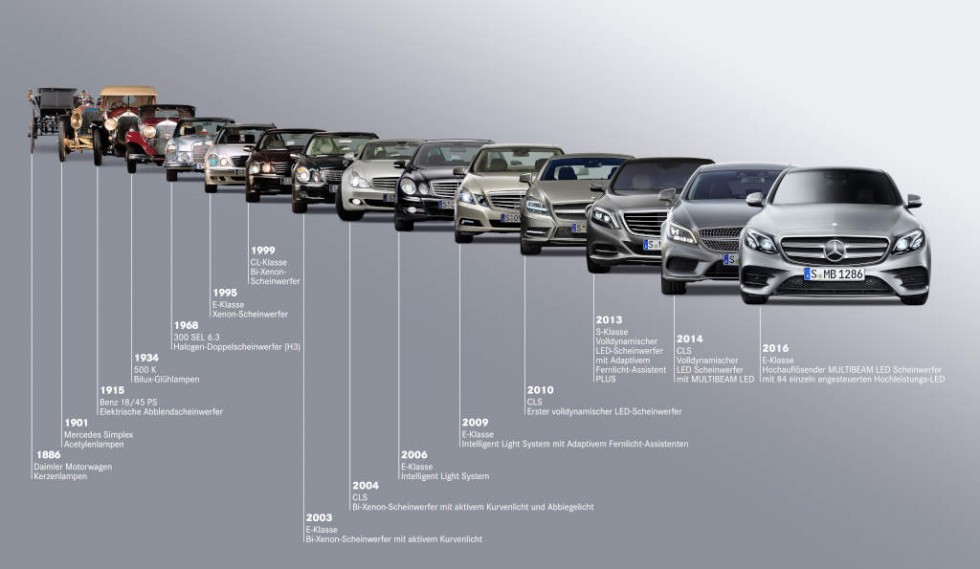
📱 A modern car
Ask:
- When did cars get so good?
- Were they always the same, or did changes happen over time?
- Can we split the significant changes into eras?
Establish:
- Cars used to be extremely basic and open air devices, like a horse-carriage.
- You might define the following eras as significant change; enclosed cabins; powerful engines for travelling long distances; significant increase in safety standards; significant increase in comfort and size
- These changes were not simply gradual refinements and improvements, but a reaction to culture such as changing laws, changing economics and new technologies.
Meanings grow and expand over time, and awareness of where and when those layers of meanings were established is an important part of the discipline of Literature.
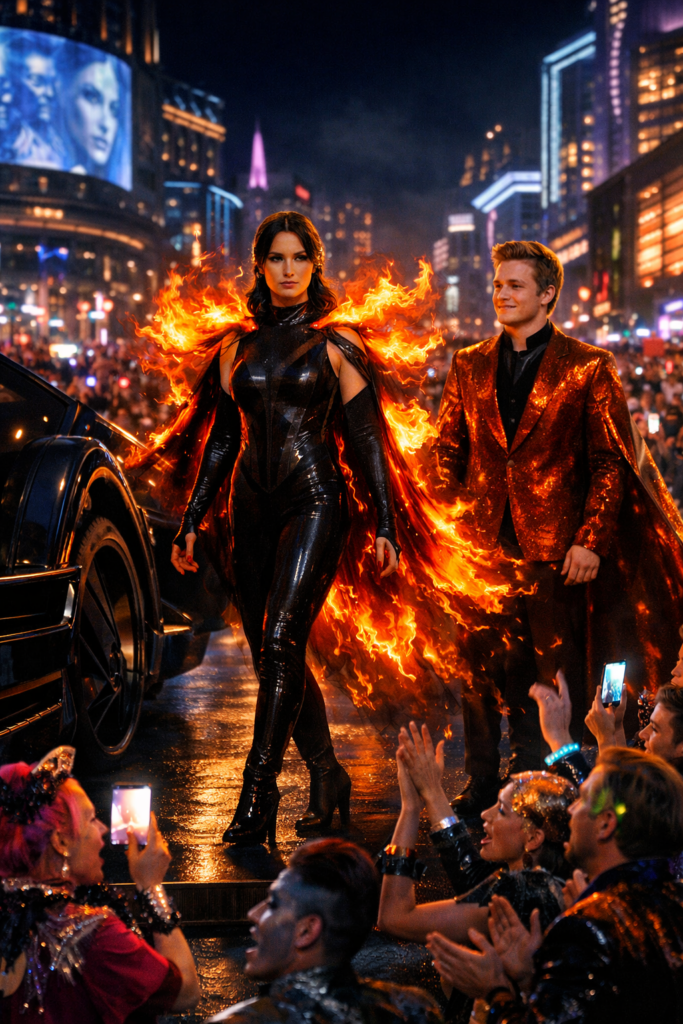
The Hunger Games is a fantastic text that draws upon the full depth, layer, substrata of English Literature. The signs being used are clearly impacted by each of the eras – remember, a sign is anything which can carry meaning. Anything can be a sign – anything can carry meaning. Literary signs obtain their meaning from prior literature.
Fire is one of the oldest symbols in human storytelling.
It carries heroic, religious, scientific, and postmodern political meanings across eras.
“You’re not afraid of fire, are you, Katniss?” He sees my expression and grins.
A few hours later, I am dressed in what will either be the most sensational or the deadliest costume in the opening ceremonies. I’m in a simple black unitard that covers me from ankle to neck. Shiny leather boots lace up to my knees. But it’s the fluttering cape ade of streams of orange, yellow, and red and the matching headpiece that define this costume. Cinna plans to light them on fire just before our chariot rolls into the streets.
“It’s not real flame, of course, just a little synthetic fire Portia and I came up with. You’ll be perfectly safe,” he says. But I’m not convinced I won’t be perfectly barbecued by the time we reach the city’s center.
My face is relatively clear of makeup, just a bit of highlighting here and there. My hair has been
brushed out and then braided down my back in my usual style. “I want the audience to recognize you when you’re in the arena,” says Cinna dreamily. “Katniss, the girl who was on fire.”
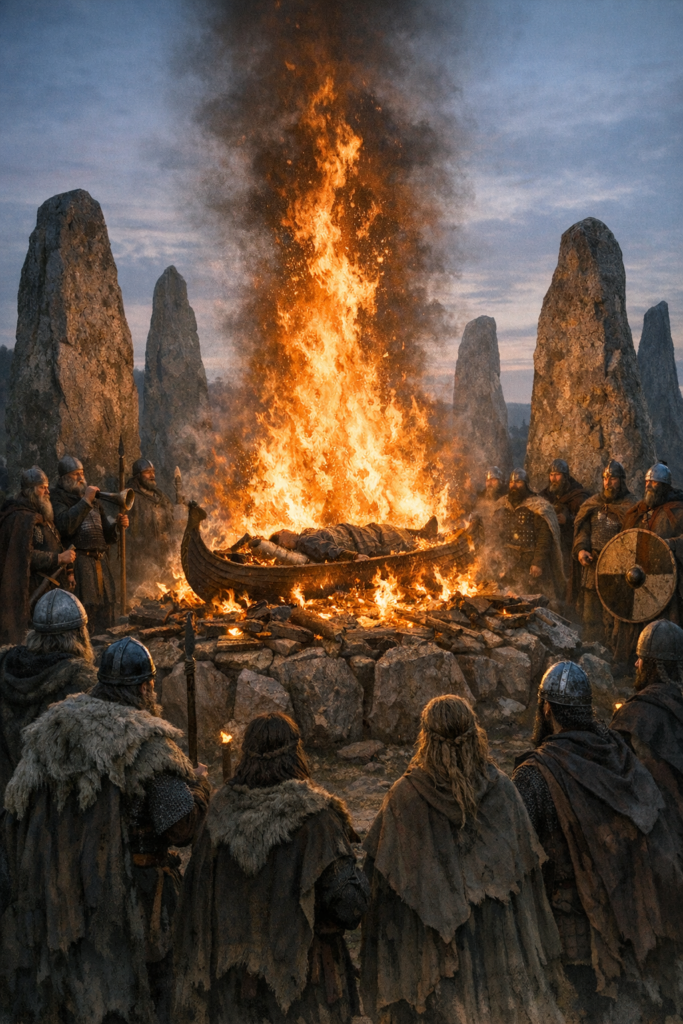
In the early English period, fir is seen as Fire as heroic ethos & fate
In Early English texts (Beowulf, The Wanderer, The Fight at Finnsburg), fire is:
- The sign of warrior glory (funeral pyres, hall‑fires)
- A mark of tribal identity and belonging
- A reminder of fate, mortality, and impermanence
- A symbol of exile when the hearth‑fire is taken away
Reading Katniss through this lens:
- Katniss as “the girl on fire” echoes the warrior who carries her tribe’s hopes into battle.
- Fire marks her as a fated figure — chosen by circumstance, bound to a heroic pattern.
- The burning district = loss of hearth, home, and community → classic Early English motif.
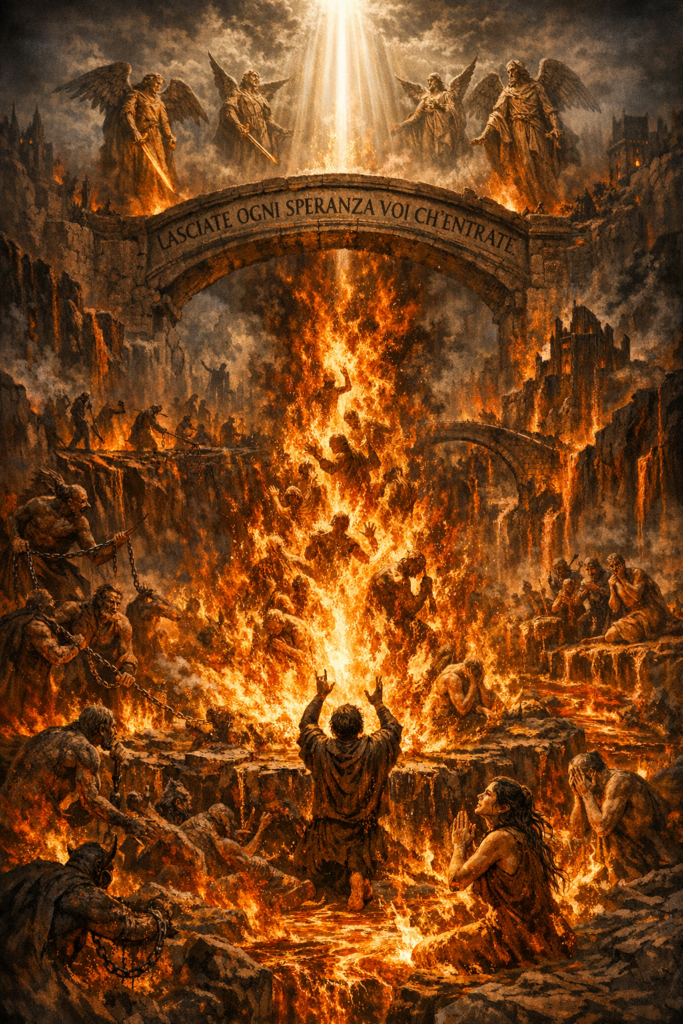
In premodernity, fire is seen as judgement, purification, divine order
Premodern texts (mystery plays, sermons, Everyman, Dante) encode fire as:
- Judgement (hellfire; divine wrath)
- Purification (trial by fire, testing the soul)
- Allegory (flames as moral transformation)
Reading Katniss through this lens:
- “The girl on fire” becomes an allegorical figure whose suffering purifies the corrupt world.
- Fire judges Panem’s injustice, echoing the moral framework of premodern symbolic thinking.
- Katniss undergoes “trial by fire” repeatedly (arena → rebellion → trauma), aligning with the soul’s testing in medieval narratives.

In Modernity, fire becomes a technology, revolution, human choice:
- A tool of human mastery, invention, and industry (Promethean ambition → science)
- A sign of revolutionary agency (French Revolution, industrial unrest)
- A metaphor for psychological intensity (passion, trauma, anger)
Reading Katniss through this lens:
- Fire symbolises human agency — Katniss as the spark who chooses action.
- Fireworks, explosions, rebellion are read as signs of systemic critique and rational revolt.
- Trauma “burns” in her, representing the modern psychological interior landscape.

Postmodernism sees fire as:
- A manufactured spectacle
- A symbol that no longer contains stable meaning
- An image controlled by institutions or media
- A sign that can be co‑opted — rebellion becomes branding
Reading Katniss through this lens:
- “The girl on fire” is constructed by stylists, the Capitol, the Games — an unstable narrative.
- Fire becomes a brand, a commodified image used by both oppressors and rebels.
- Meaning collapses: is Katniss a hero? A puppet? A product? Fire becomes the centre of that tension.
- The symbol is constantly rewritten by competing grand narratives → a traditional postmodern instability.
For Katniss, fire becomes a powerful and much layered symbol. The Collins inherits early English encoding in which fire is part of a journey or transition. For Katniss, the is on a transition from district serf to savior. Collins inherits the premodern encoding in which fire is a symbol for damnation, and Katniss is being sent into a place of torture and punishment – the games themselves are a parallel for this place of no return. But Fire can also be redemption, and she is able to return from the games as a savior. Collins also needs the Modernist encoding, where fire is industrial. For Collins, each district is an industrial hand that feeds the Capitol. And finally fire is a postmodern symbol in which her dress is no longer real flame but a simulation designed to entertain an audience. The symbol of fire is then deeply layered with many kinds of meaning, each encoded through a cultural history.
Student Task
Choose one sign from our current text.
- Explain how the sign was used in different eras, to mean different things.
- Connect each meaning to the four eras we will study.
Scaffold:
- At first, this sign was encoded to have meant…
- The oldest encoded meaning in this sign was…
- But later in English history, it adopted new meanings of…
- Today, it is also encoded to mean…
- Overall, this sign has a complex and layered history…
- The text is sophisticated literature because it reflects a layered history…
Finish the sentence:
“A sign can mean multiple things because…”
You are listening for:
- They reflect multiple eras
- Signs obtain meaning at different times
- Meanings don’t decay, but get added to as layers
- Signs reflect history
a) Pre-reading of the next lesson – read through the knowledge so you can be ready to discuss in class.
b) Apply the learning of today’s lesson to your own private reading text. Write a paragraph explaining how today’s learning changes how you might conceive your text. Be sure to use the key vocabulary and sentence stems.
c) Write a paragraph about the discipline of Literature, explain how key words from today’s lesson impact the field overall.
d) Add today’s vocabulary and sentence stems to your own glossary. Highlight any that you are unsure about, but you must also research the meanings yourself and develop your glossary to include this differentiated support.
How did you do? Remember, this is the disciplinary knowledge for Literature – it needs combining with the text you are studying now. Can you use this knowledge to write differently about the text you are studying? When you are ready, access the next lesson in this series.