
This lesson adds a new disciplinary lens to the Human Nature strand:
Maslow’s Hierarchy of Needs, a psychological model proposing that human behaviour is strongly shaped by an ordered set of needs—from physiological foundations to self‑actualisation. Maslow argues that unmet lower-level needs inhibit motivation and growth, whereas the satisfaction of these needs fosters autonomy, wellbeing, and meaningful decision‑making.
In Literary Studies, Maslow allows us to analyse why characters act, what needs drive them, and how texts dramatise the struggle for security, dignity, belonging, and self-realisation. This builds directly on CECA’s Human Nature concept—extending “motivations and desires” into a structured psychological framework of human needs.
By the end of this lesson, students will be able to:
- Identify Maslow’s five main categories of need.
- Explain how unmet needs influence behaviour and decision‑making.
- Analyse an extract from Jane Eyre using Maslow’s framework to interpret human motivation.
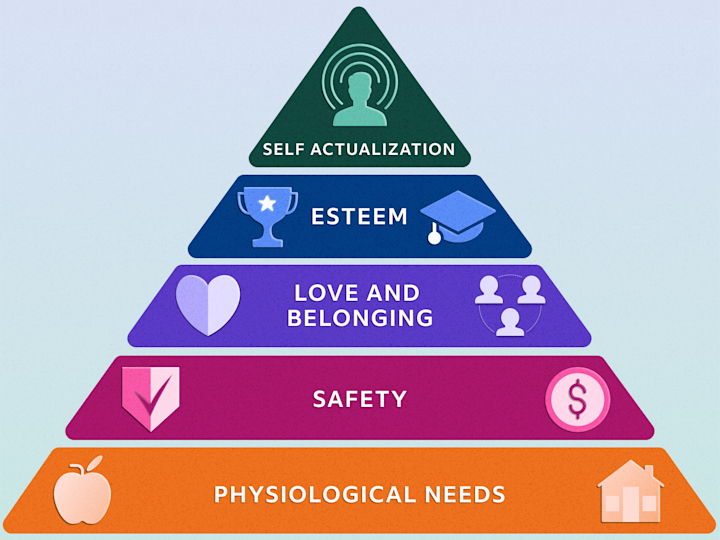
Maslow suggests that humans are motivated by a hierarchy of needs, usually depicted as a pyramid:
- Physiological — food, water, rest, warmth
- Safety — stability, protection, routine
- Belonging — friendship, love, community
- Esteem — confidence, respect, dignity
- Self‑actualisation — autonomy, personal fulfilment, achieving one’s potential
People act differently depending on which need is unmet:
someone hungry may focus on survival; someone denied belonging seeks connection; someone whose dignity is threatened asserts independence.

A student cannot concentrate in class if:
- they are hungry and didn’t sleep well (physiological)
- they feel unsafe due to bullying (safety)
- they feel excluded from the curriculum (belonging)
Only once these needs are met can they focus on:
- confidence and achievement (esteem)
- creativity and full engagement in learning (self‑actualisation)
This mirrors how characters in literature respond to unmet needs.
Question: How important is the school uniform and canteen to ensuring that these needs are met?
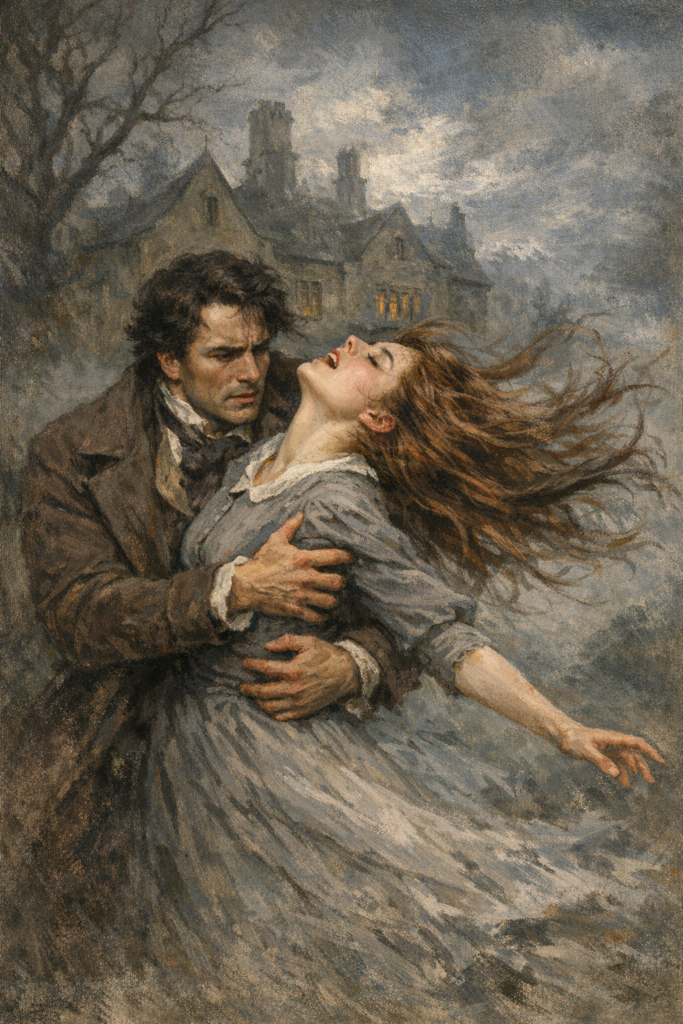
Charlotte Brontë’s Jane Eyre (1847) follows Jane’s lifelong struggle to protect her dignity, belonging, and autonomy within oppressive social conditions. The chosen extract shows Jane asserting her selfhood in defiance of forces that threaten her esteem and safety, allowing Maslow’s model to frame her motivations with psychological clarity.
“As we are!” repeated Mr. Rochester—“so,” he added, enclosing me in his arms, gathering me to his breast, pressing his lips on my lips: “so, Jane!”
“Yes, so, sir,” I rejoined: “and yet not so; for you are a married man—or as good as a married man, and wed to one inferior to you—to one with whom you have no sympathy—whom I do not believe you truly love; for I have seen and heard you sneer at her. I would scorn such a union: therefore I am better than you—let me go!”
“Where, Jane? To Ireland?”
“Yes—to Ireland. I have spoken my mind, and can go anywhere now.”
“Jane, be still; don’t struggle so, like a wild frantic bird that is rending its own plumage in its desperation.”
“I am no bird; and no net ensnares me; I am a free human being with an independent will, which I now exert to leave you.”
Another effort set me at liberty, and I stood erect before him.
“And your will shall decide your destiny,” he said: “I offer you my hand, my heart, and a share of all my possessions.”
“You play a farce, which I merely laugh at.”
“I ask you to pass through life at my side—to be my second self, and best earthly companion.”
“For that fate you have already made your choice, and must abide by it.”
“Jane, be still a few moments: you are over-excited: I will be still too.”
A waft of wind came sweeping down the laurel-walk, and trembled through the boughs of the chestnut: it wandered away—away—to an indefinite distance—it died. The nightingale’s song was then the only voice of the hour: in listening to it, I again wept. Mr. Rochester sat quiet, looking at me gently and seriously. Some time passed before he spoke; he at last said—
“Come to my side, Jane, and let us explain and understand one another.”
“I will never again come to your side: I am torn away now, and cannot return.”
“But, Jane, I summon you as my wife: it is you only I intend to marry.” I was silent: I thought he mocked me.
Why this extract suits the learning objective
- Jane rejects a situation that threatens her esteem and belonging.
- Her emphasis on “independent will” signals movement toward self‑actualisation but at the expense of love.
- She refuses belonging that compromises dignity, showing conflict between needs.
- Her motivation arises from unmet earlier needs (childhood neglect→ safety & belonging deficits).
Question: How does Jane react to Rochester’s proposal?
Questions:
Which basic need do you find hardest to meet during a school day: physiological, safety, belonging, esteem, or self‑actualisation?
Can the school do anything to support students who have not met the lower needs?
Task:
Using the same extract (or another teacher‑selected passage), identify which of Maslow’s needs motivates Jane’s decision.
Instructions:
- Choose one need category.
- Use two vocabulary terms.
- Begin with a sentence stem.
- Explain how the unmet or met need shapes her action.
Success Criteria:
- Correct identification of the need
- Textual reference (paraphrased)
- Clear psychological reasoning
- Connection to human nature
Which of Maslow’s needs is most lacking in the text you are studying and why?
a) Pre-reading of the next lesson – read through the knowledge so you can be ready to discuss in class.
b) Apply the learning of today’s lesson to your own private reading text. Write a paragraph explaining how today’s learning changes how you might conceive your text. Be sure to use the key vocabulary and sentence stems.
c) Write a paragraph about the discipline of Literature, explain how key words from today’s lesson impact the field overall.
d) Add today’s vocabulary and sentence stems to your own glossary. Highlight any that you are unsure about, but you must also research the meanings yourself and develop your glossary to include this differentiated support.
How did you do? Remember, this is the disciplinary knowledge for Literature – it needs combining with the text you are studying now. Can you use this knowledge to write differently about the text you are studying? When you are ready, access the next lesson in this series.