
We think of words in a somewhat paradoxical way: we observe language and record usage in dictionaries and manuals of style and grammar, we use what has been seen to derive rules; but we enforce a rule-learning approach to replicates what has been observed. So is language something derived, or learned? The linguist treats language in a descriptive manner, intending to describe how language is used, but we are prescriptive in the way it is to be used by others.
The concept that undermines the methodology of prescribing rules for others to learn is that of pragmatics.
Pragmatics is fundamentally descriptivist, because it studies how speakers actually use language in context. But it also exposes why the prescriptivist project is philosophically unstable: once meaning depends on context, intention, inference, and shared assumptions, “rules” cannot fully determine meaning. Pragmatics shows that language cannot be governed solely by prescriptive rules, because meaning is not located in forms but in use.
I put this in a highly vernacular way; words don’t have meanings, they get meanings.
I demonstrate this to students badly through contranyms. If one were to say “The horse is bolted”, do we mean the horse is ‘locked down and secure’, or that ‘the horse has escaped’? We can’t really know without looking around the image outside of the phrase; at the field and stables that have not been depicted grammatically. This is the effect of pragmatics.
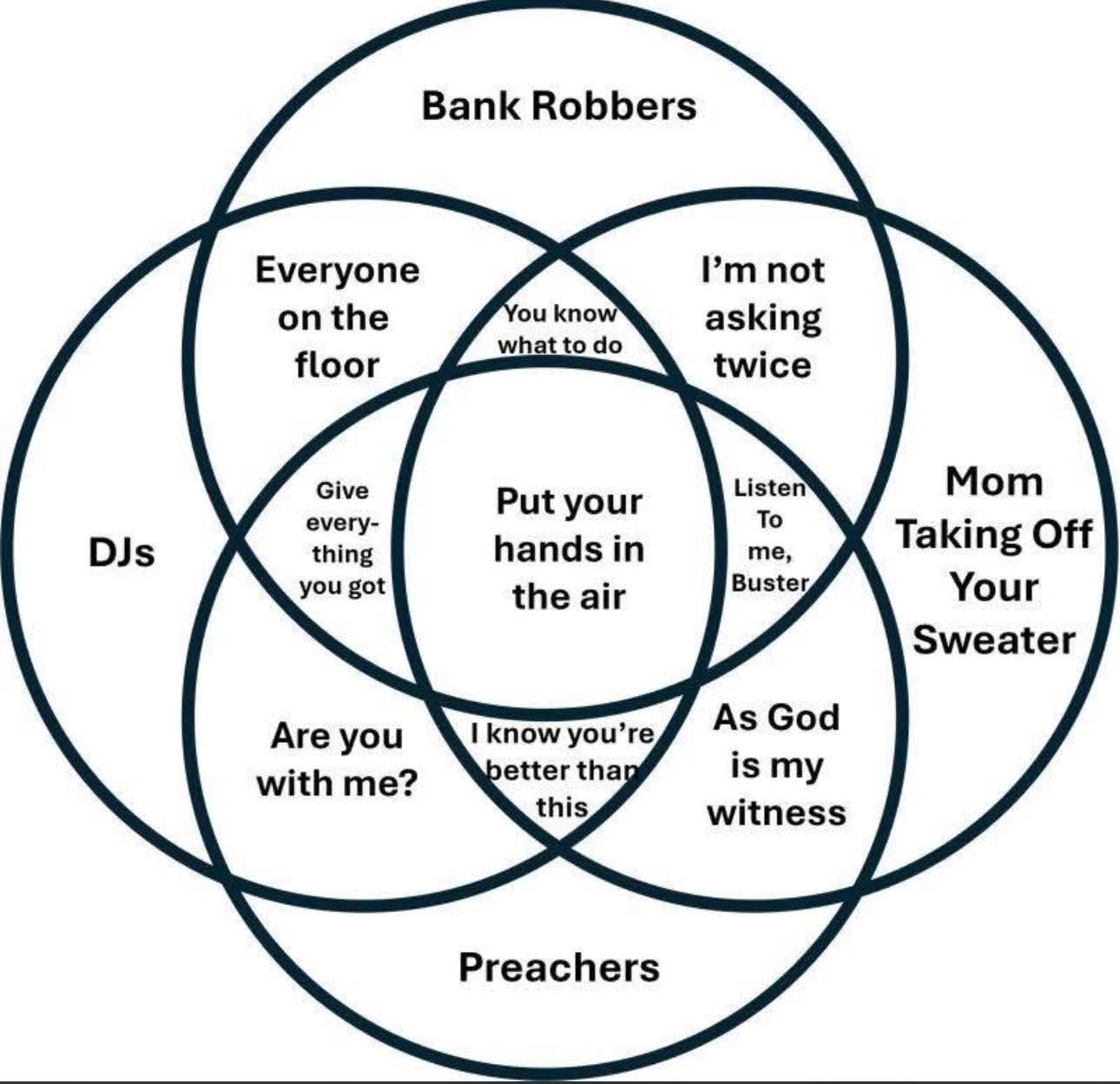
But here is a much better example of pragmatics:
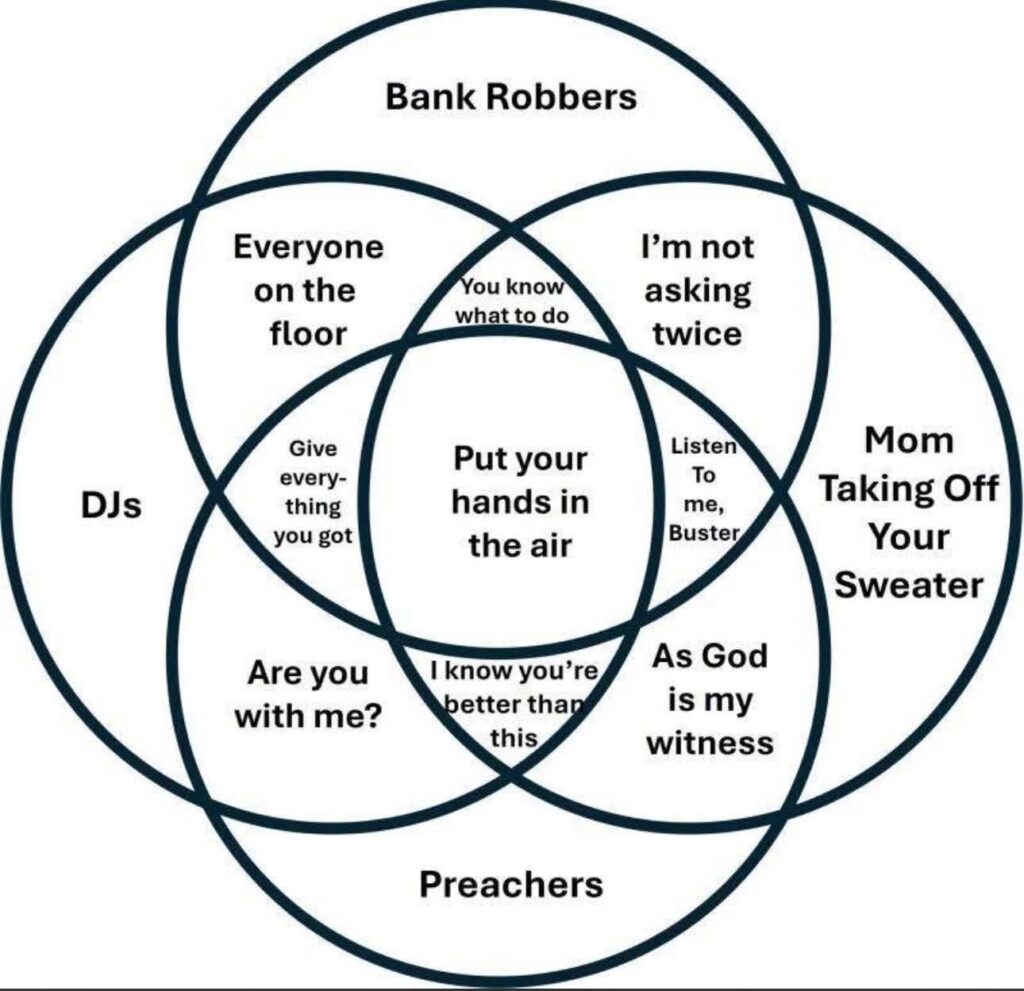
The phrases change their meaning depending on what is going on outside of the words. And maybe there will be information in the paragraph around them, such as ‘the masked robber shouted “put your hands in the air” ‘. In which case the demand requires the information that preceded it for sense. Contextualising information that came before the statement is an anaphoric referent, and ‘ “put your hands in the air”, shouted the masked robber’ would be cataphoric because subsequent information is required for meaning.
So students should understand then that words themselves are not reliably a-priori to meaning. They are part of structures of coordinated signs that together build meaning. Masked + robber + shouted + put + your + hands + in + the + air are all required as a structural system, and no individual sign can become the centre or the root of meaning.
Structuralism requires that we keep stepping out to larger structures still. ‘Masked’ could be a signifier to various referents; covid masks, balaclavas, masking tape, a likeness sculpted in wax even. So we step outwards towards cultural understanding of the command verb ‘put’ and the noun ‘mask’ to create meaning; that these are terms of antagonism. A single word gets meaning from the sentence around it. The sentence gets its meaning from the narrative around it. The narrative gets its meaning from cultural experience around it. Cultural experience gets its meaning from political and ideological frameworks. Politics obtains authority from a long sequence of historical structures.
This is the problem with structuralism as a methodology; when attempting to find the true meaning of words, we end up getting further and further away from the text.
But to keep it simple, this meme is a perfect example of one structuralist step – that words don’t have meanings until you look around at the place in which they’ve been used. It’s the place, setting, time and intent that gives to words their meanings.
Leave a Reply