
We often talk about the function of Literature as one of nurturing students to know how to read. To build the skill of reading, we focus on sustained and focused reading time, reading aloud, retrieval and recall questions. The progress and attainment of reading is often measured through reading age or NRSS scores. But, these reading scores are not the same objectives or outcomes to be measured in actual Literature style assessments and so the concern is that Literacy progress is conflated with Literature progress. If Literacy is the measure of one’s reading proficiency, and can be tracked via the data outcome of reading proficiency, what is the outcome and measurement in Literature?
Literature still takes the function of teaching students ‘how to read a text’, but the referents or definitions of these terms are different to the same motto of Literacy. ‘Text’ in Literature does not have to be a written text. Roland Barthes in his seminal text SZ demonstrates how we talk about cultural signs in the same method as we talk about the literary text – the critical language, the vocabulary of analysis is much more universal than the narrow framing of ‘literary analysis’. The vocabulary of analysis is a transferable across texts, and importantly can be used to talk about the world around us.
Double Determination
There are a vast number of these critical perspectives (the critic being to Literature, what the historian is to History) and to account for all of them in a curriculum (a list of learning objectives) I should think would be impossible. I am often seeing critical perspectives that I hadn’t considered before, such as the idea of Double Determination which I have taken from the article Smooth Sailing, by Jon Harvey:
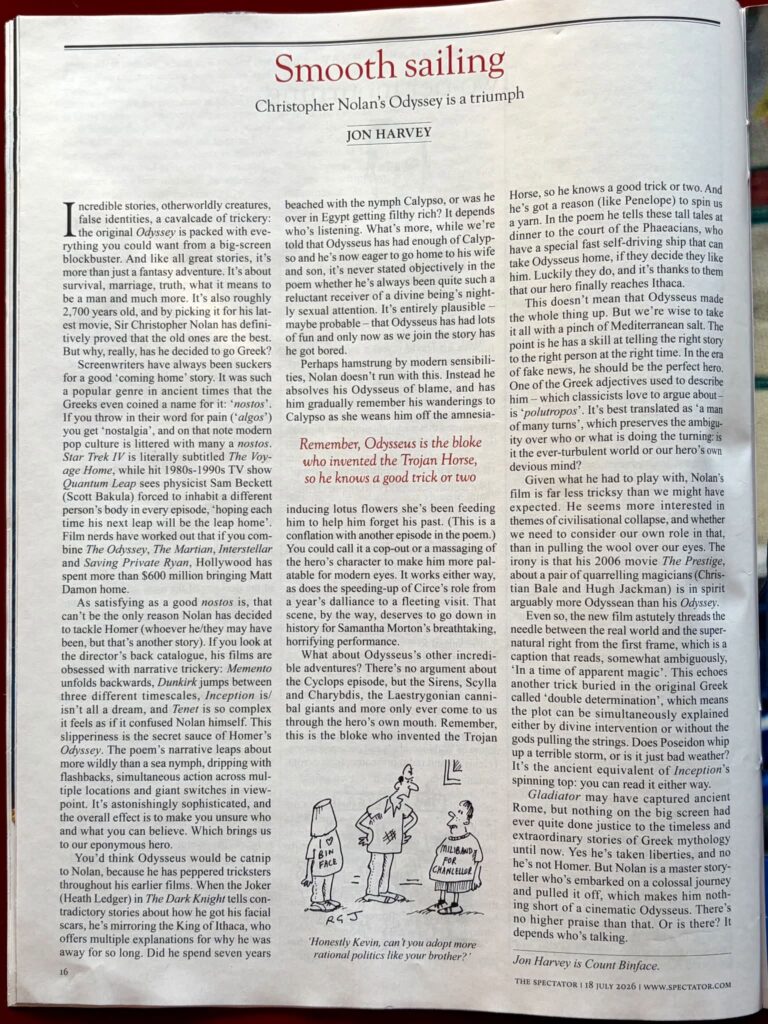
Double Determination; the way a text carries multiple justifications for the outcomes of the narrative. The multiple determinations might be a paradox, they might be complementary, or structural forces (systemic, societal drivers of outcomes).
Lineage:
Marxist and structuralist roots
In Marxist criticism, “determination” refers to the shaping force of material conditions. But cultural objects are never only materially determined; they are also shaped by ideology, discourse, and symbolic systems. Hence: double determination = economic structure + ideological structure.
Psychoanalytic and post-structuralist extensions
Freud and Lacan both imply that human actions are doubly determined by conscious intention and unconscious desire. Barthes and Derrida extend this to texts: meaning is determined by authorial intention and by the play of language itself.
Cultural studies
Stuart Hall’s encoding/decoding model is a form of double determination: media messages are shaped by institutional production and by audience interpretation.
Impact On Literary Analysis
This critical vocabulary is highly suited to Literature studies as Key Stage 3, and of GCSE texts, with it being quite overt as a theme in many texts.
Macbeth, Romeo and Juliet;
In some of Shakespeare’s texts, the outcomes of the narrative are described by two paradoxical affects; free will or fate. The outcomes cannot be reached by both of these affects but Shakespeare cleverly proposes two alternative explanations for the outcomes.
Blood Brothers, An Inspector Calls; A Christmas Carol;
These texts play on the impact that class structures determine a set of outcomes, which is paradoxical to another reading of the text – that personal identity affects outcomes. Personal identity and class structures are paradoxical, and we are either in control of our destiny of the class we are born into directs our outcomes.
Lord Of The Flies, Animal Farm;
In these texts, the author builds two paradoxical readings; that the outcomes are reached because of some a priori, innate human nature or that the outcomes are reached through group dynamics and relationships.
The determinations can generally be seen as paradoxical – they can’t both be the explanation for the outcomes at the same time. Or, evidence for one cannot be evidence for the other.
Impact On Cultural Analysis
This is more than just a method of reading across multiple texts however, and once it has been mastered through the rehearsal in Literature studies, can be applied to wider cultural experiences.
Migrants into a country undergo the paradox of double determination in that they are both ‘taking work from native born citizens’ and also ‘abusing the welfare system’. A person in work cannot claim welfare, and the group undergoes the impossible circumstance of two paradoxical criticisms.
A politician who gives his education, career and life experience to politics has no ‘lived experience’ of working in professions and a lengthy period in politics to understand the structures. Both the professional career and the political career are under tension as both cannot be built without harming the other.
The national flag is both simultaneously a way of identifying the ingroup included within its referent system, and as a way of excluding an outgroup from the referent system. This is less paradoxical, but structural. If one wants to identify the ingroup, simultaneously identifying the outgroup reinforces the purpose.
Feminism is celebrated for giving power to women, in social structures that have historically withheld power from them, whilst also removing power from men. It can be seen as a transfer of power, rather than just an increase in the total amount of power. This proposes another paradox; if the increase in women’s power is at the expense of the degree of men’s power, it cannot be a net increase in power.
A leader of a democratic country might claim to be in power through the will of God. This double determination is a paradox in which free men who vote for their leader are either projections of the will of God, or being subverted by the will of God. But he cannot be in power both through the will of God and the democratic consent of the people.
In each of these cultural systems, the narrative we ultimately uphold as the affective determinant comes from our own internal bias and perspective. We are not in fact reading the text, but we are reading ourselves. If we come away from feminism feeling that it is a transference of power from men to women, is not an overall net increase in power and must only benefit women at the expense of harm to men, we are making a politically subjective reading that may or may not be true. The conclusion is not an accurate reflection of the text but a cathartic release of internalised concerns.
The act of the critic (a reader of texts, who is using a specific type of vocabulary to explore the power of sign systems and not just stories) is not to decide on the dominant determinant, but to identify the range of determinants that lay-readers can select from. A lay reader will naturally come to some subjective conclusion because they are not trained in the vocabulary of the critic. The critic is elevated above ‘concluding’, and takes an objective stance, seeing through the bias of subjectivity and instead maps out the structures of the text.
Concluding thoughts
Literature as a subject has two potential functions, which are themselves a double determination. On the one hand, Literature can be about reading for pleasure, literacy proficiency, and the accumulation of read-texts. On the other hand, and paradoxically, is the function of the critic. This is slower, accrues less text experience and displaces narrative with vocabulary. The outcome of a critical literary experience lends itself to better cultural, social and political engagement. The more time that a student spends in reading for pleasure, the less time can be spent on developing a critical vocabulary.
There might be some assumption that better literacy proficiency and wider reading experience naturally imbues students with the skills of the critical. We sometimes build curriculum which assumes the critical skills can be learnt implicitly through the act of reading, and that there is in fact no paradox in this double determination. But this goes against virtually all pedagogical stances. We know that curriculum must be explicit, that it must be sequenced and repeated, it must be demonstrable and measurable. To treat Literature as a series of stories that builds the intuition of the critic merely through proximity with important texts is a falsehood.
Literature has always faced a challenge in identifying its functional role and its academic base. One way we can better defend the teaching and learning of Literature is to recognise the double determination, and the paradox of reading for pleasure versus reading for critical vocabulary. When we build a curriculum around a critical vocabulary first and reading second, Literature is preparing students for a lifetime of critical analysis. Reading for pleasure is not the same as observing a text from a critical stance, and its vocabulary must be taught explicitly.
Double determination is a powerful example of how disciplinary vocabulary allows students to read with conceptual precision. It shows that texts and cultural signs are never shaped by a single force, but by the interplay of structures, desires, histories, and ideologies. Once mastered in Literature, it becomes a powerful way of reading the world.
Leave a Reply