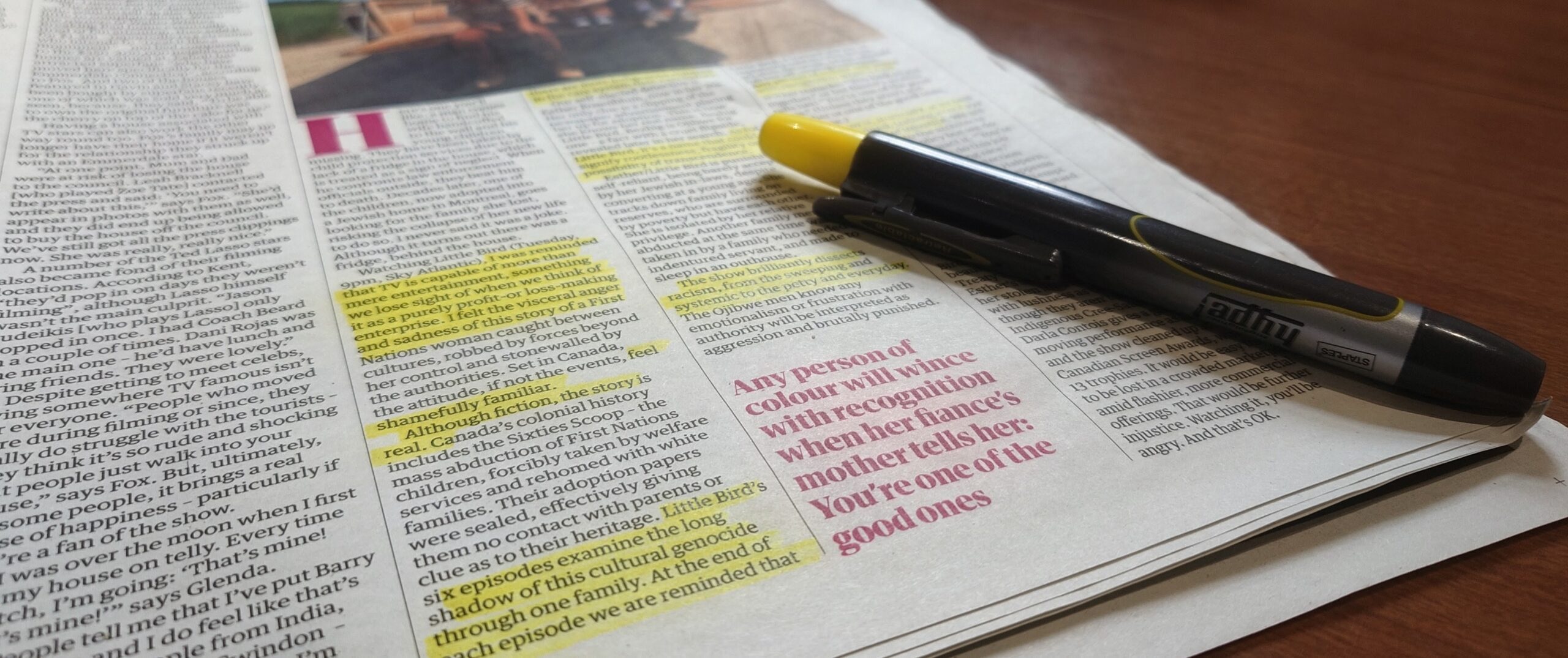

Something I will do from time to time with students is to ‘exchange the text’; Drop the novel we’re reading and undertake an Barthesian Mythologies style of investigation. Barthes explored how cultural artifacts such as boxing matches, cars, public figures, steak and chips… He showed that any cultural artifacts before from the same analytical vocabulary that we used today in Literature. This text-exchange might sound something like this:
How can Macbeth be demarcated down at the word level as a blending of fact and fiction? Too conceptually strange? How can Donald Trump be demarcated down at the word level as a blending of fact and fiction?
What stories must be known by the reader to understand the intertextual nature of Romeo and Juliet, to be an ‘ideal reader’? Too conceptually strange? What car models must you be aware of before you can understand the value of a BMW 3 Series?
The language and procedure we undertake within Literature is what I would call a critical analysis because it uses a language that dissects cultural artifacts. Literature texts are a cultural artifact, and the study of culture is shared with other cultural studies subjects such as Sociology, History, Geography, Psychology etc. Each of these is a study of our constructed world.
So it should come as no surprise that when we talk about the world around us, it often shares in style and vocabulary with the way we talk about Literature. An example of this comes from Rhik Sammader’s review of Little Bird (Sky Atlantic), in The Guardian 15th-21 August 2026.
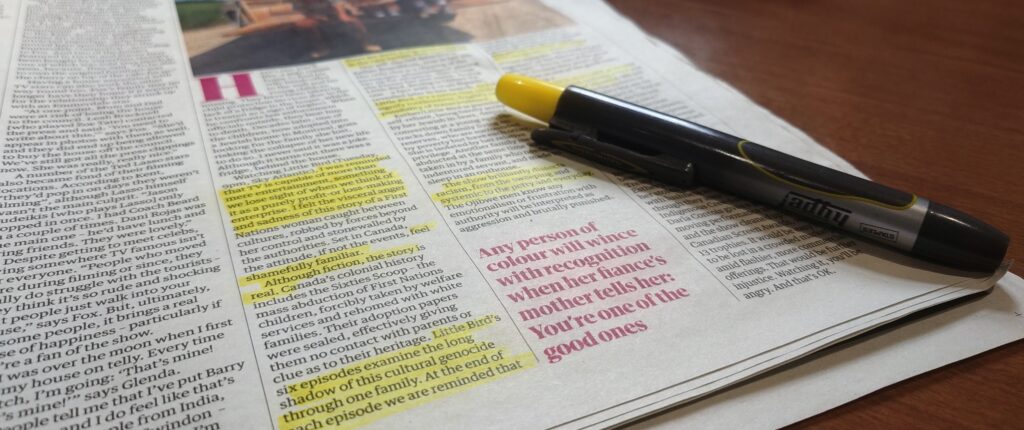
Reading through this, I was drawn to certain passages that read exactly like how we would write about our literary texts. I will reproduce some of these here, and exchange his cultural text Little Bird with just [the text], so that we can imagine the compatibility with our own studies.
I was reminded that [the text] is capable of more than mere entertainment, something we loose sight of when we think of it as a purely profit or loss making enterprise. I felt visceral anger and sadness of this story…
All literary texts (and arguably, all cultural texts) exist within a profit and loss enterprise – this statement shows a critic understands why and how texts are produced and would be marked as critical engagement with ‘form’. This is not an one lesson constructed in the curriculum here, but the concept of commercial viability appears in the articles from time to time.
Feel shamefully familiar.
Texts are designed to impact our thoughts and feelings – if we merely talk about texts in an objective and distant way, we fail to participate in the emotional and affective way that examboards hope students will do. Again, it’s a phrase that is universal across literary texts and cultural texts, though the actual feeling is arbitrary! This is covered in a lesson about the range of human emotions.
Although fiction, the story is real.
This is one of the most important, foundational critical positions that I teach – it is literally one of the first lessons in my curriculum. Students must be able to recognise that all texts are constructed from fictions and non-fictions, and a sophisticated reader is able to distinguish between evidence for both.
[The text] examines the long shadow of [a theme].
A phrase such as this takes a meta view of the text, seeing how the text as a whole construct is undertaking a job and the small parts that we evidence through quotes must accumulate to some ‘big picture’ understanding of the function of the text. The idea that themes persist and evolve over a long period of time is covered in our curriculum.
As for [the text], its a name that could signify rootlessness, fragility or the posibility of transcendence.
The idea of the themes of a text is a well understood function of Literature, but we can discuss theme in non-literary texts too.
[The text] brilliantly dissects racism, from the sweeping and systemic to the petty and everyday. Any person of colour will wince with recognition when…
Texts, literary or not, are capable of exploring issues of representation, or the abject presentations, or eurocentrism. Again, there are lesson dedicated to this critical analysis.
The show is ironically, at its best when retrained, training a cool eye on the banality of injustice.
Our cultural artifacts are political, engaging with injustices done upon minority and vulnerable classes.
Overall, analysis of Literature is at its best when it isn’t a discussion that takes places within the boundaries of the literary text. The language of critical analysis should be transferable and connected to wider social issues. In this way, readers move away from paraphrase and toward engagement.
Leave a Reply